














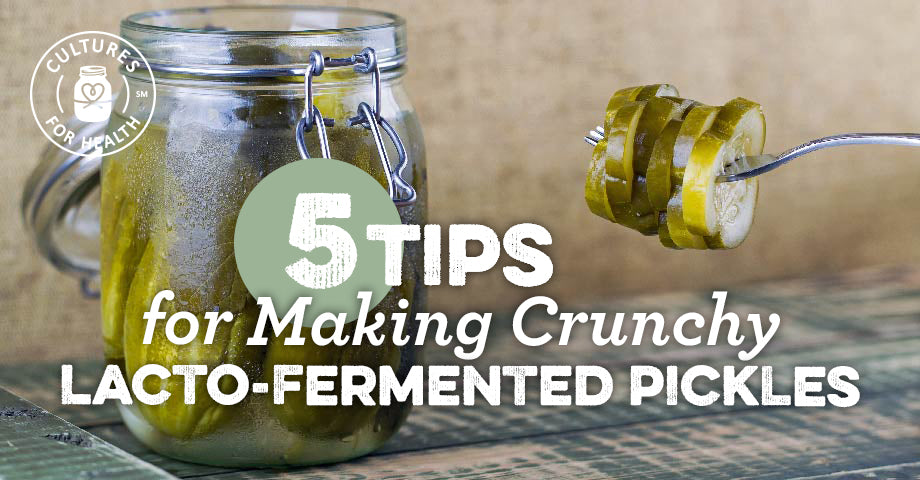
Vinegar-brined pickles are one of the most popular and well-known preserved vegetables. They are super acidic, tangy, sometimes spicy, and definitely crunchy. However, they are missing one thing that you'll get with fermented pickles: probiotics!
To enjoy all the benefits of fermented pickles and still retain that special crunch, there are a few extra steps to take, to avoid a jar of mushy pickles.
HOW TO KEEP CUCUMBERS CRUNCHY DURING FERMENTATION
1. Add a Tannin-Containing Agent to Your Pickling Jars.
Black tea leaves, oak leaves, grape leaves, or horseradish leaves all work well. Add a few larger leaves or a good teaspoon or so of loose tea or a teabag to a half-gallon jar.
2. Ferment at the Coolest Temperature You Can
A fast, hot fermentation can result in a less-than-stellar crunch to a pickle. If your house is too warm for fermenting, consult our article on keeping cultures cool in summer, for ideas on creating a cooler environment for culturing.
3. Try Small Whole Cucumbers First
They tend to retain their crunch better than a chopped-up larger cucumber.
4. Remove the Blossom End
The end of the cucumber contains enzymes that soften pickles. Use a knife to remove a thin slice from the end, to preserve the firm texture.
5. Puncture the Skin
If the cucumber is harvested a bit later in the year or has been on the vine a little longer, it will develop a thicker skin. Use a skewer or paring knife to prick a hole in each cucumber. The brine can penetrate faster and the cucumbers will culture more evenly.
With these tips in mind, you should be able to achieve that crunch that is so desirable in a pickle.