










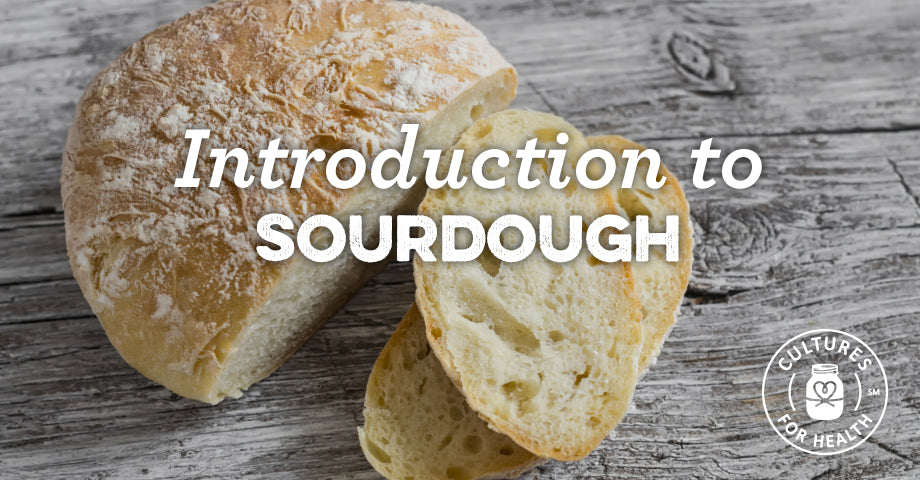
Bread has been called the staff of life, but like many other food products on the market today, bread is not what it once was, nor what it still has the potential to be. How was bread made before packaged yeast and fancy ovens? And how does flour and water turn into something beloved around the world?
THE HISTORY OF SOURDOUGH
Many historians believe the Egyptians were the first to discover that flour and water could “come alive” to rise simple dough into bread. Bakeries and breweries were often next to each other. Someone likely used mash from beer in their bread and decided it was pretty amazing! In time, they discovered that by keeping a bit of the dough for the next batch, one could reliably produce beautiful loaves of bread. The soured bread had a better flavor and texture than plain unleavened breads. A similar discovery was made in other regions that relied on grains such as wheat, barley and rye. Over time, certain starters were prized for qualities such as rise time and flavor. Families passed starters down to the next generation. Breads became part of the local culture, from Egyptian pita, to German pumpernickel, and Russian black bread.
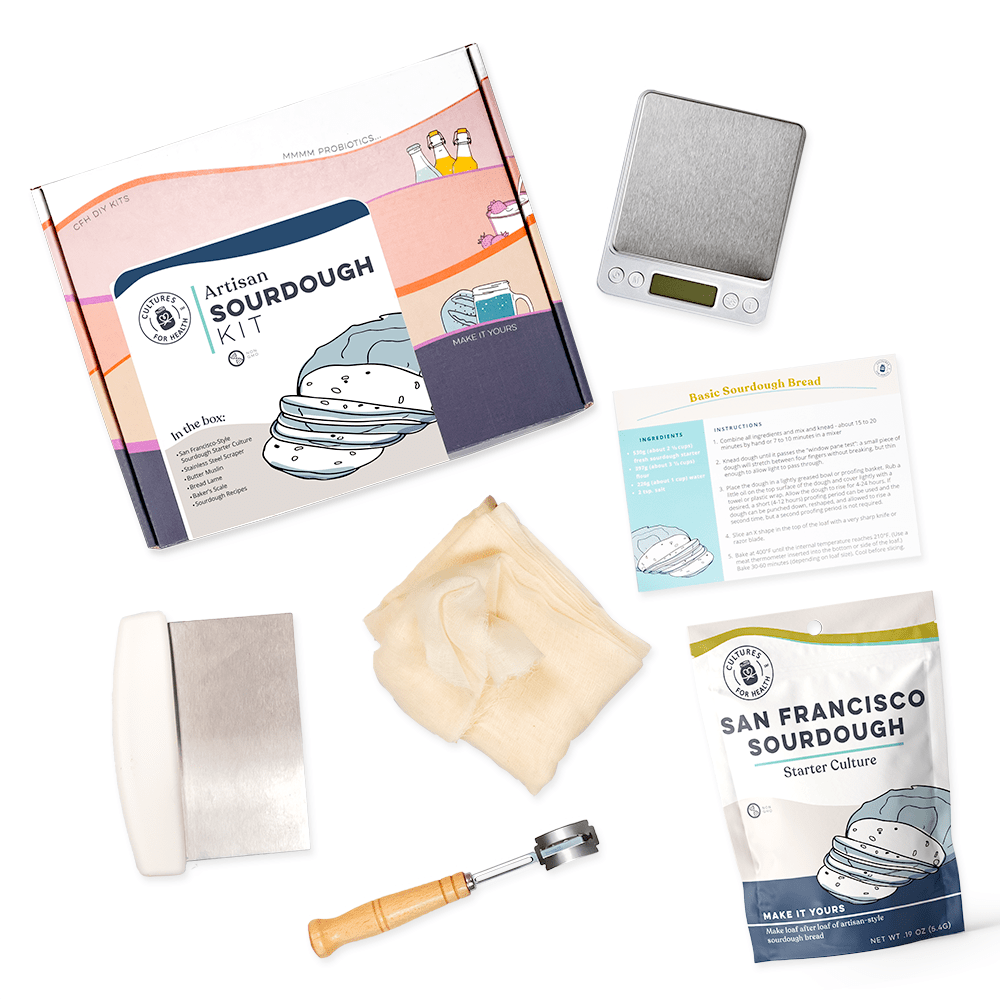
While sourdough starters and bread made from starters have been around for thousands of years, the term "sourdough" has a pretty short history. It is a US term that came into use during the California Gold Rush days of the late 1800s. You may also check our sourdough starter for sale.
Many gold miners obtained provisions in the booming coastal town of San Francisco before heading up into the mountains, and a good bread starter would have been a vital necessity. Starters from that area produced bread with a unique and particularly sour tang. Thus the starters and bread from that area became known as "sourdough." The term has since been generalized to mean any natural bread starter.

THE SCIENCE OF SOURDOUGH
What makes sourdough so unique, and how does it work?
Commercial baking yeast is a single strain of Saccharomyces cerrivasae. Yeasts from this family are very specialized. Strains are selected for particular end uses. They are very fast-acting and easy to produce commercially, but don’t adapt well and are intolerant of acidic environments.
Traditional sourdough contains a complex blend of bacteria and yeast. The yeasts in sourdough are strains of Saccharomyces exiges, which are relatives of S cerrivasae. These yeasts thrive naturally on the surface of grains, fruits, vegetables, and even in the air and soil. The exact strains of yeast and bacteria will vary depending on the origins of the starter.
In a healthy sourdough starter, yeast and lactobacilli thrive in a harmonious symbiotic relationship. Each has a preferred carbohydrate fuel from the grains. The yeast uses these carbohydrates to produce ethanol and carbon dioxide. Ethanol is further converted by the bacteria, which produces lactic acid. Bubbles of carbon dioxide become trapped in the stretchy dough, making it rise. The acidity created by the lactobacilli is good for the yeast but inhospitable to other organisms. A sourdough starter is able to be kept at room temperature (if fed properly) and the acidity of the bread acts as a preservative even after baking.
WHAT MAKES SOURDOUGH SUPERIOR?
Sourdough Breaks Down Gluten
The longer rising/soaking time necessary to raise sourdough breads allows for the breakdown of the proteins (gluten in wheat) into amino acids, making it easier to digest. This gluten breakdown is why some people who have a gluten sensitivity can tolerate sourdough wheat breads.1
Sourdough Naturally Preserves the Bread
The lactic acid produced during the fermentation process creates a lovely tang in the bread and predigests the grain for you. The acetic acid helps the bread to keep longer by inhibiting the growth of molds.
Sourdough is Sustainable
One of the best features of the sourdough process is that it allows you to make bread with the simplest of ingredients, ones that you can even produce yourself. Instead of having to buy a yeast packet for every loaf of bread, you can just add your homemade starter. No more need to remember to buy yeast!
Sourdough is More Nutritious
Because sourdough breads go through a fermentation process, many of the simple sugars present in the grain are eaten up in the process. This process makes the bread easier on blood sugar levels. The fermentation process also makes the bread higher in nutrients, especially B vitamins.
Finally, the bacteria present in the sourdough help to activate phytase, an enzyme that breaks down phytic acid, an anti-nutrient found in all grains and seeds2. This allows your body to better hold onto minerals, as phytic acid can bind with them and take them out of your body.