




















If you are lactose intolerant or prefer to keep lactose consumption to a minimum, it is possible to further reduce the lactose content of milk kefir to fit your needs.
Click to download our Milk Kefir Guide with tricks and tips to show you how to make milk kefir that is low in lactose. This guide also includes information on the health benefits of milk kefir.
LACTOSE IN KEFIR
All cultures (kefir grains, kombucha scobys, etc.) consume sugars in order to produce the acids and favorable microorganisms found in the cultured foods that we love.
The lactose found in milk is the primary food supply for dairy cultures. The cultures feast on the lactose and convert it into the tangy lactic acid we find in milk kefir or yogurt. Because the lactose is consumed in the fermenting process, any cultured dairy product is lower in lactose than the milk before culturing.
WHAT AFFECTS THE LACTOSE CONTENT OF MILK KEFIR?
- The amount of time that your kefir is cultured,
- What you do with your kefir after it has cultured.
By manipulating these factors you can control the lactose content of your kefir to some degree.
Milk Kefir Culturing Time
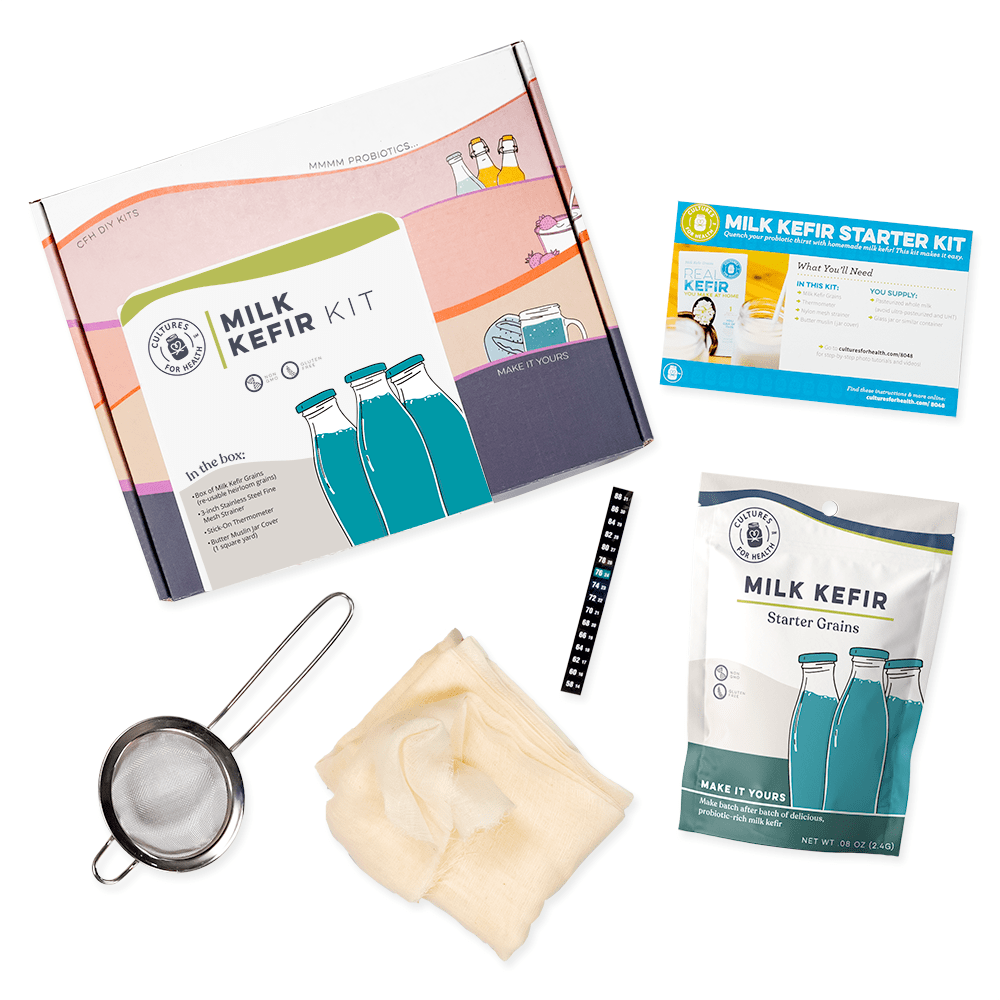
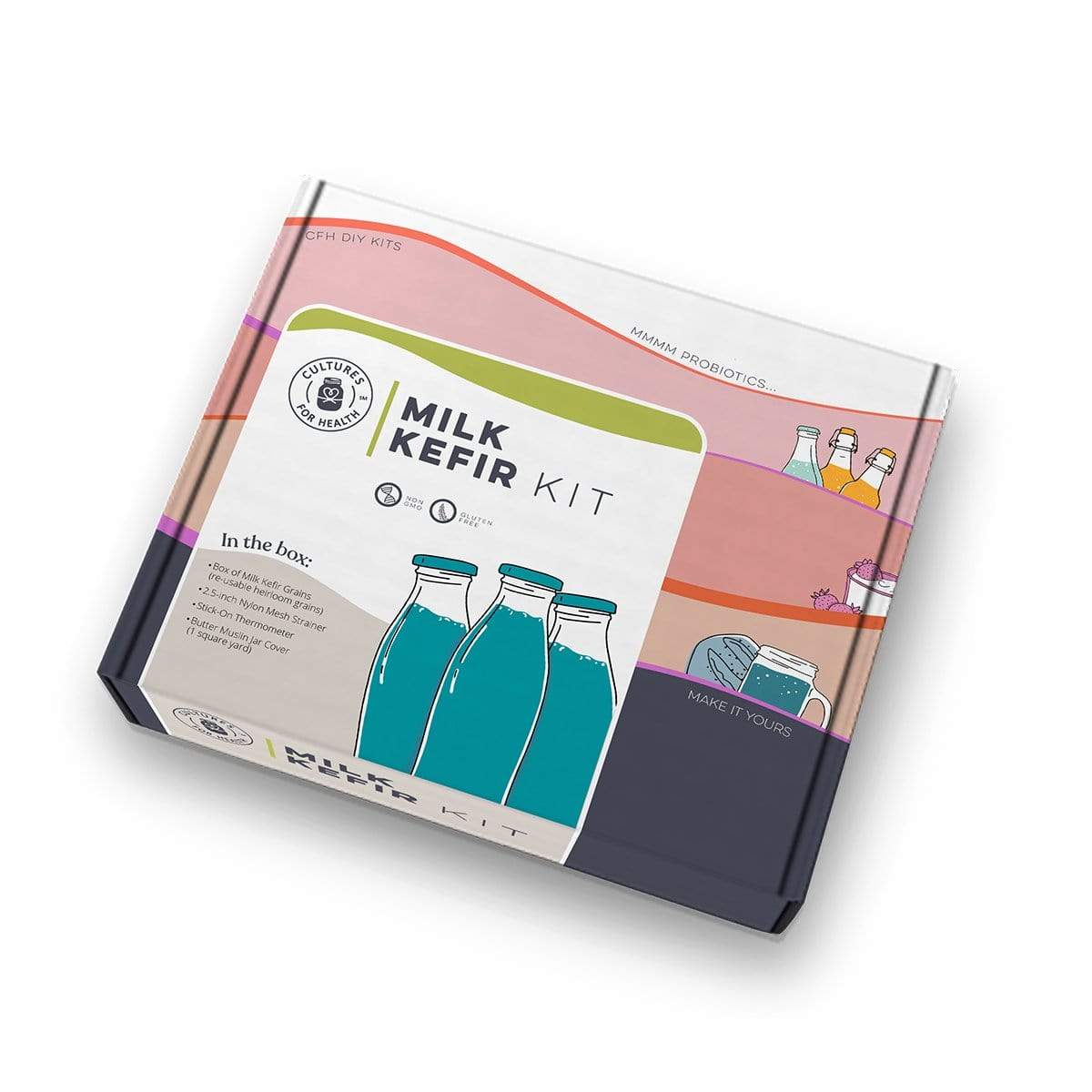

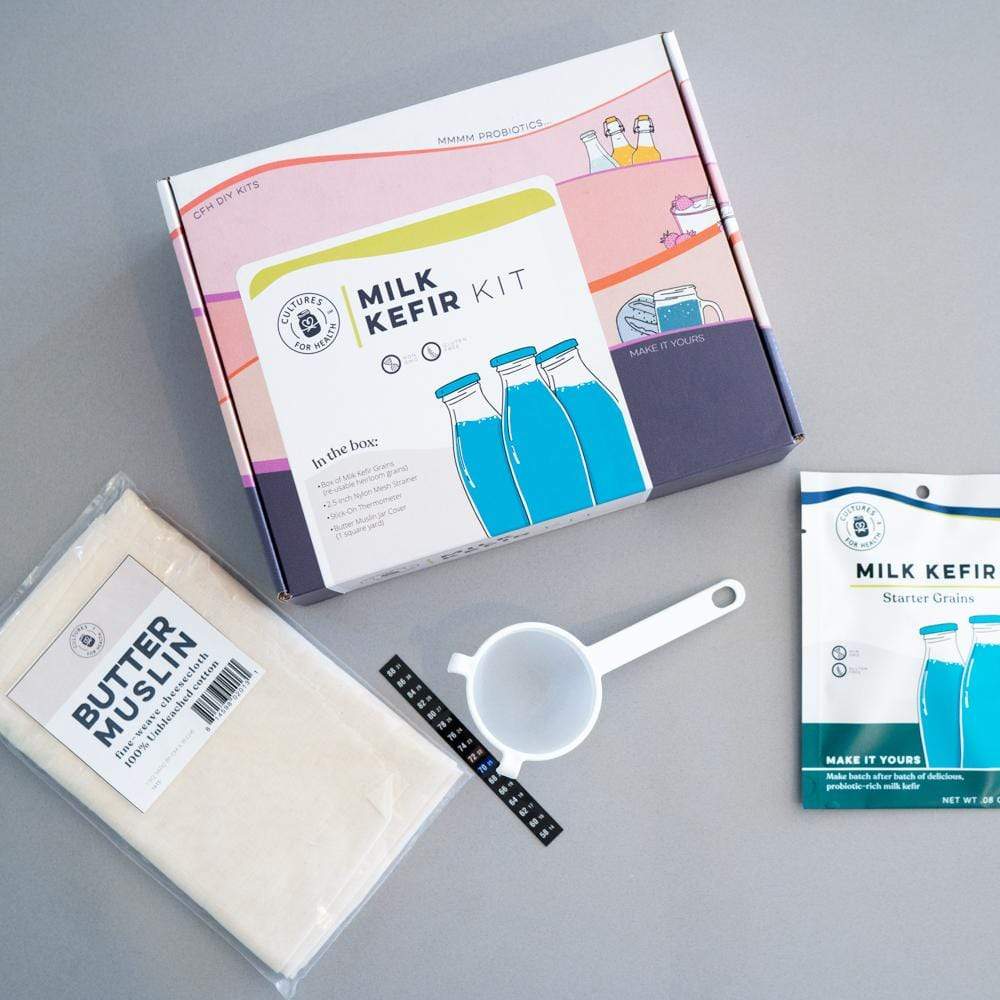
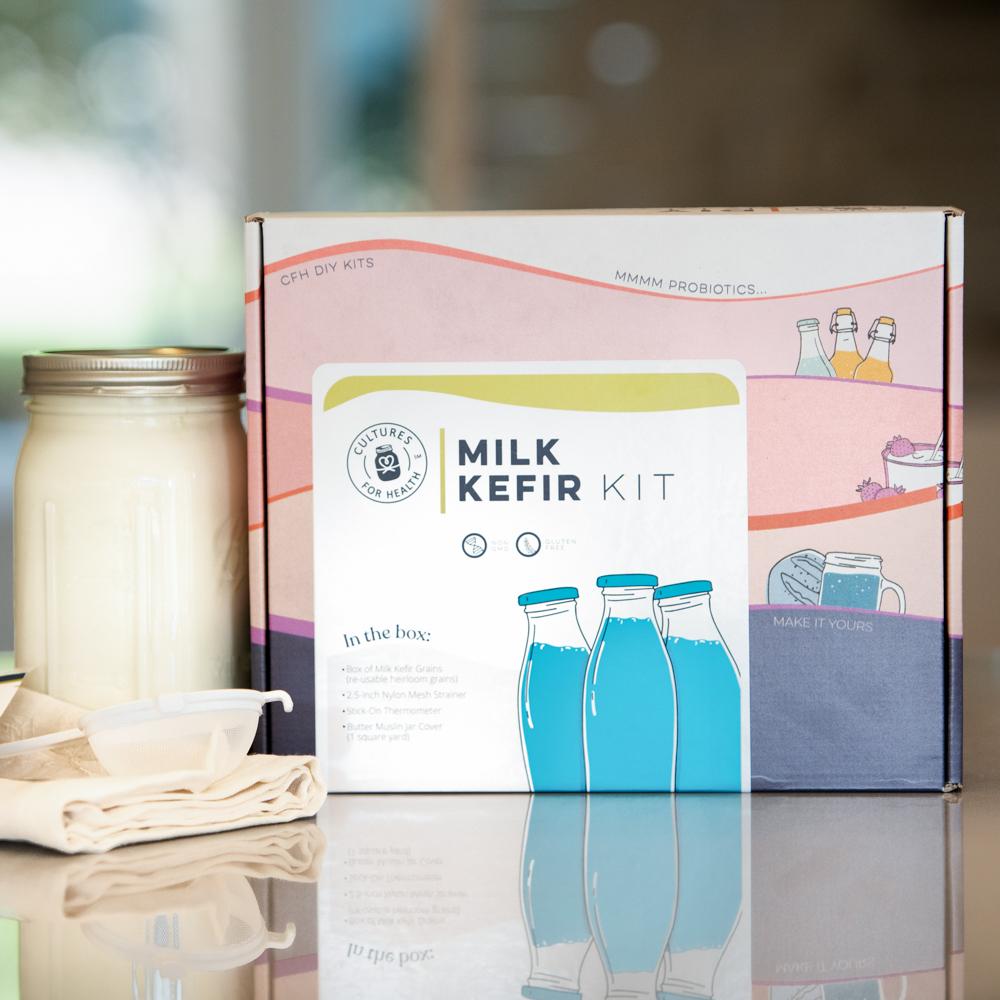


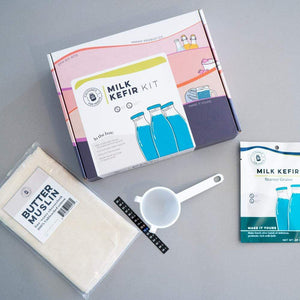

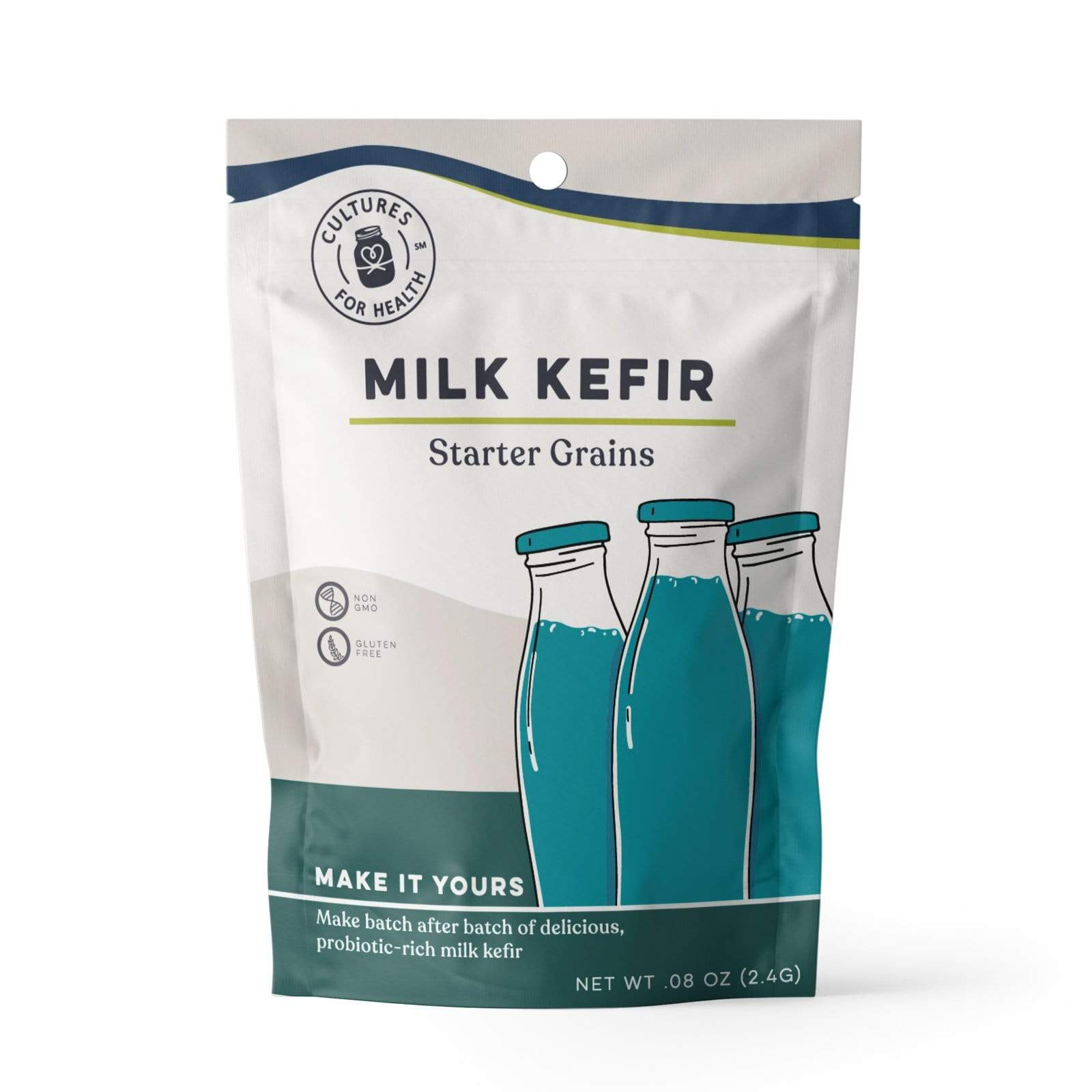
Milk Kefir Starter Kit
When milk is cultured into milk kefir, the culture consumes the lactose. The more time the milk kefir is given to culture, the more lactose is consumed and the more acids are produced. One of the best indications of how much lactose remains is the amount of acids in the end product. More acids present equate to a tangier milk kefir.
Maturing Milk Kefir After Culturing
Once the milk kefir has cultured for 24 hours, there is another step to take, which ensures that the lactose content is as low as possible. This step is called maturing or ripening.
INSTRUCTIONS FOR MATURING MILK KEFIR
- Pour cultured milk kefir (after the grains are removed) into a clean, sealable glass container. Fill about 75% full.
- Place lid on container, but do not seal airtight. A fair amount of carbonation can build up if the container is sealed.
- Once or twice every day, tighten the lid on the container until airtight and shake vigorously. This shaking prevents yeasts and vinegar bacteria from forming a colony on the surface. These colonies may form a fuzzy layer on the top of your kefir if it is not well-shaken once or twice per day. Be sure to loosen the lid again so it is not airtight.
- Milk kefir can be kept for up to 5 days at room temperature in a warm climate and up to 14 days at room temperature in very cool climates. Check the flavor to decide when your milk kefir is to your liking.
- Tighten lid and refrigerate.
If you are highly sensitive to lactose, use caution and be sure to consult your healthcare professional.
Want to start knowing how to make milk kefir? Download our Milk Kefir Guide and Recipe today!