











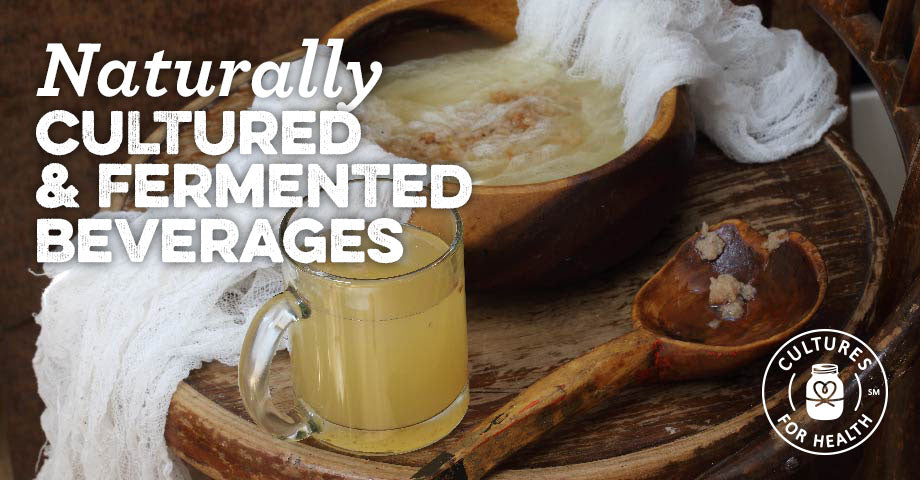
Naturally cultured and fermented beverages are not only a simple way to incorporate more fermented foods into your family's diet, they are often quite easy to make.
LACTO-FERMENTED SODA
Lacto-Fermented Soda: Making lacto-fermented soda at home is not only easy, it's a great way to get kids excited about kicking a commercial soda habit and provide a dose of probiotics. Here are a few recipes to get you started:
LACTO-FERMENTED HERBAL TEA
Lacto-Fermented Herbal Tea: Try this slightly fizzy cultured tea! Click here for an easy recipe uisng herbal tea, sugar, and whey, starter culture, or a few tablespoons of lacto-fermented vegetable brine.

REJUVELAC
Rejuvelac: Made of fermented grains such as wheat, rye, barley, rice, millet, etc. Rejuvelac contains a number of vitamins including eight of the B vitamins as well as vitamins E and K. Rejuvelac is made by sprouting grain and then soaking the grain in water. The water is then consumed. Click here to learn more about making Rejuvelac.
JUICE FROM CULTURED VEGETABLES
Juice from Cultured Vegetables: Don't waste all the liquid left over from making Sauerkraut, Cultured Beets, Carrots, etc. The leftover juice makes a wonderful probiotic-rich beverage. Often the juice will be quite salty and strong so it may need to be watered down a bit depending on your taste preferences. Click here for more information on harvesting the fermented juice from cultured vegetables.
KVASS
Kvass: A traditional fermented beverage originating in Russia and at one point was the most common drink across all classes of society. Kvass can be made with stale rye sourdough bread, beets, or other vegetables. The bread based version tastes somewhat like beer--but without the high alcohol content. Click here for more information on making Orange Ginger Carrot Kvass and Beet Kvass.
SWEET POTATO FLY
Sweet Potato Fly: Sweet potatoes an be used to make this surprisingly delicious lacto-fermented beverage. Spiced with what you please it is reminiscent of a ginger ale or other spice, bubbly beverage.
Like many lacto-fermented foods, it may take some getting used to, but once you acquire a taste you’ll find its sweet, tangy, spicy flavor quite refreshing! Click here for our easy Sweet Potato Fly recipe.
KOMBUCHA
Kombucha: A fermented tea containing significant quantities of B-vitamins, Kombucha is made from a culture often known as a Scoby or Mushroom. The mother culture is composed of yeast and bacteria and is similar to cultures used to make vinegar. The flavor of Kombucha can be influenced by several factors including the type of tea used and the length of time beverage is allowed to ferment (can range from a sweet, slightly acidic beverage to a stronger vinegar-taste). Kombucha can be consumed plain or flavored with fruit, herbs or fruit juice following the initial culturing process. While Kombucha is often available commercially through health food stores, it can run $3+ for 16 oz. but can be made at home for about $1 a gallon. Click here to learn more about making Kombucha at home.
WATER KEFIR
Water Kefir: Made with sugar water, fruit juice or coconut water, water kefir is perhaps one of the most well liked fermented beverages. The slightly sweet, slightly fermented taste makes the perfect background for flavorings such as fruit, juice and even herbs. Made with a culture known as Water Kefir Grains (also known as Tibicos, Japanese Water Crystals, etc.), water kefir is fermented for 24 to 48 hours. The culture itself is comprised of bacteria and yeast existing in a symbiotic relationship. The culture does not contain any grains such as wheat, rye, etc. but rather is referred to as a grain for its crystal grain-like appearance. Click here to learn more about making Water Kefir at home.
DAIRY KEFIR
Dairy Kefir: Traditionally made with cow or goat milk, Dairy Kefir contains a plethora of beneficial yeasts and bacteria. Dairy Kefir is one of the easiest fermented beverages to make and is one we often recommend starting with. Dairy Kefir can be made with Kefir Grains (symbiotic yeast and bacteria comprising a culture that looks like cauliflower) or with powdered Kefir Starter Culture. The culture consumes much of the lactose in the milk yielding a slightly carbonated beverage with a consistency similar to thin yogurt. Kefir can be used as a base for smoothies, salad dressings, creamy soups and more or in place of yogurt or buttermilk in recipes. Dairy Kefir can also be made with coconut milk. Click here to learn more about making Dairy Kefir.