
Details
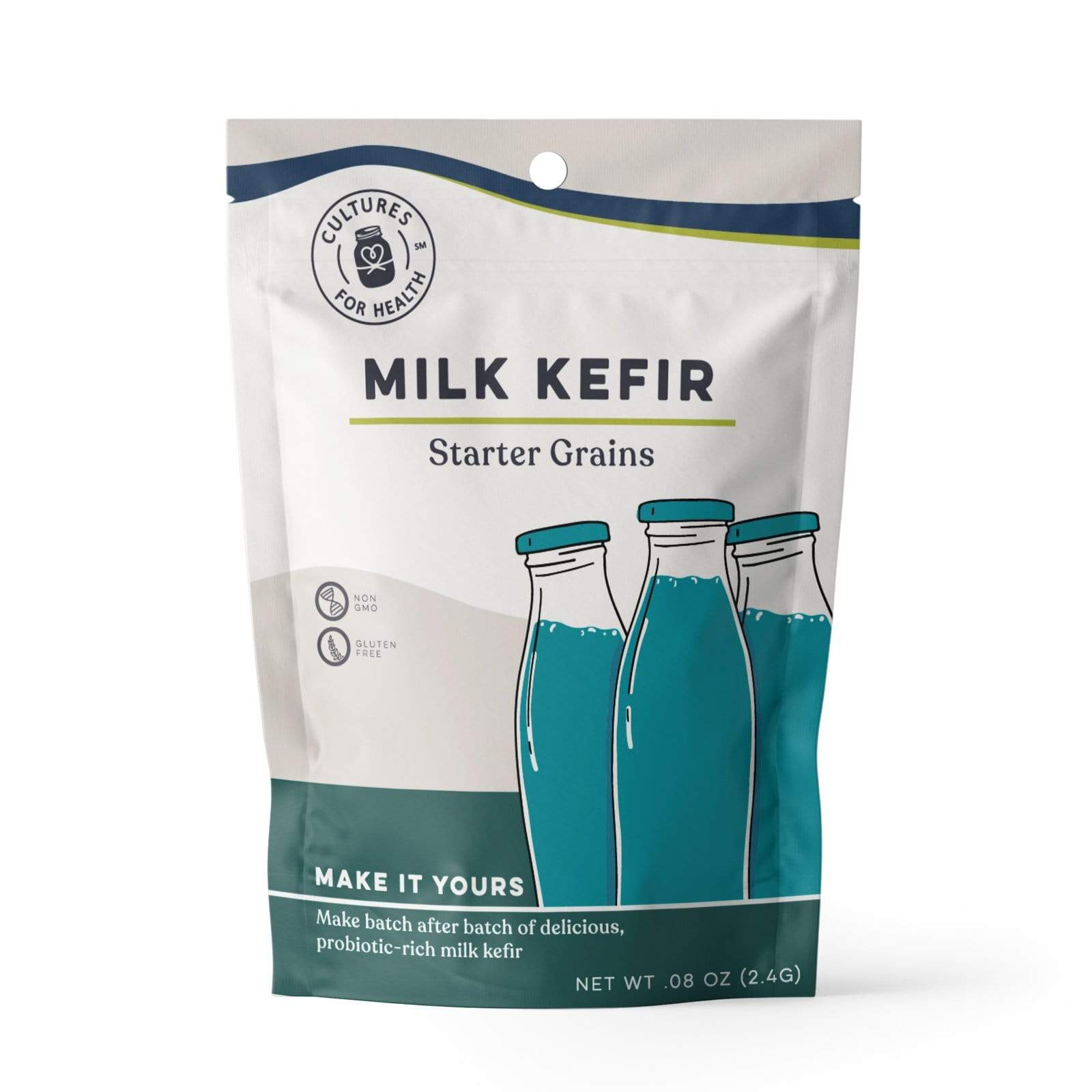
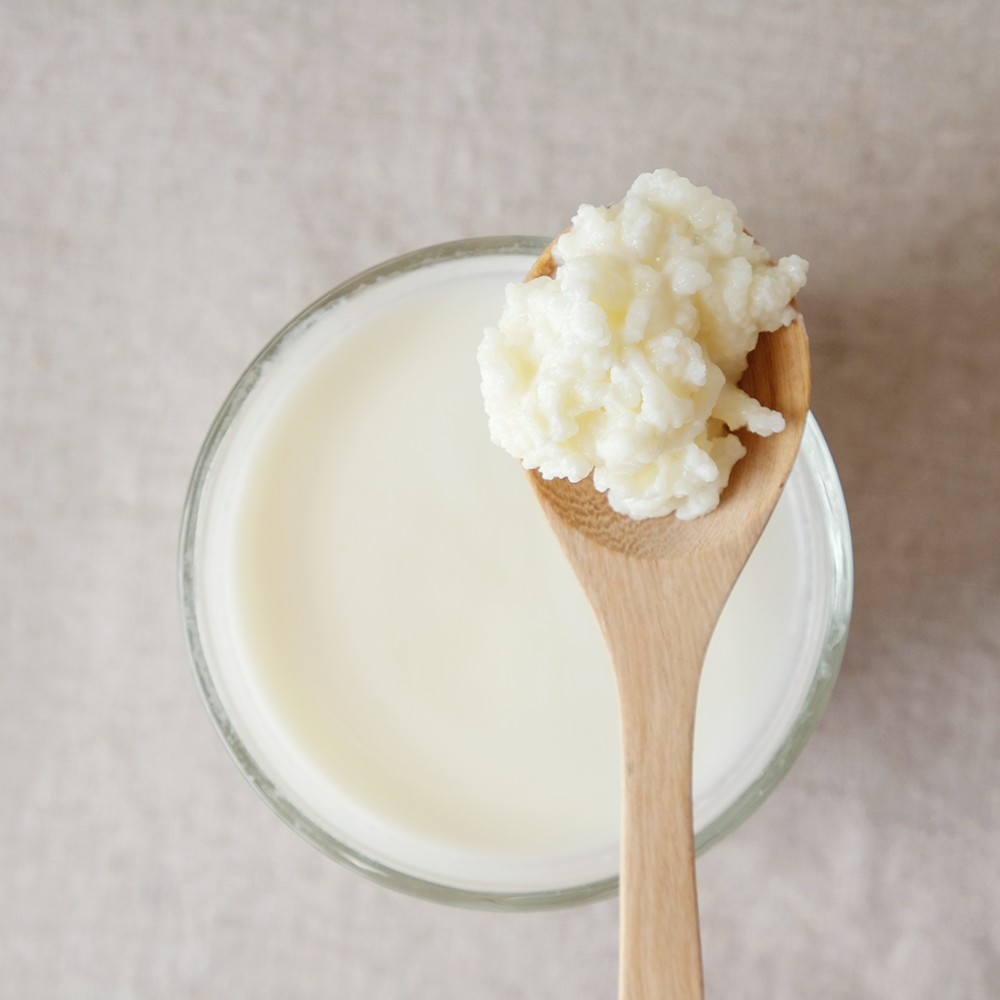
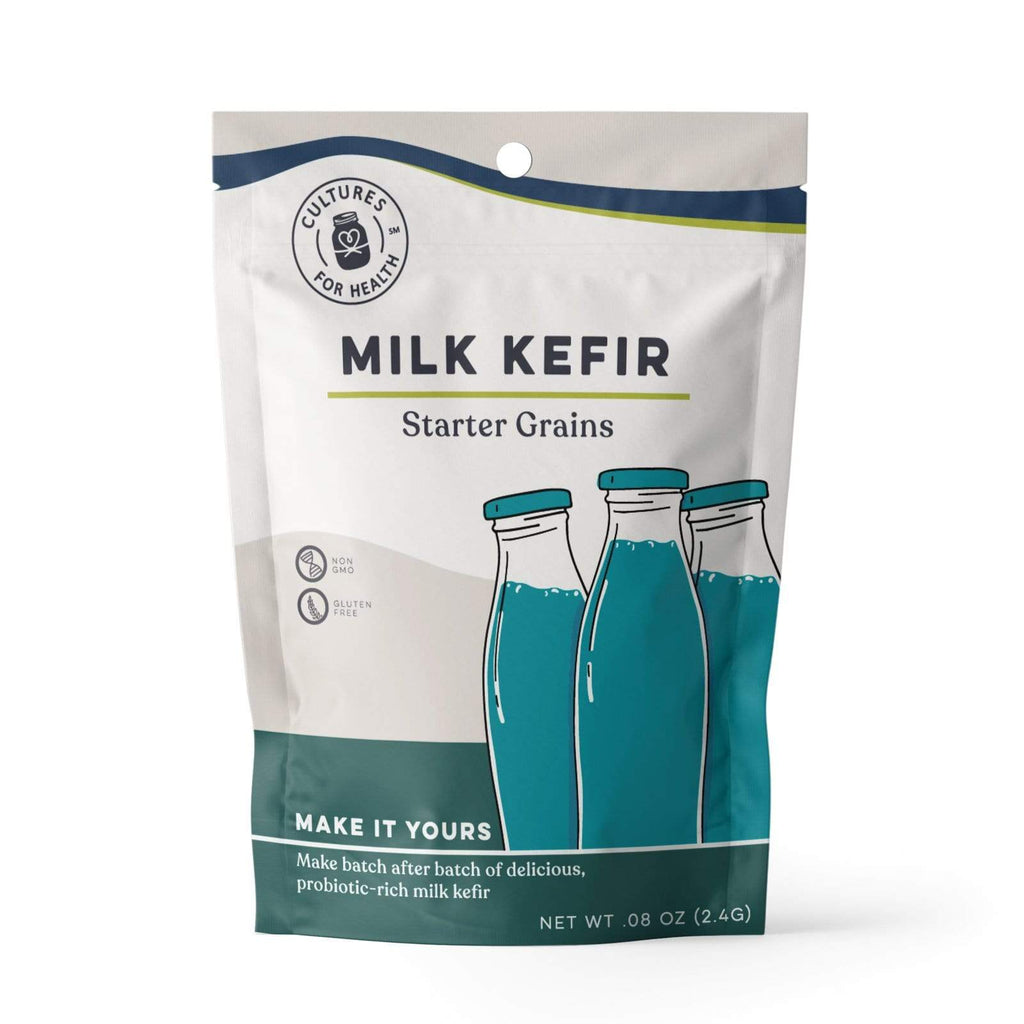
Milk kefir grains are live active cultures consisting of yeast and bacteria which exist in a symbiotic relationship. Adding the kefir grains to fresh milk yields a probiotic drink within 24 to 48 hours. This dairy kefir culture is reusable and with care, will allow you to make kefir over and over again.
- Traditional heirloom-style kefir culture (aka "grains" due to appearance); not a powdered starter culture
- Reusable culture; makes a new batch of kefir every 18-48 hours
- With proper care, the culture can be used indefinitely to create delicious probiotic rich kefir
- Cultures on the counter at 67-80°F, no heating appliance required
- Can be used with cow milk, goat milk and coconut milk (see instructions)
Milk kefir grains are a starter culture which can be used with soy or coconut milk if care is taken to occasionally revitalize them (complete instructions will be included with each order). Coconut kefir in particular is quite thick, rich and delicious. Click here for information on making coconut kefir.
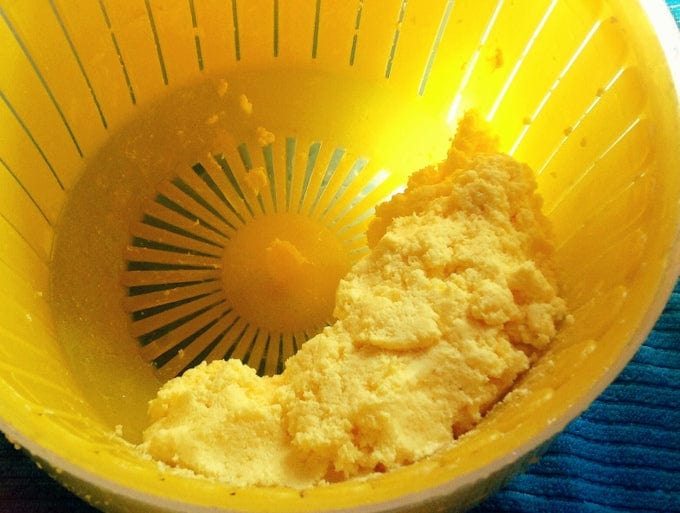
There are numerous uses for kefir including making a type of cream cheese, adding to smoothies and drinking alone. Kefir can also be flavored after it has cultured and the kefir grains have been removed. Click here for more information on the numerous strains of bacteria and yeast generally known to comprise milk kefir grains.
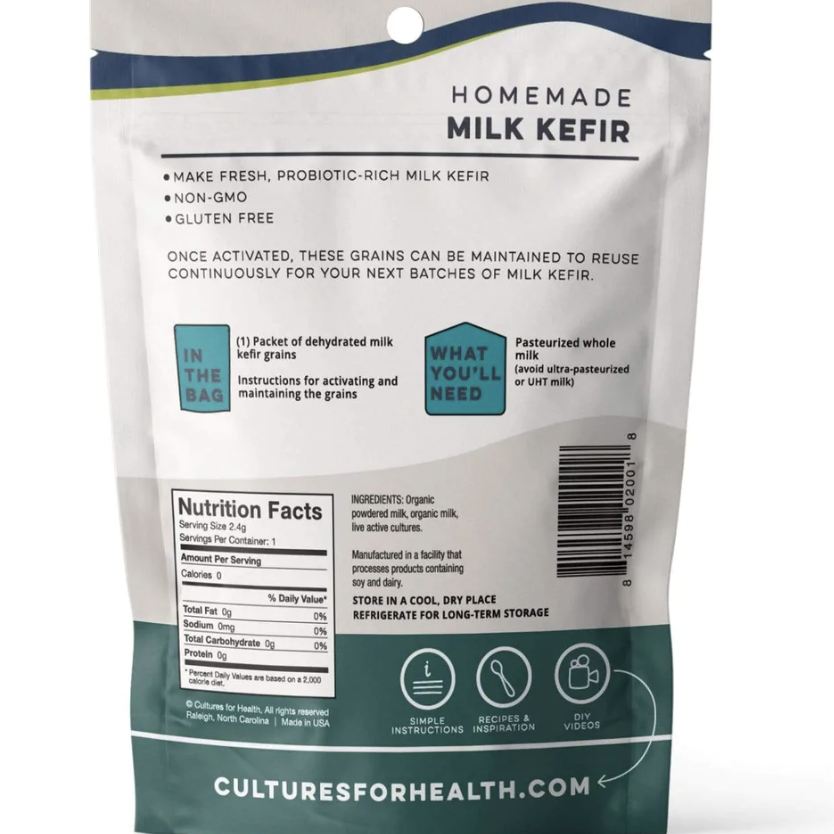
Ingredients: Organic whole milk. Packaged with a small amount of organic powdered milk to extend shelf life.
Milk Kefir Grains are manufactured in a facility that also processes soy, wheat, nut, and fish products.
Shipping Information: Our Milk Kefir Grains are shipped in a dehydrated state in a barrier sealed packet. Upon receipt, the dairy grains can be rehydrated in fresh milk (this process usually takes 5-7 days) and then used to make kefir by adding the grains to fresh milk, stirring, covering and leaving at room temperature until the desired consistency is reached (no more than 48 hours).
Complete instructions are included with each order. Click here to view our kefir instructions.
Questions on Milk Kefir Grains
- From Beth at 12/7/10 9:56 AM
- From Nick at 12/17/10 4:26 PM
- When using milk kefir grains with coconut milk, can it be unsweetened coconut milk that does not contain any sugar?
- I apologize for the delay responding to your message--it looks like we had a system glitch that delayed these messages coming through to us.
Ideally you'd want to use unsweetened coconut milk. Any additives have the potential to interact negatively with the kefir grains and potentially damage them. Unsweetened would be safest. - Do you find this question helpful? Yes No
- From Adam at 1/10/11 7:44 PM
- From Nick at 1/10/11 11:22 AM
- I rehydrated my kefir grains in cow milk and they came out great. I then switch to unsweetened organic coconut milk for two days and the grains no longer seem to be active, even after switching back to cow milk. Do you know why this could be? If the milk is unaffected after 24-36 hours are the grains no longer active? Thanks.
- Kefir grains can take a few days to adjust to a new milk medium. For example, if you switch your kefir grains from cow to goat milk, it can take a few batches for them to adjust to the composition of the new milk and start working properly. Same thing happens if you go from pasteurize cow milk to raw cow milk and sometimes even different brands of milk (feed, etc. can vary from farm to farm). Different chemical compositions can mean an adjustment period of up to a few batches. So go ahead and put them back in coconut milk and give them a batch or two to adjust (maybe just the coconut milk that isn't kefiring in the meantime to cook or in a smoothie or something). They should perk up and start doing their thing in a few days. With coconut milk though you'll need to put them back in cow milk for 24 hours to revitalize for every few weeks they spend in cow milk.
- Do you find this question helpful? Yes No
- From Steena at 1/25/11 4:37 AM
- How many kefir grains are sold in one box? How many are needed for one batch? I'm new to kefir and I'm just wondering if there's enough for a "backup" in this box? Or enough to share with a friend? Thanks!!
- Kefir grains are one of the hardiest cultures so there's just one portion in the box. Kefir grains are a wonderful culture for a beginner because they are very easy to use and it's very rare to mess them up. Kefir grains do generally start to multiply after 6-8 weeks and usually within 3-5 months will have grown enough to have extras to share with friends. We can't guarantee they will multiply since it's due to a large number of factors but it's rare for them not to multiply.
- Do you find this question helpful? Yes No
- From Emma at 1/28/11 8:38 AM
- Hello, what is the quantity (tablespoons?) of the grains once rehydrated? Thank you!
- The milk kefir grains rehydrate to about 2 teaspoons which is sufficient to culture up to a quart of milk every 18-48 hours. Once they begin to multiply, of course, you can culture more milk at one time.
- Do you find this question helpful? Yes No
- From Lynn at 2/6/11 12:31 PM
- Can kefir be made with powdered milk? If so how does this effect quality?
- Well, you could try it... There's not much information around on whether this would work, or how well. One concern is that powdered milk is highly processed, and is usually very low in fat, so it might not produce a suitably thick result. On the other hand, it does contain lactose, so it would provide sufficient food for the grains.
- Do you find this question helpful? Yes No
- From Nick at 2/11/11 7:12 PM
- Can heavy whipping cream be cultured with kefir grains? If so, would heavy whipping cream be sufficient to revitalize the grains when used with coconut milk?
- Heavy whipping cream might be a little too much for a decent result with milk kefir grains. The grains require lactose to survive and reproduce, and there is very little lactose in heavy cream. You could try half-and-half, or even just adding some cream to the milk.
For the same reason, you should use regular milk (whole milk is fine) to revive the grains periodically when you are culturing coconut milk. - Do you find this question helpful? Yes No
- From Madison at 2/12/11 9:02 PM
- Will the grains "go bad" if not used frequently enough? Thanks!
- It's not so much that they would go bad, but they would starve if they don't get fresh milk (for milk grains) or sugar (for water grains). If you want to take a break from making kefir, our packages include instructions for doing that. It's pretty easy.
- Do you find this question helpful? Yes No
- From Terri at 2/21/11 1:48 PM
- Are milk and water kefir grains the same? Or can they be used interchangeably? Of course the need for several days of adjustment?
- Milk kefir grains and water kefir grains are actually different organisms. Milk kefir grains eat lactose (present in milk) and water kefir grains eat glucose/sucrose.
Milk kefir grains can be converted (slowly) to work with water, but they can't be converted back. Water kefir grains can't be converted.
- Do you find this question helpful? Yes No
Ask Your Own Question
Back to the product pageCustomer Reviews
- Wonderful! Review by Jennifer
-
Love the Kefir with blended fruit, and the cream chesse is very tasty! (Posted on February 11, 2012)Quality Value Price
- AMAZING POTENCY & TASTE!!! Review by Laura
-
Even better than I anticipated! Within a week I have been able to make 2 cups of perfectly delicious kefir in 12 hours. This method produces kefir that is MUCH better-tasting and more economical than buying the storebought kind each week. Your milk kefir grains are amazingly potent when kept in a warm area!! THANK YOU!! I have been keeping my kefir in a dark, enclosed area (next to a laundry basket in a corner) with an oil heater to keep it warm (my house is too cold, around 60-65 degrees).Quality Value Price
My only regret is that I didn't buy these kefir grains sooner! (Posted on February 5, 2012)
- Excellent value and quality Review by Shirley
-
I've made kefir for years with the same granules. It makes thicker naturally in cooler weather. Just to have these excellent granules available at all and at this price is marvelous.Price Value Quality
I want to respond to Brad who said that his granules were not growing in size or numbers. I got some granules many years ago. I have given away tons over the years as they grow so fast. One year mine quit growing and got smaller so I talked to an informed person who said that no doubt there were antitbiotics in the milk. We called the goat feed company. Sure enough they had changed the feed and were putting antibiotics in the feed without revealing it on the label. We changed feed and they began growing again. Something is wrong, Brad, and it is probably not the granules. So see if you can find out what. One test is to put only half and half or pure cream on them. They will almost grow before your eyes. So if that works, then you know it is the milk or the way you rinse them or something. Hope this helps. (Posted on January 27, 2012)
- good quality, but.... Review by Brad
-
I've been using them to make tasty Kefir for a couple months now. However, surprisingly the grains are not growing in size and numbers at all. This is not what I expected or have experienced with other kefir cultures in the past. (Posted on November 22, 2011)Quality Price Value
- use these in raw goatmilk. They are awesome! Review by Sueskier
-
Have used them, stored them and reused them! (Posted on July 22, 2011)Quality Price Value
- Great grains Review by Mamamoose
-
I'm happy tohave purchased these--I bought some a long time ago and they worked great for over a year, until my husband fed them to the goats.I happily bought more, and was hoping I could use them in my goat milk, even though previously I had used them only in store bought cow milk. It took a LOT of doing,but they are going great and I woulddef. buy from this company again and again and again... (Posted on July 15, 2011)Value Quality Price
- Love it! Review by Bridget
-
I love my kefir grains! In just a few days I had perfect kefir to add to my smoothies. It only takes about 2 mins a day and I'm saving so much money. Plus, the kefir is way better for you than the store-bought kind. Thanks so much! (Posted on May 4, 2011)Price Value Quality
- Great product Review by Fermenting!
-
Bought these milk kefir grains almost 2 years ago, and had great success with them. Now back to try water kefir! Obviously a caring company. (Posted on May 1, 2011)Price Value Quality
- Great product Review by Ulfa
-
The grains worked after 3 days. Great tasting kefir and easy to make. (Posted on January 25, 2011)Quality Price Value
- Well worth it! Review by Cardamom
-
The instructions were easy to follow, and the kefir set up on the second day. This same batch is now culturing 2 quarts of kefir per day and still going strong!! Our family of 11 loves kefir! (Posted on January 24, 2011)Price Value Quality
- Well worth it! Review by Cardamom
-
The instructions were so easy, and the kefir set up on the second day. I use them now to culture 2 quarts of kefir every day and they are still going strong. My family of 11 loves kefir!! (Posted on January 24, 2011)Price Value Quality
- Excellent grains! Review by LoriA
-
Excellent product, well worth the price. (keep away from cats, they love the kefir grains too!!) (Posted on January 13, 2011)Price Value Quality
- Easy and Productive Review by Cynthia
-
The Kefir Grains worked sooner than directions claimed (we used Organic Milk) said! Yummy! I only wish we had purchased the plastic strainer as we can't find one locally of as fine a mesh. (Posted on January 10, 2011)Value Quality Price
Attention!
Starter cultures, rennet for cheese making and cultured vegetables, juices and condiments are sensitive to excessive heat. Once your order has shipped, an e-mail with tracking information will be sent to you. We encourage you to use the tracking information to anticipate the arrival of your items so they can be removed from the mail box and stored in the refrigerator promptly.