


How to Make Yogurt

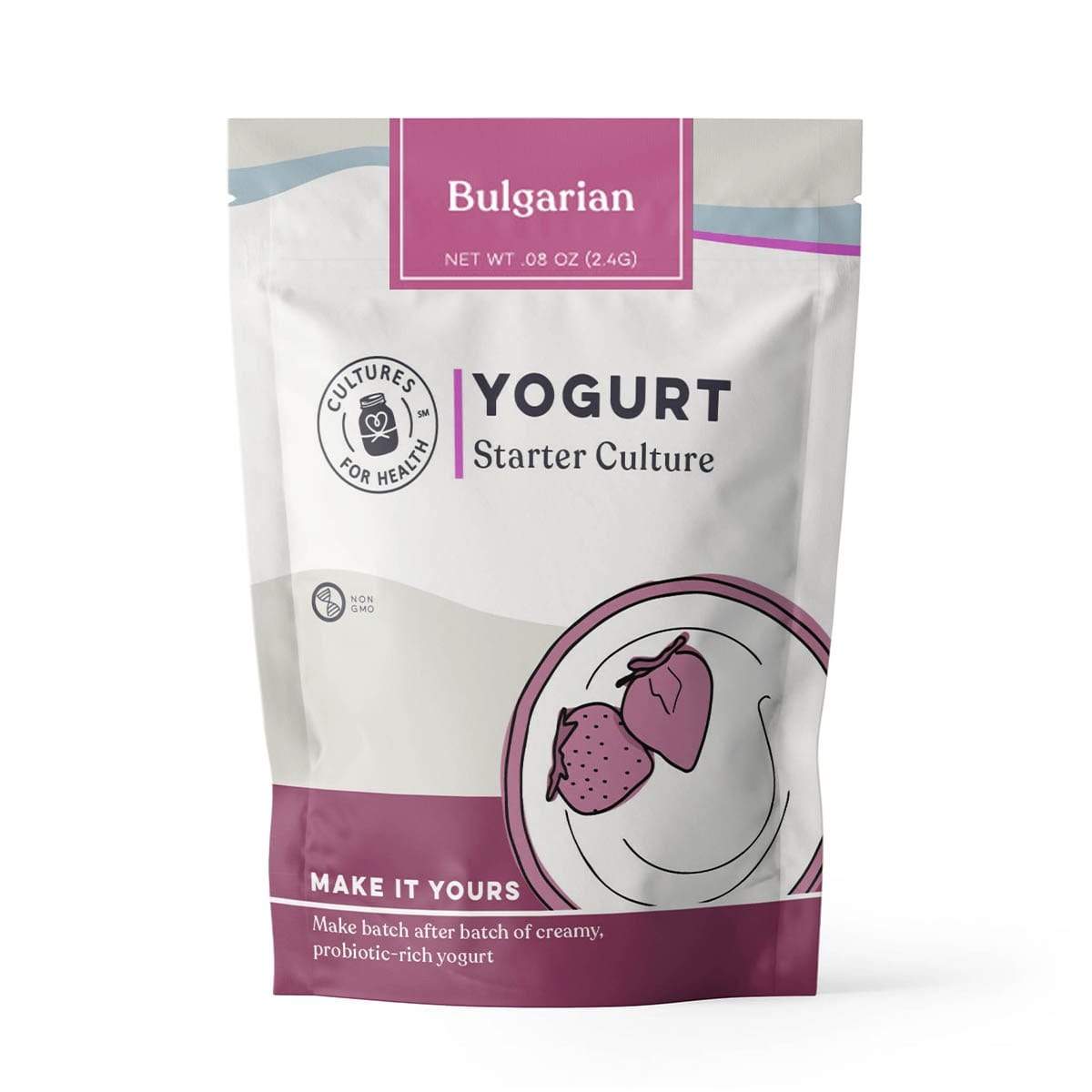
Making yogurt for your family is fun and easy with our comprehensive instructions. The first step is to determine which type of yogurt starter you will be using. There are two main types: Direct-set cultures and Reusable cultures. 

Direct-set cultures are powders that are added to a quantity of milk to produce a single batch of yogurt. With some care, a direct-set starter can be re-cultured two or three times by saving some of the yogurt and adding it to another batch of milk to produce additional yogurt. Eventually, however, a new direct-set starter must be used. 

Reusable cultures can be propagated indefinitely. With each batch, some of the yogurt is saved to add to a new batch of milk to make more yogurt. Reusable cultures should be re-propagated at least every five to seven days to maintain the vigor of the bacteria. Examples of varieties of resuable yogurt cultures include Viili, Filmjolk, Matsoni, Piima, Greek and Bulgarian.


Click here to learn to Make Yogurt with Direct-set Cultures

Click here to learn to Make Yogurt with Reusable Cultures


Making Yogurt with Direct-Set Cultures

The procedure for making yogurt will be pretty much the same regardless of what milk you use or what starter you use. Basically you are going to add bacteria to milk and let it work. However there are two types of culture you can add to the milk: a reusable culture, where you save some yogurt from each batch to culture the next batch; and direct-set, where you add some dried yogurt culture to milk each time you want to make a new batch.

Direct-set cultures are thermophilic (heat-loving), and require a yogurt maker or some other way of keeping the milk warm while it ferments.

You can use pretty much any kind of dairy milk to make a reusable yogurt culture: cow, goat, sheep, even buffalo. The essential ingredients are milk proteins, milkfat, and lactose. The milk can be raw, pasteurized, or vat pasteurized.

Raw milk is milk that has not been pasteurized at high temperatures under pressure. It is also not homogenized. Raw milk is pretty much straight from the cow (or goat), chilled quickly, and bottled for the consumer.

Pasteurized milk has been sterilized at high temperatures under pressure.

Alternative milk can be soy milk, rice milk, nut milk, or any other type of non-dairy milk.

You can also use direct-set cultures to make yogurt with alternative (non-dairy) milks. You can use a dairy-based direct-set culture, or a special non-dairy culture made specifically for non-dairy milks.

Here are the steps for making yogurt with a direct-set culture. Following the table are more detailed instructions and some discussion about each step.


Direct-Set Starter with Raw Milk (low-temperature method)

Direct-Set Starter with Raw or Pasteurized Milk (high-temperature method)

Direct-Set Starter with Alternative Milk

Step 1: Prepare the Milk

Measure out one cup or as much as two quarts of fresh raw milk.

Measure out one cup or as much as two quarts of fresh raw or pasteurized milk.

Use one to two quarts of coconut milk, nut milk, or soy milk and add 1-1/2 to 2 teaspoon sugar per cup. Or, use one to two quarts of rice milk.

Heat the milk to between 110° and 112°F.

Heat the milk to between 160° and 180° F, then cool it down to 110° to 112°F.

Heat the milk to between 108° and 110°F.  (You can heat it more and cool it down if you like.)

Put the milk into a clean glass container, or a plastic insert for a yogurt maker.

Put the milk into a clean glass container, or a plastic insert for a yogurt maker.

Put the milk into a clean glass container, or a plastic insert for a yogurt maker.

Optional: Add cream or powdered milk. Thickeners such as agar, tapioca starch, guar gum, etc. can also be added at this point. Make sure the thickener is thoroughly incorporated into the milk.

Optional: Add cream or powdered milk. Thickeners such as agar, tapioca starch, guar gum, etc. can also be added at this point. Make sure the thickener is thoroughly incorporated into the milk.

Optional: Add thickeners such as agar, tapioca starch, guar gum, etc. Make sure the thickener is thoroughly incorporated into the milk.

Step 2: Inoculate the Milk with the Culture

Add 1/8 teaspoon of starter to one or two quarts of milk. (You can make larger quantities of yogurt by adding 1/4 teaspoon to 1 to 4 gallons of milk.)

Add 1/8 teaspoon of starter to one or two quarts of milk. (You can make larger quantities of yogurt by adding 1/4 teaspoon to 1 to 4 gallons of milk.)

Add 1/8 teaspoon of starter to one or two quarts of milk. (You can make larger quantities of yogurt by adding 1/4 teaspoon to 1 to 4 gallons of milk.)

Stir thoroughly to mix the culture into the milk.

Stir thoroughly to mix the culture into the milk.

Stir thoroughly to mix the culture into the milk.

Put a lid on the jar. If you are using a yogurt maker, you can leave the lid off or put it on.

Put a lid on the jar. If you are using a yogurt maker, you can leave the lid off or put it on.

Put a lid on the jar. If you are using a yogurt maker, you can leave the lid off or put it on.

Step 3: Culture the Milk

Put the inoculated milk in a yogurt maker, or wrap it and put it in a place that will remain at 110° to 112°F.

Put the inoculated milk in a yogurt maker, or wrap it and put it in a place that will remain at 110° to 112°F.

Put the inoculated milk in a yogurt maker, or wrap it and put it in a place that will remain at 108° to 110°F.

Let it sit without being disturbed for 5 to 7 hours.

Let it sit without being disturbed for 5 to 7 hours.

Let it sit without being disturbed for 6 to 8 hours.

Begin to check the yogurt at 5 hours, and again every half hour or so, until it is set.

Begin to check the yogurt at 5 hours, and again every half hour or so, until it is set.

Begin to check the yogurt at 6 hours and again every half hour or so, until it is set.

When the yogurt is set, let it cool for 2 hours to room temperature.

When the yogurt is set, let it cool for 2 hours to room temperature.


Put it in the refrigerator for 6 hours.

Put it in the refrigerator for 6 hours.

Put it in the refrigerator for 6 hours.


Preparing the Milk for Making Yogurt

Whether you are using raw milk or pasteurized milk, the procedure for setting up a batch of mesophilic yogurt is the same: simply measure the milk into the container you will use for culturing. No other preparation needed!

Direct-set cultures need to incubate between 100° and 112°F, so you will need to get the milk warmed up before you introduce the culture.

If you are using pasteurized milk, you must first sterilize it. Some people ask why this is necessary if the milk has already been pasteurized. The answer is that pasteurization kills the natural bacteria that are in milk, so as it ages, the milk can collect and nurture bad bacteria. If you simply warm the milk up to 110°F, the bad bacteria can flourish and make the milk taste unpleasant or even make it harmful. (This is why pasteurized milk has an expiration date, and is not good to use after a certain time.)

Sterilizing the milk just before culturing it makes sure that the milk is completely clean and will present a welcoming environment where the yogurt culture can thrive and do its work. Additionally, heating the milk denatures (changes the characteristics of) the milk proteins, weakening the cell membranes and allowing the protein molecules to adhere to each other, causing better coagulation in the yogurt.

You can sterilize raw milk the same way you do pasteurized milk, but many people like to warm the milk only up to culturing temperature so they can keep the natural bacteria and enzymes that are present in raw milk. (Keep in mind this will also make it less easy for the milk to coagulate, so the resulting yogurt will be thinner than when the milk is heated to 160°F.)

After you’ve heated the milk, you’ll need to cool it back down to 110°F or so. Temperatures over 118°F will kill the bacteria in the yogurt culture.

If you are using an alternative milk, heat it up to culturing temperature, or heat it more and cool it down. Alternative milk can be difficult to culture since its nutritional profile is so different from dairy milk. It will help to add sugar to soy or nut milk, and thickeners can also help provide a more palatable yogurt. This is the point at which to add those things. Consult our article on choosing an alternative milk to see how the different milks compare to dairy milk.

Rice milk is especially hard to make yogurt with because of the very low amount of protein in it. Thickeners can help considerably.

When the milk is ready, put it into the jar or container you will use for culturing. If you’re going to use a collection of small jars, you can put the milk in a larger container, add the culture, then pour the inoculated milk into the small containers.

At this point, you can also add extra dried milk powder and/or thickeners such as agar, cream, tapioca starch, cornstarch, pectin, etc. If you add milk powder, it should be from the same type of animal as the milk you’re using. Whatever you add, mix it up thoroughly in a small amount of milk to dissolve it, then add that to the milk you’ll be culturing.


Inoculating the Milk

You must use the correct proportion of culture. Too much culture in the milk will result in a thin, weak yogurt. The reason for this is that the cultures will compete for food in the milk mixture, and if there are too many cultures, they will use up the food before the yogurt is completely set. A smaller amount of culture will provide a nutritious environment for the culture, so it can do its work and let the milk proteins coagulate properly.

You will use a very small amount of culture: 1/8 teaspoon for 1 to 2 quarts of milk, and 1/4 teaspoon for 1 to 4 gallons of milk. Whatever milk you use, and whatever starter you use, stir the inoculated milk gently but thoroughly to distribute the starter.


Culture the Milk

Now just let the milk sit until it turns into yogurt.

The temperature of the culturing yogurt should remain fairly constant, and the yogurt should not be disturbed as it cultures.

Dairy milk yogurts will set up in 5 to 7 hours, and alternative milk in 6 to 8 hours. You can begin looking at the yogurt at the earliest end of the range, and check it again every half hour or so.

If your kitchen is particularly cool you may need to establish a spot for it that is warm enough, but not too warm to kill the bacteria.

There are several options for keeping the yogurt warm while it cultures:

  • Use a yogurt maker. Make sure the unit is running at a constant temperature between 105° and 112°F by filling the yogurt compartment with water, turning the unit on, and taking the temperature of the water every half hour for a regular culturing cycle (around 7 hours).
  • Wrap the jar in a dishtowel and put it in an insulated cooler with the cover on.
  • Make an insulated incubator out of a small crock pot by lining it with foam. Put the jar of yogurt inside, put a piece of foam on top, and put the lid on.
  • Turn on the light in an electric oven, then put wrap the yogurt in a dishtowel and put it inside the oven.
  • Set the yogurt inside a food dehydrator that has the trays taken out, and that is set for no higher than 110°F.


The amount of time you let the yogurt culture depends on your preference for tartness and texture. The longer it cultures, the more tart it will be, and the more thick. Toward the absolute limit of culturing time, the yogurt may begin to separate into solid (curds) and liquid (whey). The whey is quite nutritious and can be strained off to use in cooking or culturing, or it can be stirred back in to the yogurt.

Separation is usually the result of yogurt culturing either too long or too fast. Once it begins to separate, it is not long before the bacteria will begin to die off, since the separation can be a sign that the lactose has been used up and is not available to feed the bacteria. You may have to experiment with times and temperatures to find the ideal conditions for your yogurt to set up as you like it.

There is a two-hour cooling-off period for thermophilic yogurt, to help ease the transition between the culturing temperature and the refrigeration period. Finished yogurt should be put into the refrigerator for six hours to halt the fermentation.

Once the fermentation has been stopped, it will not restart if you bring the milk back to room temperature.

If you want a thicker yogurt but don’t want to let it culture long enough to separate on its own, you can strain it through a coffee filter after it has been refrigerated and let the whey drain out. This is also how you get a thick Greek-style yogurt.


Making Yogurt with Reusable Cultures

The procedure for making yogurt will be pretty much the same regardless of what milk you use or what starter you use. Basically you are going to add bacteria to milk and let it work. However there are two types of culture you can add to the milk: a reusable culture, where you save some yogurt from each batch to culture the next batch; and direct-set, where you add some dried yogurt culture to milk each time you want to make a new batch.

When you work with a reusable culture, you will take slightly different steps depending on the kind of culture you use and the kind of milk you use. We sell both mesophilic and thermophilic yogurt cultures.

Mesophilic means “medium loving” and refers to a culture that will work at room temperature.

Thermophilic means “heat loving” and refers to a culture that requires a yogurt maker or some other way of keeping the milk warm while it ferments.

 You can use pretty much any kind of dairy milk to make a reusable yogurt culture: cow, goat, sheep, even buffalo. The essential ingredients are milk proteins, milkfat, and lactose. The milk can be raw, pasteurized, or vat pasteurized.

Raw milk is milk that has not been treated at high temperatures under pressure. It is also not homogenized. Raw milk comes straight from the cow (or other animal), chilled quickly, and bottled for the consumer.

Pasteurized milk has been sterilized at high temperatures under pressure.

Vat pasteurized has been heated but not treated with high pressure.

The steps for making yogurt are similar regardless of what type of starter you’re using or what kind of milk, but there are some important differences. Here is a table of the different ways to make yogurt with a reusable culture.

Following the table are more detailed instructions and some discussion about each step.


Mesophilic with Raw Milk 

Mesophilic with Pasteurized Milk 

Thermophilic with Raw Milk

Thermophilic with Pasteurized Milk

Before you start (do this with a new, dehydrated starter): make a mother culture.

Heat one cup of raw milk to 160°F, place in a glass jar, then cool to room temperature. Or, use pasteurized milk at room temperature.

Measure one cup of pasteurized milk into a glass jar.

Heat one cup of raw milk to at least 160°F (but not over 180°F), place in a glass jar, then cool to 110°F.

Heat one cup of pasteurized milk to at least 160°F (but not over 180°F), place in a glass jar, then allow the milk to cool to 110°F.

Add 1/8 teaspoon dried starter, and mix well.

Add 1/8 tsp dried starter and mix well.

Add 1/8 teaspoon dried starter and mix well.

Place 1/2 teaspoon of dehydrated culture and add half the heated milk. Stir well.


Add the rest of the milk and mix again.

Cover with a towel or coffee filter and let sit for 12 to 48 hours between 70° to 78°F.

Cover with a towel or coffee filter and let sit for 12 to 48 hours between 70° and 78°F.

Cover and let sit for 5 to 8 hours at 110°F in a yogurt maker, or wrap it and put it in a place that will remain at 110° to 112°F.

Cover and let sit for 5 to 8 hours at 110°F in a yogurt maker, or wrap it and put it in a place that will remain at 110° to 112°F.

Begin checking the yogurt at 12 hours, and again every hour or so until it is set.

Begin checking the yogurt at 12 hours, and again every hour or so until it is set.

Begin checking the yogurt at 5 hours, and again every half hour or so until it is set.

Begin checking the yogurt at 5 hours, and again every half hour or so until it is set.


When the yogurt is set, let it cool for 2 hours at room temperature.

When the yogurt is set, let it cool for 2 hours at room temperature.

When the yogurt is set, put it in the refrigerator for 6 hours.

When the yogurt is set, put it in the refrigerator for 6 hours.

After the yogurt is cool, put it in the refrigerator for 6 hours.

After the yogurt is cool, put it in the refrigerator for 6 hours.

Step 1: Prepare the milk.


Measure out one cup or as much as two quarts of fresh raw milk.

Measure out one cup or as much as two quarts of fresh pasteurized milk.


Heat fresh milk to between 110° and 112°F.

Heat fresh milk to between 160° and 180°F then cool it down to 110° to 112°F.

Put fresh milk in a clean glass jar. Use as little as one cup or as much as two quarts.

Put fresh milk in a clean glass jar. Use as little as one cup or as much as two quarts.

Put the milk into a clean glass container, or a plastic insert for a yogurt maker.

Put the milk into a clean glass container, or a plastic insert for a yogurt maker.

Optional: Add cream or powdered milk. Thickeners such as agar, tapioca starch, guar gum, etc. can also be added at this point. Make sure the thickener is thoroughly incorporated into the milk.

Optional: Add cream or powdered milk. Thickeners such as agar, tapioca starch, guar gum, etc. can also be added at this point. Make sure the thickener is thoroughly incorporated into the milk.

Optional: Add cream or powdered milk. Thickeners such as agar, tapioca starch, guar gum, etc. can also be added at this point. Make sure the thickener is thoroughly incorporated into the milk..

Optional: Add cream or powdered milk. Thickeners such as agar, tapioca starch, guar gum, etc. can also be added at this point. Make sure the thickener is thoroughly incorporated into the milk.

Step 2: Inoculate the milk with the prepared culture.

Add some mother culture in the propor­tion of one table­spoon of mother culture for each cup of milk, up to two quarts. Don’t forget to save at least one tablespoon of mother culture to make more. Do not use yogurt from previous batches to make new yogurt. (See Step 4.)

For your first batch of yogurt, add one tablespoon of mother culture to the milk. For subsequent batches, add yogurt from the previous batch into the fresh milk. Use the propor­tion of one table­spoon of culture or yogurt for each cup of milk, up to two quarts.

Add some mother culture to the milk in the proportion of 1-1/2 to 2 teaspoons of mother culture for each cup of milk, up to two quarts. Don’t forget to save some mother culture to make more. Do not use yogurt from previous batches to make new yogurt. (See Step 4.)

For your first batch of yogurt, add 1-1/2 to 2 teaspoons of mother culture to the milk. For subsequent batches, add yogurt from the previous batch into the fresh milk. Use the propor­tion of 1-1/2 to 2 teaspoons of culture or yogurt for each cup of milk, up to two quarts.

Stir thoroughly to mix the culture into the milk.

Stir thoroughly to mix the culture into the milk.

Stir thoroughly to mix the culture into the milk.

Stir thoroughly to mix the culture into the milk.

Cover the milk with a coffee filter or clean towel and secure the cover with a rubber band.

Cover the milk with a coffee filter or clean towel and secure the cover with a rubber band.

Put a lid on the jar. If you are using a yogurt maker, you can leave the lid off or put it on.

Put a lid on the jar. If you are using a yogurt maker, you can leave the lid off or put it on.

Step 3: Culture the milk.

Put the inoculated milk in a place that will remain at 70° to 78°F.

Put the inoculated milk in a place that will remain at 70° to 78°F.

Put the inoculated milk in a yogurt maker, or wrap it and put it in a place that will remain at 110° to 112°F.

Put the inoculated milk in a yogurt maker, or wrap it and put it in a place that will remain at 110° to 112°F.

Let it sit without being disturbed for 12 to 18 hours.

Let it sit without being disturbed for 12 to 18 hours.

Let it sit without being disturbed for 5 to 7 hours.

Let it sit without being disturbed for 5 to 7 hours.

Begin to check the yogurt at 12 hours, and again every half hour or so until it is set.

Begin to check the yogurt at 12 hours, and again every half hour or so until it is set.

Begin to check the yogurt at 5 hours, and again every half hour or so, until it is set.

Begin to check the yogurt at 5 hours, and again every hour or so, until it is set.


When the yogurt is set, let it cool for 2 hours to room temperature.

When the yogurt is set, let it cool for 2 hours to room temperature.

Put it in the refrigerator for 6 hours.

Put it in the refrigerator for 6 hours.

Put it in the refrigerator for 6 hours.

Put it in the refrigerator for 6 hours.

Step 4: Make a new mother culture (for raw milk yogurt).

Heat one cup of raw milk to 160°F, then cool to room temperature, or use pasteurized milk at room temperature.


Heat one cup of milk to at least 160°F  (but not over 180°F), then allow the milk to cool to 110°F.


Add one tablespoon of the previous mother culture and mix well.

Add 1-1/2 to 2 teaspoons of the previous mother culture and mix well.

Cover and let sit for 12 to 48 hours between 70° to 78°F.

Cover and let sit for 5 to 7 hours at 110°F.

When the yogurt is set, put it in the refrigerator for 6 hours.

When the yogurt is set, let it cool for 2 hours at room temperature.


After the yogurt is cool, put it in the refrigerator for 6 hours.


Preparing the Mother Culture

This is a very important step, whether you are using raw or pasteurized milk, and whether you are using a mesophilic or thermophilic culture. The reason for doing this is that the dehydrated culture has been in a state of hibernation so it can be shipped to you. It is not yet active, and the first time you use it, the bacteria will not be up to their full strength. So, you let them work in a very small amount of milk to become established and multiply.

Once the culture is established, it will multiply and become more vigorous and hardy. If you’re using pasteurized milk, the resulting yogurt will contain live, strong bacteria, and you can use some of that yogurt to culture a new batch.

If you are using raw milk, you’re also making the mother culture so you can perpetuate it for culturing additional batches of milk each time you make yogurt. Raw milk contains many of its own bacteria that multiply over time, and compete with the yogurt culture. When you make a mother culture with raw milk, you must first sterilize a small quantity of the milk to give the yogurt culture a safe environment in which it can reproduce.

The package you get from Cultures for Health contains enough starter to make two mother cultures, so if you have any problems with the first one, you can try again. Once you have a mother culture established, you can either throw away the leftover starter, or make an extra mother culture with it. It's generally only good to use as a starter for seven days once you have opened the package.


Preparing the Milk for Making Yogurt

Whether you are using raw milk or pasteurized milk, the procedure for setting up a batch of mesophilic yogurt is the same: simply measure the milk into the container you will use for culturing. No other preparation needed!

For mesophilic yogurt, the milk should be at room temperature, which is between about 68° and 78°F. The warmer the room is, the faster the yogurt will culture. If you have stored the milk in the refrigerator, it’s easier on the cultures to let the milk warm up to room temperature before you add the cultures.

A thermophilic culture needs to incubate between 100° and 112°F, so you will need to get the milk warmed up before you introduce the culture.

If you are using pasteurized milk, you must first sterilize it. Some people ask why this is necessary if the milk has already been pasteurized. The answer is that pasteurization kills the natural bacteria that are in milk, so as it ages, the milk can collect and nurture bad bacteria. If you simply warm the milk up to 110°F, the bad bacteria can flourish and make the milk taste unpleasant or even make it harmful. (This is why pasteurized milk has an expiration date, and is not good to use after a certain time.)

Sterilizing the milk just before culturing it makes sure that the milk is completely clean and will present a welcoming environment where the yogurt culture can thrive and do its work. Additionally, heating the milk denatures (changes the characteristics of) the milk proteins, weakening the cell membranes and allowing the protein molecules to adhere to each other, causing better coagulation in the yogurt.

You can sterilize raw milk the same way you do pasteurized milk, but many people like to warm the milk only up to culturing temperature so they can keep the natural bacteria and enzymes present in raw milk. (Keep in mind this will also make it less easy for the milk to coagulate, so the resulting yogurt will be thinner than when the milk is heated to 160°F first.)

After you’ve heated the milk, you’ll need to cool it back down to 110°F or so. Temperatures over 118°F will kill the bacteria in the yogurt culture.

When the milk is ready, put it into the jar or container you will use for culturing. If you’re going to use a collection of small jars, you can put the milk in a larger container, add the culture, then pour the inoculated milk into the small containers.

At this point, you can also add extra dried milk powder and/or thickeners such as agar, cream, tapioca starch, cornstarch, pectin, etc. If you add milk powder, it should be from the same type of animal as the milk you’re using. Whatever you add, mix it up thoroughly in a small amount of milk to dissolve it, then add that to the milk you’ll be culturing.


Inoculating the Milk

There are two very important things to remember when you are adding the yogurt culture to the prepared milk.

First: You must use the correct proportion of culture. Too much culture in the milk will result in a thin, weak yogurt. The reason for this is that the cultures will compete for food in the milk mixture, and if there are too many cultures, they will use up the food before the yogurt is completely set. A smaller amount of culture will provide a nutritious environment for the culture, so it can do its work and let the milk proteins coagulate properly.

Second: if you are working with raw milk, you must remember to leave enough of the mother culture to make a new mother culture. The bacteria will not remain strong enough in the raw milk to be reusable batch after batch, so you must continue to make small quantities of yogurt with sterilized milk. You can then use that mother culture each time you make a new batch of yogurt.

Raw Milk Yogurt Innoculation Graphic

For the first batch of yogurt, you will add mother culture to the prepared milk.

For a mesophilic culture, add mother culture in the proportion of 1 tablespoon to 1 cup of milk. Since you made 1 cup of mother culture, you will have 16 tablespoons: enough to make 16 cups of yogurt if you’re using pasteurized milk.

If you’re using raw milk, you’ll have enough mother culture for 15 cups of yogurt plus 1 cup of new mother culture. This will give you plenty of mother culture to make yogurt and more mother culture, and even some left over.

For a thermophilic culture, add the mother culture in the proportion of 1.5 to 2 teaspoons of mother culture to 1 cup of milk. (That works out to a little less than 3 tablespoons per quart.) Since you made 1 cup of mother culture, you will have enough mother culture to make 24 to 32 cups of yogurt (6 to 8 quarts)! However, it is difficult to maintain the proper culturing temperature with quantities larger than 2 quarts, so if you are making large quantities of yogurt, you must either make it in smaller containers, or set up a way to keep a larger container at a consistent temperature.

If you are using your thermophilic culture with raw milk, don’t forget to hold some of the mother culture aside to make more mother culture.

Whatever milk you use, and whatever starter you use, stir the inoculated milk gently but thoroughly to distribute the starter.


Culture the Milk

Now just let the milk sit until it turns into yogurt.

The temperature of the culturing yogurt should remain fairly constant, and the yogurt should not be disturbed as it cultures. A mesophilic yogurt can sit on a countertop.

Mesophilic yogurt will set up in 12 to 48 hours, and thermophilic yogurt in 5 to 7 hours. You can begin looking at the yogurt at the earliest end of the range, and check it again every half hour or so.

If your kitchen is particularly cool you may need to establish a spot for it that is warm enough, but not too warm to kill the bacteria.

For a mesophilic yogurt, some options for keeping it warm are:

  • Set it in a high spot where the ambient temperature is likely to be warmer, like on top of a refrigerator, or in a high cabinet.
  • Put it on top of a piece of electronic equipment that is always on, such as a DVR. (Make sure the jar it is on a tray or in pan to avoid accidental spills.
  • Check with a local nursery or garden shop for a “seedling mat” that can be set to around 75°F.
  • Turn on the light in an electric oven, then put the yogurt on top of the oven where some of the internal heat from the stove can warm the oven surface.


For a thermophilic yogurt, there are also several options:

  • Use a yogurt maker. Make sure the unit is running at a constant temperature between 105° and 112°F by filling the yogurt compartment with water, turning the unit on, and taking the temperature of the water every half hour for a regular culturing cycle (around 7 hours).
  • Wrap the jar in a dishtowel and put it in an insulated cooler with the cover on.
  • Make an insulated incubator out of a small crock pot by lining it with foam. Put the jar of yogurt inside, put a piece of foam on top, and put the lid on.
  • Turn on the light in an electric oven, then put wrap the yogurt in a dishtowel and put it inside the oven.
  • Set the yogurt inside a food dehydrator that has the trays taken out, and that is set for no higher than 110°F.


The amount of time you let the yogurt culture depends on your preference for tartness and texture. The longer it cultures, the more tart it will be, and the more thick. Toward the absolute limit of culturing time, the yogurt may begin to separate into solid (curds) and liquid (whey). The whey is quite nutritious and can be strained off to use in cooking or culturing, or it can be stirred back in to the yogurt.

Separation is usually the result of yogurt culturing either too long or too fast. Once it begins to separate, it is not long before the bacteria will begin to die off, since the separation can be a sign that the lactose has been used up and is not available to feed the bacteria. You may have to experiment with times and temperatures to find the ideal conditions for your yogurt to set up as you like it.

There is a two-hour cooling-off period for thermophilic yogurt, to help ease the transition between the culturing temperature and the refrigeration period. Finished yogurt should be put into the refrigerator for six hours to halt the fermentation.

Once the fermentation has been stopped, it will not restart if you bring the milk back to room temperature.

If you want a thicker yogurt but don’t want to let it culture long enough to separate on its own, you can strain it through a coffee filter after it has been refrigerated, and let the whey drain out. This is also how you get a thick Greek-style yogurt.

Make a New Mother Culture

If you’re using raw milk with a mesophilic culture, or with a thermophilic culture and only heating it to 110°F, you will have to make a new mother culture to inoculate your next batch of yogurt.

You should re-culture the mother culture within seven days to make sure the bacteria stay strong. If you have extra mother culture after you have inoculated the yogurt and made more mother culture, you can eat it just like any other yogurt.