










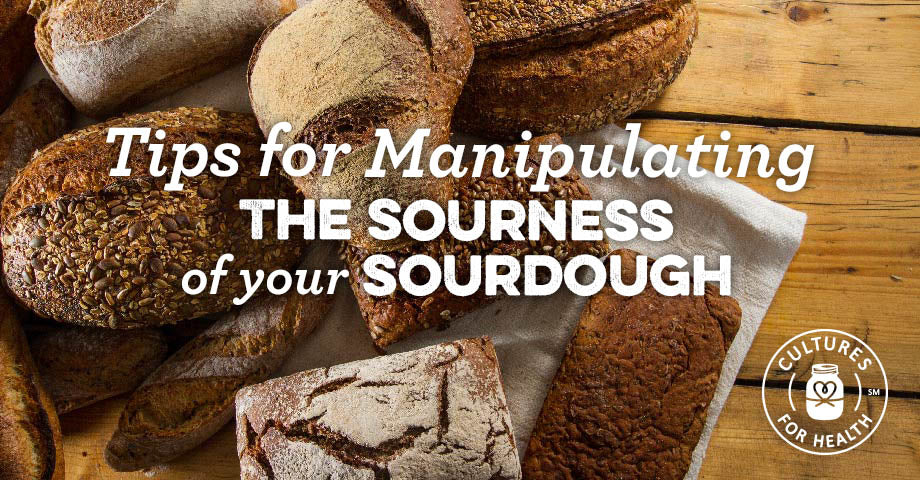
Did you know that the term ‘sourdough’ doesn't necessarily refer to flavor, but actually refers to the process of souring or fermenting bread dough?
Whether you prefer a tangy flavor to your sourdough bread kit or a more mild taste, you can learn to manipulate your sourdough starter and dough to produce a bread that tastes great to you and your family.
Click to download our Sourdough Guide today, which contains tips and tricks on making sourdough bread that is more sour and flavorful to get the desired results.
HOW TO MAKE A MORE SOUR SOURDOUGH
There are two main acids produced in a sourdough culture: lactic acid and acetic acid. Acetic acid, or vinegar, is the acid that gives sourdough much of its tang.
Giving acetic acid-producing organisms optimal conditions to thrive and multiply will produce a more tangy finished product. Here are some ways to achieve this.
1. Adjust the Starter
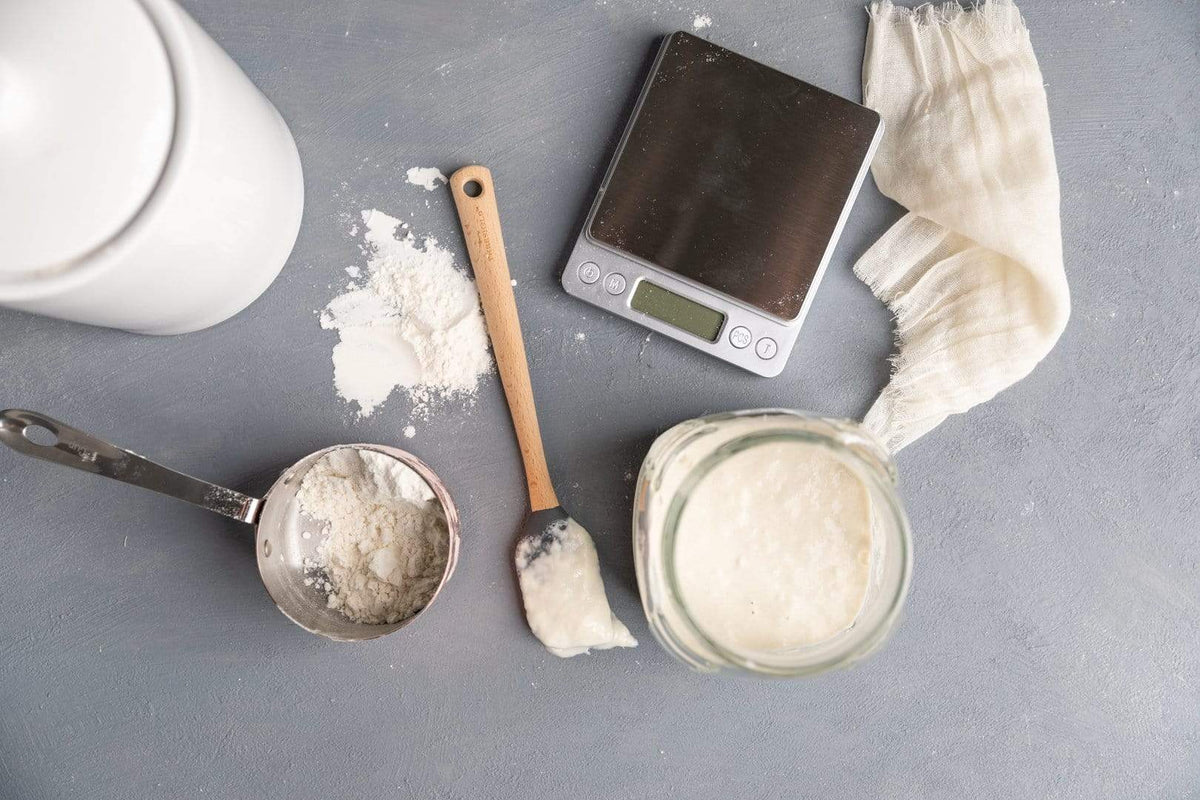
- Maintain your starter at a lower hydration level. This means using a higher ratio of flour to water. Acetic acid is produced more abundantly in a drier environment like this while lactic acid-producing organisms seem to thrive in a wet environment.
- Use whole-grain flours, which the acid-producing bacteria love.
-
Keep the hooch or brown liquid layer that forms on a hungry sourdough starter instead of pouring it off. Retaining hooch can add acidity to sourdough and help it develop tang.
2. Adjust the Bread Dough
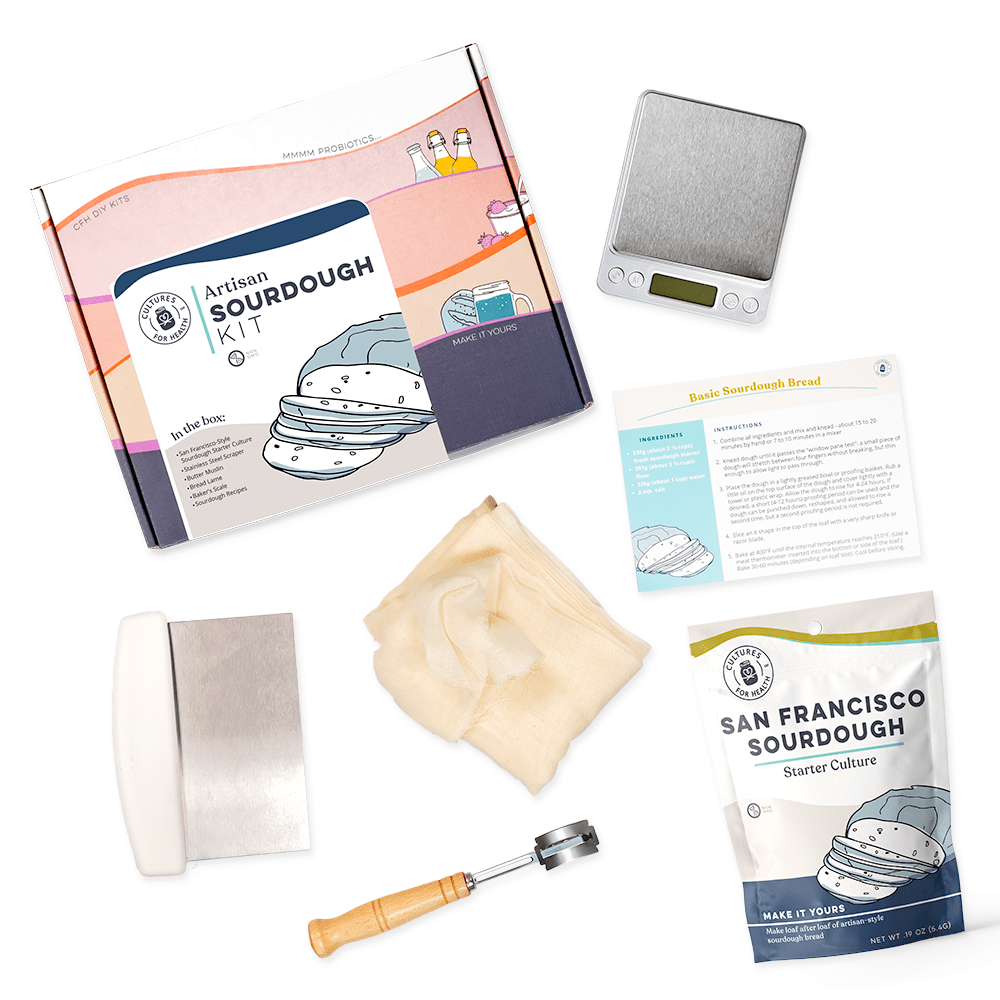
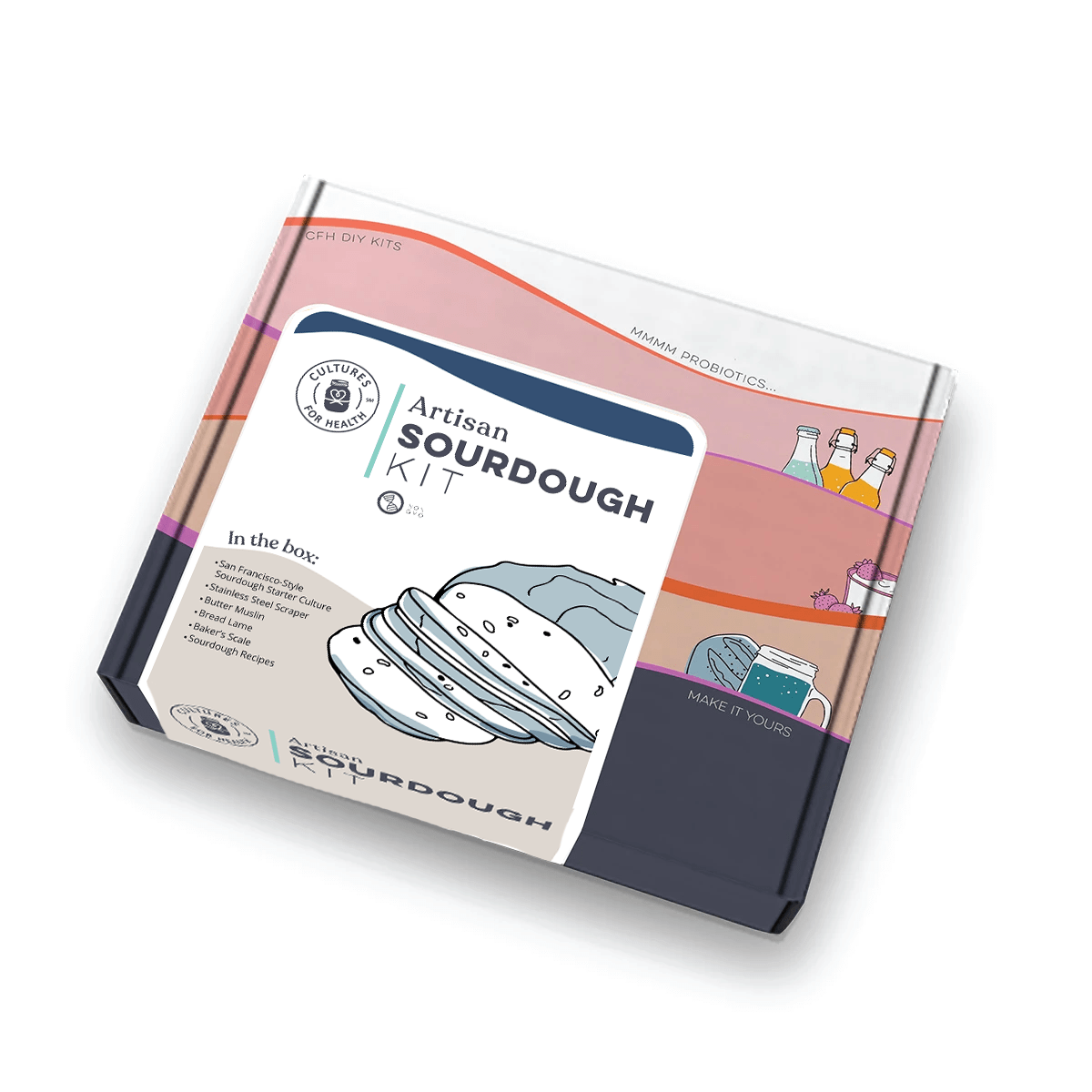

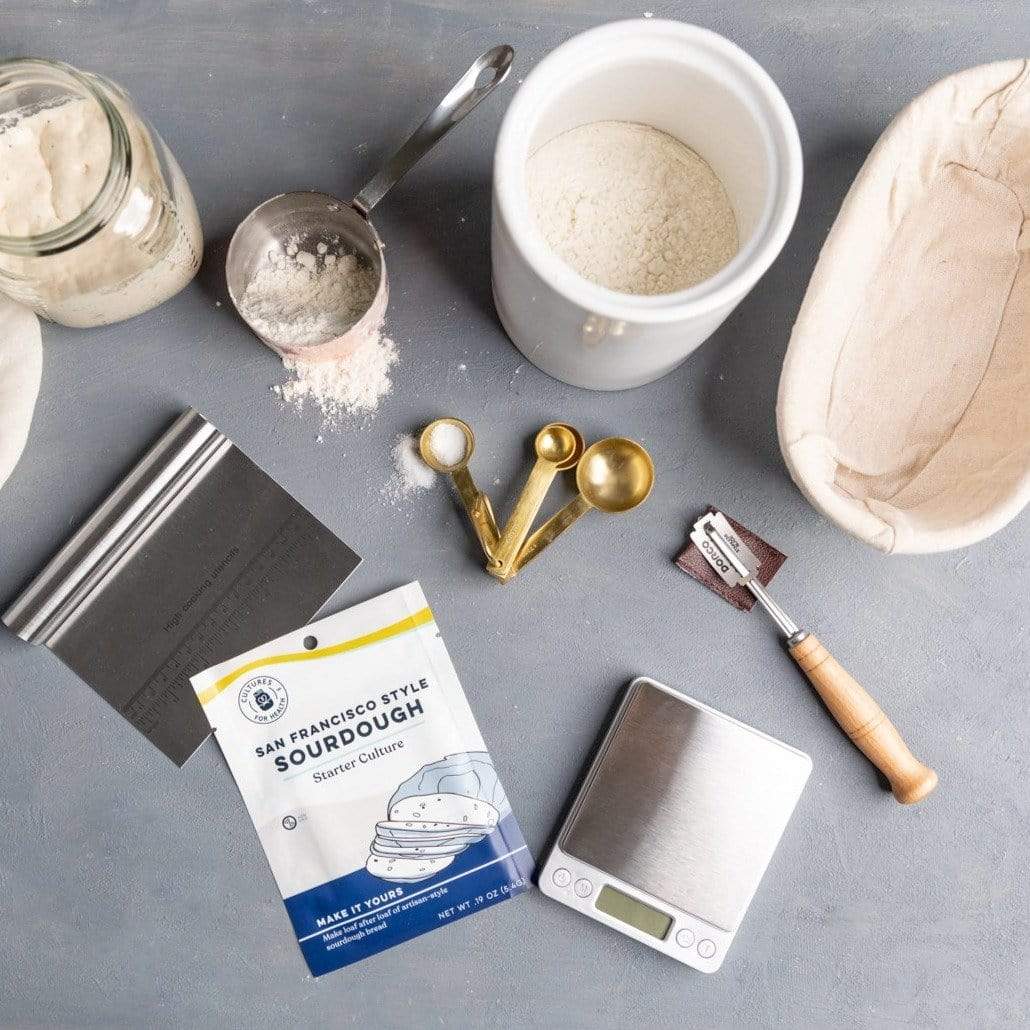
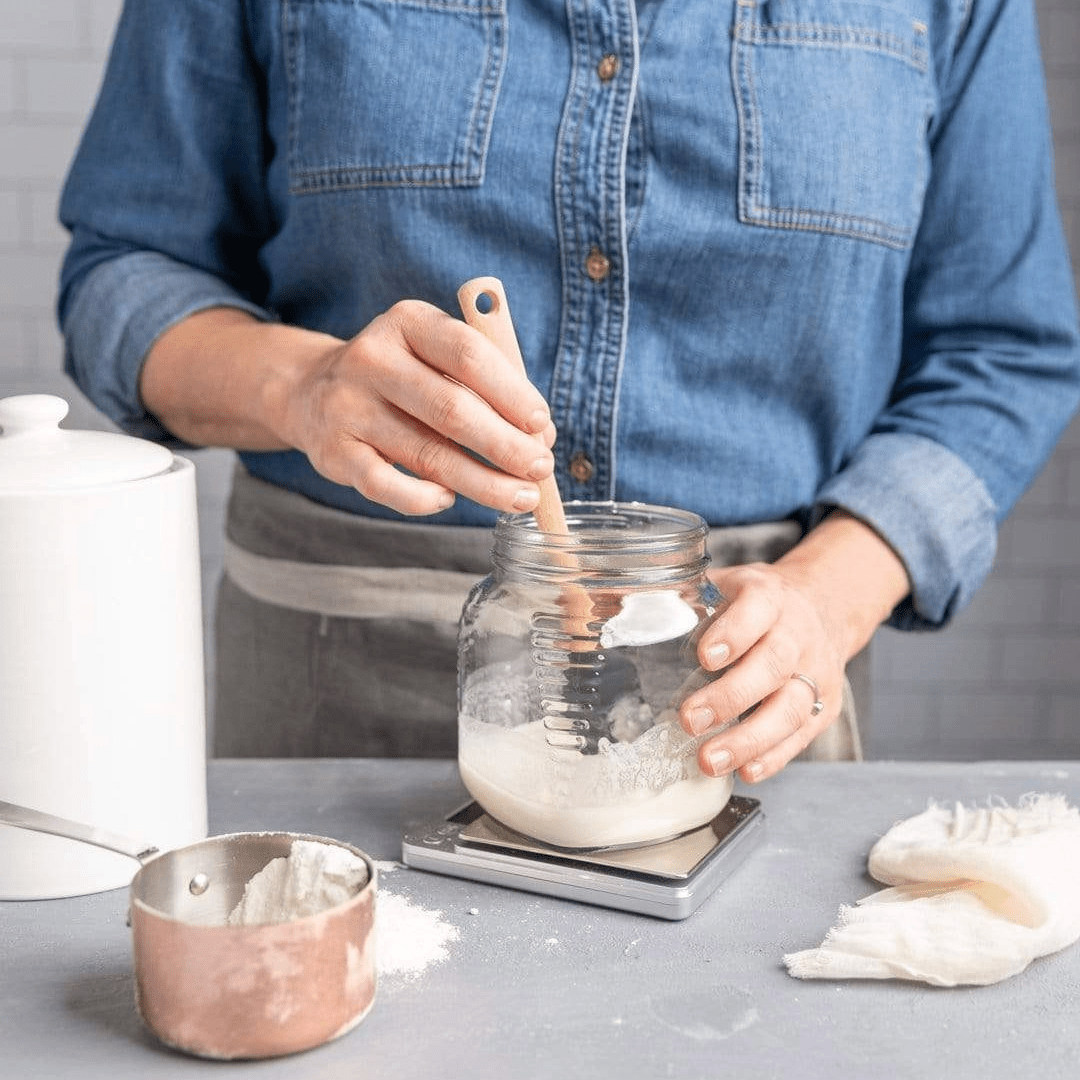
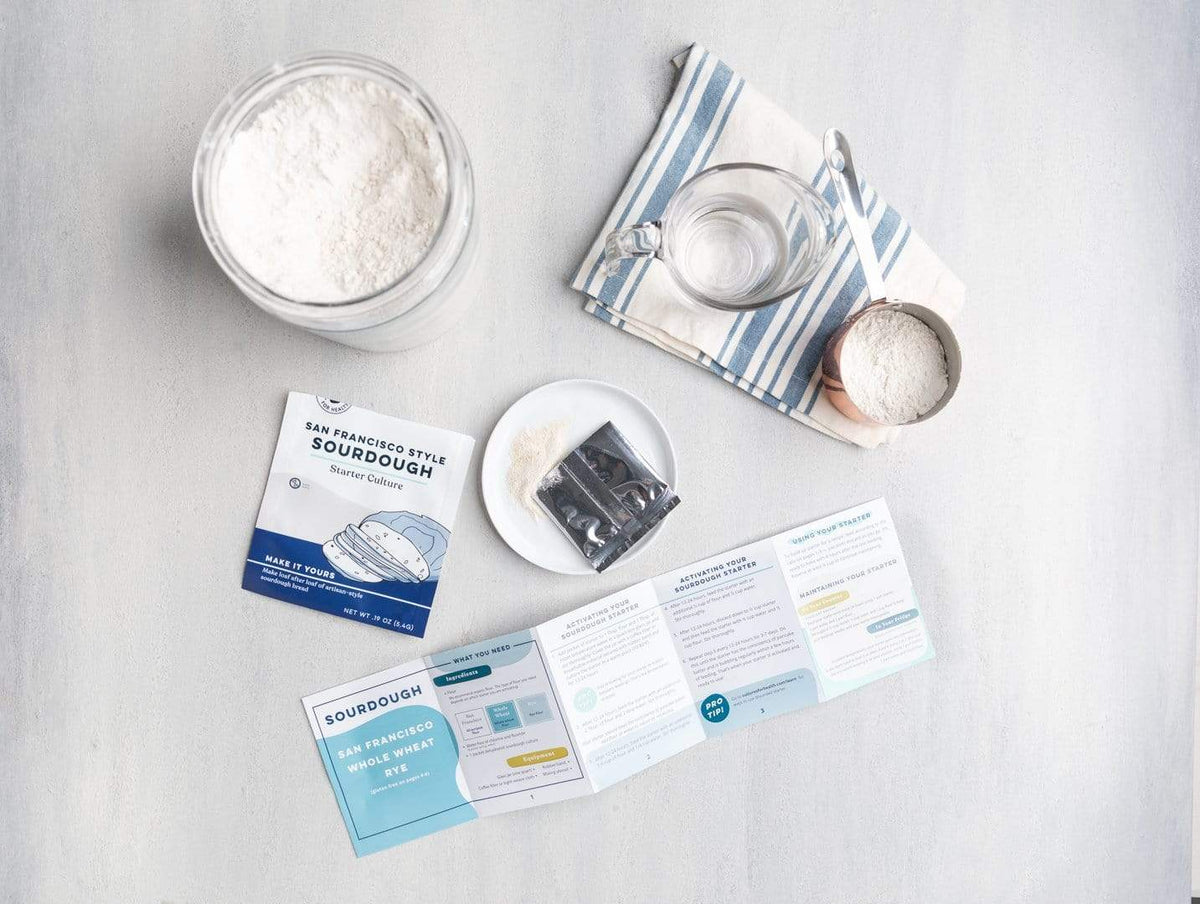
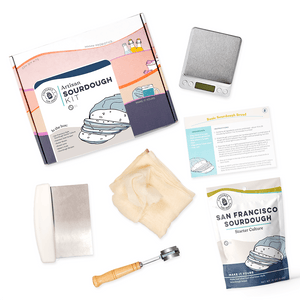

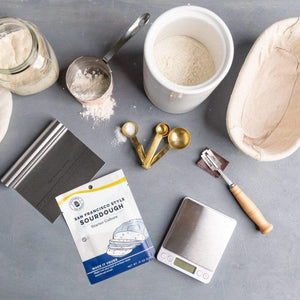
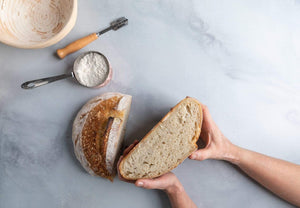
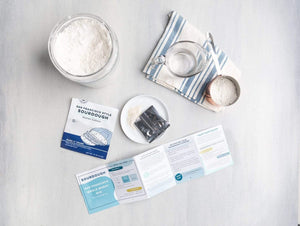
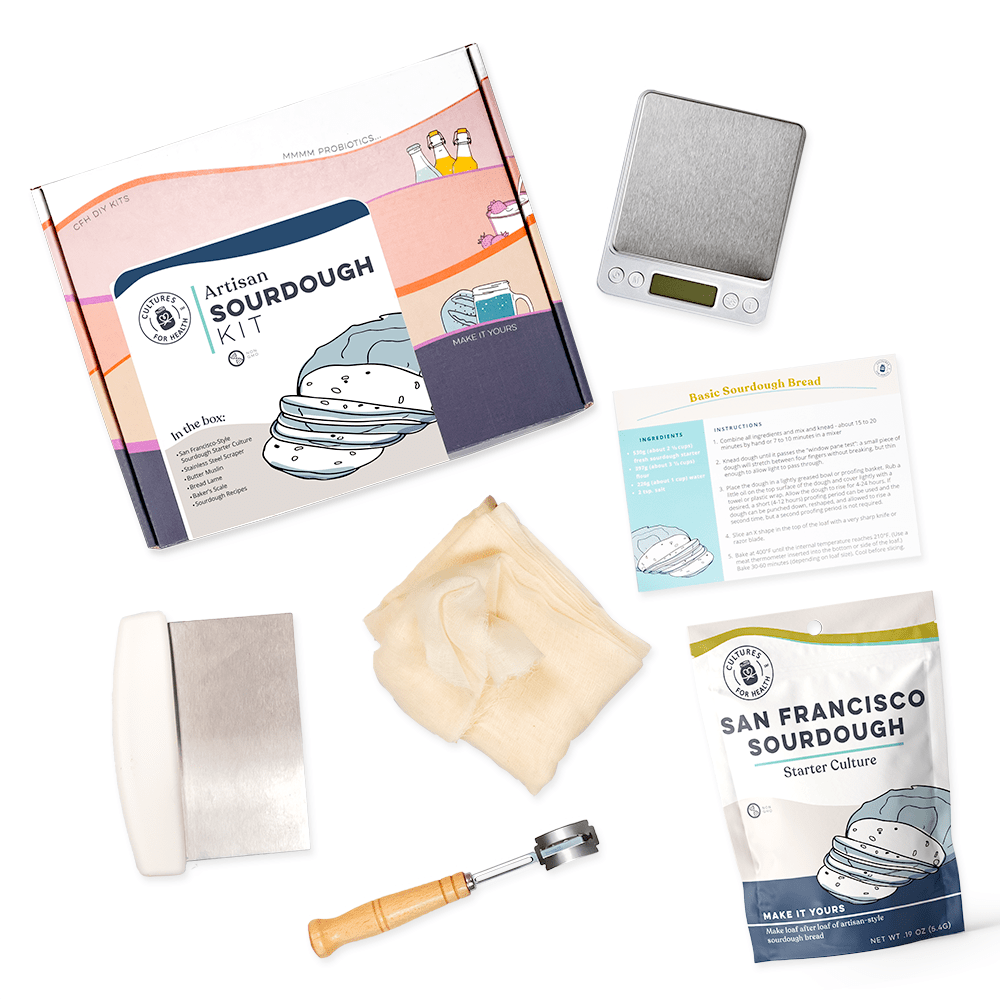
Artisan Sourdough Bread Kit
While it may take a little trial and error, attempting to achieve a longer, slower rise may also contribute to a more sour sourdough. Try creating a slower rise by doing the following.
- Find a cooler spot for rising the dough. (Remember, warmer temperatures speed up fermentation and cooler temperatures slow down fermentation.)
- Punch down (degassing) the dough at least once, if not twice, before the final shaping of the loaf.
- Perform the final rise for at least four hours or overnight in the refrigerator. Take the dough out of the refrigerator and let it sit at room temperature for about 30-60 minutes before baking. Although many experts recommend that the last rise be a quick one done in a warmer environment, you will have a better “oven-spring” by putting a cooler loaf into a hot oven.
HOW TO MAKE A LESS SOUR SOURDOUGH
To create the opposite effect from above and create a more mild flavor in your finished sourdough, try these adjustments.
1. Adjust the Starter
- Feed your starter regularly. The temperature of your culturing area and the strength of your starter will influence how often your starter needs feedings, which can be anywhere from 8 to 24 hours. Try increasing the frequency of your feedings to create a more mild taste. This should minimize the alcohol content and reduce the overall acidity of the sourdough. Less acidity means less tang!
2. Adjust the Bread Dough
- Use more sourdough starter in the dough. A larger percentage of sourdough starter in the dough allows it to both rise in a cooler location and have a shorter rising time. Both of these conditions help to tame the sourness in sourdough by lowering acetic acid production. (The amount of starter may need to be adjusted by season: more starter in the winter and less in summer.)
- Add baking soda. Baking soda is an alkaline substance. Adding it to sourdough neutralizes some of the acidity and gives the dough a little extra leavening boost.
Each sourdough starter is unique, so keep adjusting until you produce a bread that is ideally suited to your taste.
WHAT TO DO WITH IMPERFECT SOURDOUGH BREAD
As you experiment with adjusting the sourness of your sourdough bread, there may be times that your bread doesn't turn out the way you wanted it to. It's okay, it happens, and it truly is the best way to learn and perfect your sourdough baking.
Luckily, not-so-perfect sourdough doesn't have to go to waste. Try one of these recipes to use up any sourdough that doesn't turn out perfectly.
START MAKING PERFECT SOURDOUGH WITH CULTURES FOR HEALTH
The easiest way to start making sourdough at home or to continue making it - Cultures for Health.
We've got everything you need to make the best sourdough possible including our amazing sourdough starter kit and multiple sourdough starters in tons of different styles including:
- San Francisco Style Sourdough Starter
- Whole Wheat Sourdough Starter
- Rye Sourdough Starter
- Gluten-Free Sourdough Starter
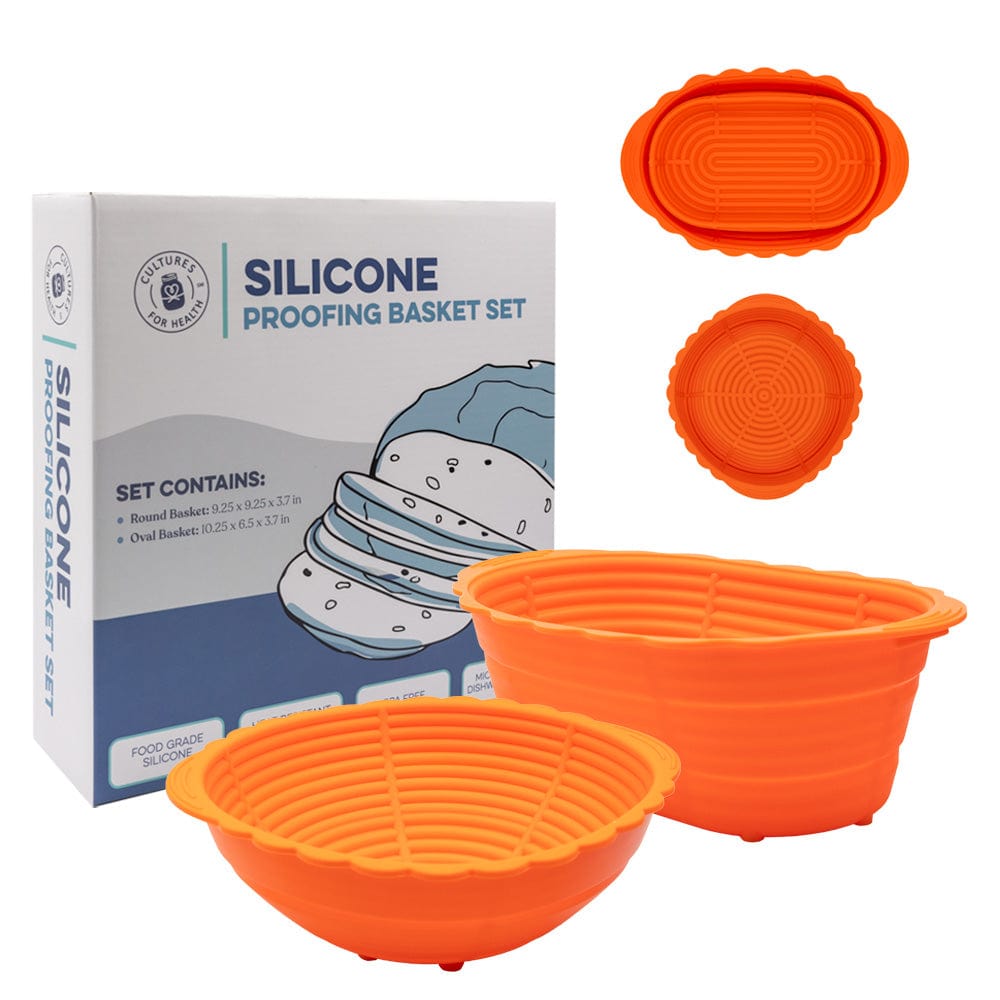
On top of all of that, we have all the tools of the trade you need to make sourdough at home.
Click here to check out our large selection of sourdough starters and tools now!
Download your copy of our Sourdough Guide and Recipe Book today!