














When you're new to fermenting, every step of the fermentation process can be slightly intimidating. From trusting that fermentation will keep your vegetables from spoiling to braving the first bite, fermenting is a bit of an adventure.
One of the biggest questions you might have is, “How do I know when my fermented vegetables are finished culturing?”
The reality is that fermentation is a continual process and flavors will change over time. As microorganisms continue to do their work on the sugars and other carbohydrates found in the vegetables, the taste of fermented vegetables will change.
There are three obvious signs that the fermentation process has at least commenced enough that fermenting vegetables can be moved to cold storage. Temperature will play a role in how quickly these signs appear, so results may vary from season to season and batch to batch.
SIGNS THAT FERMENTED VEGETABLES ARE FINISHED FERMENTING
Bubbling
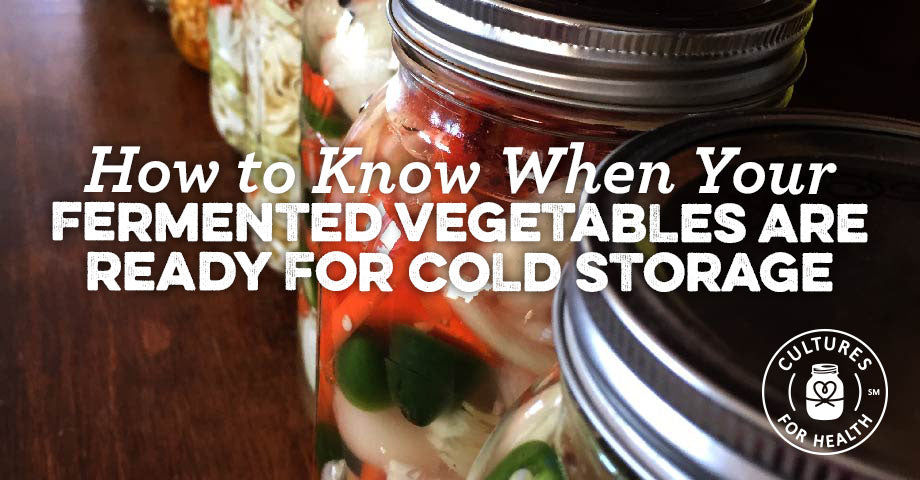
The lactic acid fermentation process produces lactic acid bacteria that create gases when they feast on the vegetables. These gases are often visible as bubbles throughout the jar after a few days at room temperature and are a good sign.
In large vegetables like chunks of zucchini, the brine will contain bubbles and the vegetables themselves will only have a slightly “bubbly” flavor. Other ferments that use vegetables with more surface area, like salsa, will have an almost carbonated flavor throughout. This carbonation is normal and can be quite tasty.
Sour Aroma
“The nose knows” is very true when it comes to fermentation. Opening the fermentation vessel after a few days may release a sour, vinegary aroma. While the aroma may be strong at first, it should be pleasant.
If, on the other hand, your sauerkraut smells like spoiled or rotten food, discard it, clean the container thoroughly, and try again another day.

Flavor
Finally, once the vegetable ferment appears gaseous or bubbly andsmells sour but pleasing, it's time to taste. Depending on the type of vegetable, varying ranges of fermented flavors may be present.
Larger vegetables, whole or pieces, like cucumber pickles, can take a much longer time to fully ferment and develop a tangy flavor. A mashup of small vegetable pieces like sauerkraut or relish usually takes on a fermented flavor more quickly.
Taste vegetables daily until they reach the flavor and texture that you prefer. At that point, it's time for cold storage.
Fermenting vegetables at home can be so rewarding. Trust your instincts and enjoy your first batch of fermented vegetables. Not sure what to ferment first? Browse our extensive selection of cultured vegetable recipes.