







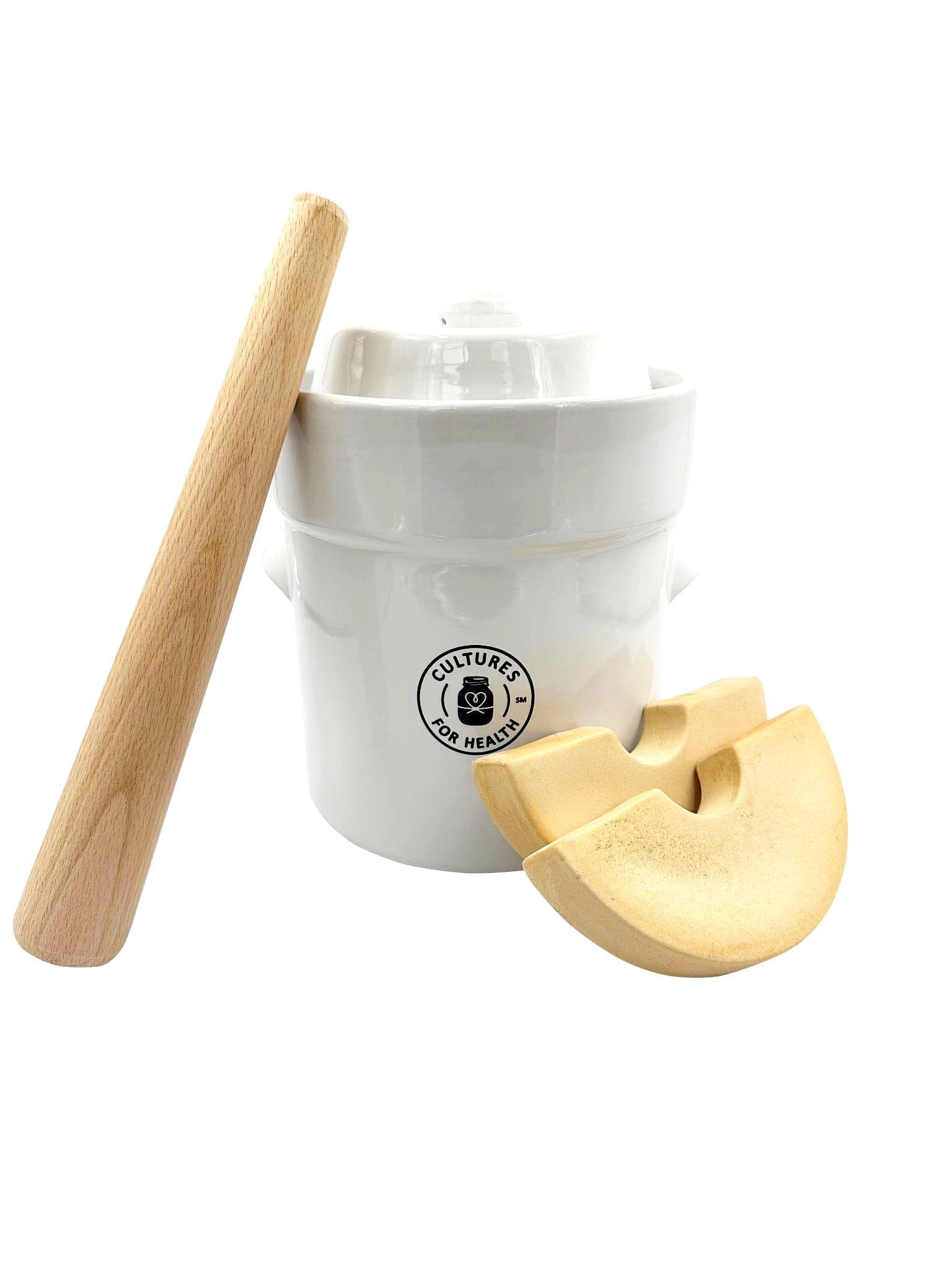









When it comes to fermenting vegetables, there are a variety of fermentation vessels to choose from, and everyone has a favorite.
Browse our fermentation vessels here!
Mason or canning jars are used most commonly since they are both affordable and quite versatile. These jars can easily be found at hardware stores and big box stores alike. But no matter what type of container you decide to use, you can keep your fermenting produce below the brine - all it takes is a little creativity, resulting in wonderfully cultured foods!
Download our Lacto-Fermentation Guide and Recipe book today and learn the best methods for submerging your veggies for optimal fermentation. Enjoy delicious, healthy fermented vegetables with this comprehensive guide!
METHODS FOR KEEPING VEGETABLES UNDER THE BRINE
To start, choose a jar with a wide mouth opening, free of cracks or chips. Then, experiment with the methods below to find the one that works best for you.
Make sure any fermentation weight is clean and appropriate for contact with food. If any best vegetables slip away from underneath the weights, simply discard them after the fermentation process is complete. Anything underneath the brine should be fine.
1. Fermentation Weights
These weights are designed for fermenting, so are made of materials safe to use with your cultured foods, such as ceramic or glass. When selecting a fermentation weight, compare the size of the fermenting jar (mouth included!) to the diameter of the weights to ensure they will fit in the jar. Pickle Pebbles are a great option and are available in both standard and wide-mouth sizes!
2. A Cabbage Leaf or Other Large Vegetable Pieces
Tuck a cabbage leaf over the top of the prepared vegetables. Often this leaf alone will be enough to keep the vegetables in place under the brine. Thin wide strips from zucchini or carrot can be placed over the vegetables as a mat.
3. A Small Ceramic or Glass Dish
Mini jelly jars, condiment dishes or small dessert ramekins that fit inside the mouth of the jar work very well to weigh down fermenting veggies. Partially fill the jar with water to create extra weight or add these jars on top of fermentation weights to help keep vegetables submerged.
4. A Small Dish Plus an Additional Weight
Similar to using ramekins or other small jars, you can place a small dish on top of the prepared vegetables and weigh it down with a rock or other heavy object.
5. A Plate Inside a Large Bowl
If none of the above options are available, ferment in a large bowl, and use a plate to press down the top of the vegetables. Add weight to the top of the plate to keep the vegetables submerged. Once the vegetables are fermented, transfer them and their brine to storage jars, still attempting to keep the brine over the veggies.
Looking for a way to keep your fermented vegetables submerged? Download our Lacto-Fermentation Guide and Recipe book today!

THE TAKEAWAYS
This list should help give you some ideas for how to keep your vegetables under the brine. Check to ensure you have all the other supplies, like a fermentation container, pick a recipe, and then get started fermenting!