



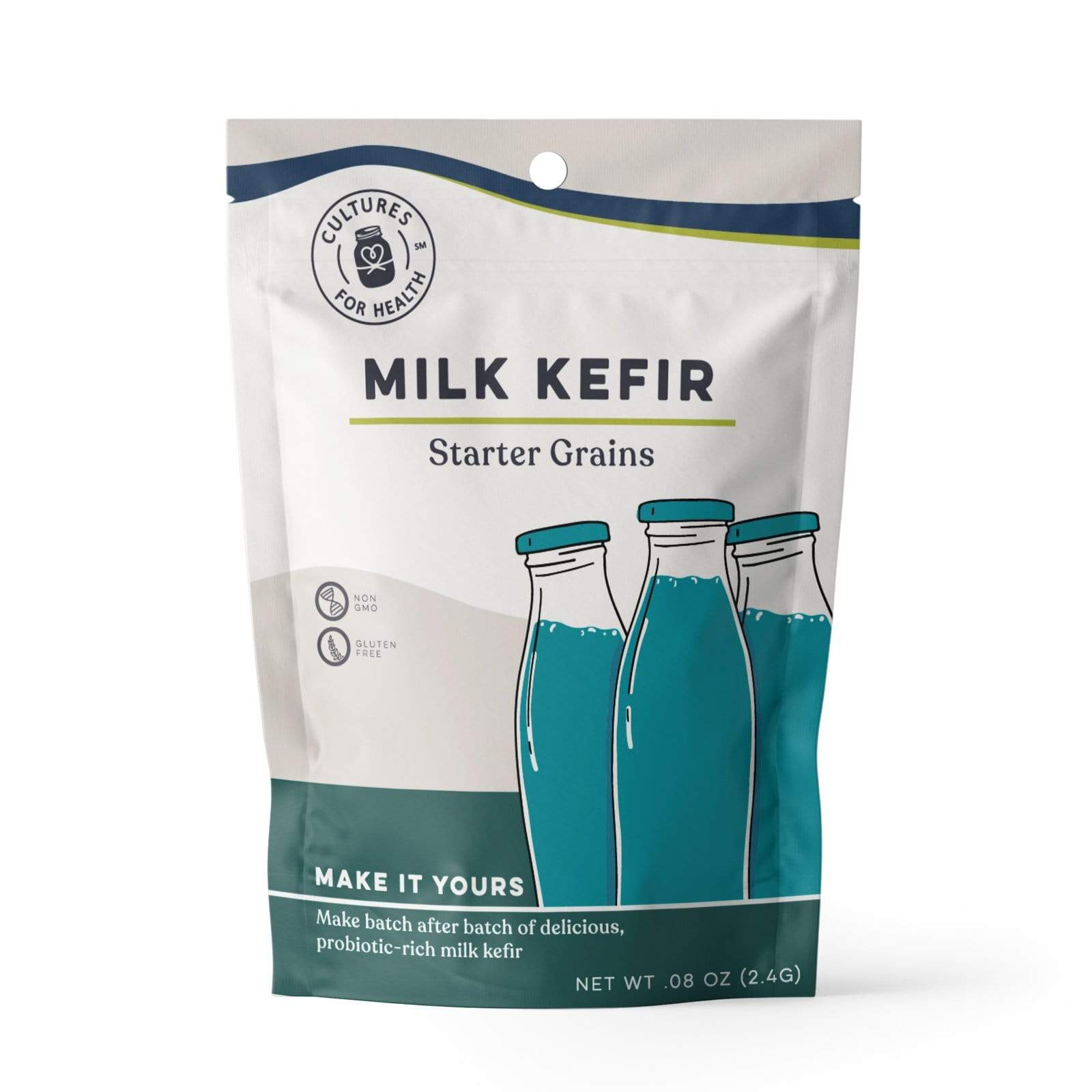

















Milk kefir is a probiotic-rich, delicious beverage, and easy to make at home! The first step to making homemade milk kefir with our dehydrated Milk Kefir Grains is to activate them. The how-to video above will show you how to do that, step by step. In this article you will also find...
BEFORE YOU BEGIN
Our Milk Kefir Grains are sold in a dehydrated state, so that they are shelf-stable and safe for shipping.
Kefir grains are living organisms and they require food in the form of milk. During the activation process, you will be feeding them increasing amounts of milk over a 3 to 7 day period, going from 1 cup to 4 cups.
You'll want to watch them carefully during this activation process to make sure they have an adequate amount of milk and don't starve.
WHAT YOU'LL NEED TO ACTIVATE THE KEFIR GRAINS

Equipment:
Making milk kefir at home doesn't require anything too special, equipment wise. You can consult our article on choosing the best equipment for making milk kefir, for more detailed information on your equipment options, but in short you will need:
- Glass jar
- A non-metal stirring utensil
- A breathable cover for the jar such as a tight-weave towel, paper towel, or paper coffee filter
- Something to secure the cover to the jar - a rubber band or canning jar ring work well
- A fine mesh plastic strainer for removing the kefir grains from the finished kefir
Ingredients:
As far as ingredients, you will need:
- One packet dehydrated Milk Kefir Grains
- Pasteurized cow or goat milk
Each packet contains enough kefir grains to make 4 cups of kefir per batch. Kefir grains are very powerful, so you don't need a lot for this process.
Avoid ultra-pasteurized or UHT milk for activating kefir grains or for making kefir, consult our article on choosing milk for making kefir, for more information.
If you would like to make raw milk kefir, you will first need to rehydrate your grains in pasteurized milk. Once they are fully rehydrated you can slowly transition the grains to raw milk.
INSTRUCTIONS FOR ACTIVATING MILK KEFIR GRAINS
- Empty the entire packet of dehydrated milk kefir grains into 1 cup fresh, cold pasteurized milk (don’t use raw milk for activation) and stir. Cover with a coffee filter or cloth, secured by a rubber band and place in a warm spot, 68°-85°F, to culture.
- Between hours 8-24, check the milk hourly. Ask yourself...
Is the milk thickening or changing texture slightly in less than 24 hours?
If "YES"...
As soon as you notice a change in the milk’s texture, strain out the grains and put them in fresh milk, increasing the amount of milk by 1/2 cup. Cover and culture as before.
If "NO"...
At the end of 24 hours, strain out the grains and put them into the same amount of fresh milk (never decrease the amount of milk). Cover and culture as before.
- Activation usually takes 3-7 days. By following the steps above, the size of your batch will increase in 1/2 cup increments up to a total batch size of 4 cups. If the milk thickens in less than 24 hours, remove some grains or add milk to keep your grains fed and happy. Your grains are activated!
STEP-BY-STEP PHOTO TUTORIAL

1. Add the kefir grains to a glass jar and add 1 cup pasteurized whole milk. If you wish to use other milks for making kefir in future, you can, you'll just need to stick to pasteurized whole milk for activating the grains.

2. Cover the jar with a paper coffee filter or tight-weave dish towel. Secure it with a tight rubber band or canning jar ring to keep out any unwanted critters!

3. Place in a warm spot, 68°-85°F, to culture. Be ready to start checking the texture of the milk after 8 hours.
4. Between hours 8-24, check the milk hourly by tipping the jar. You are looking for any slight change in the texture of the milk.
5. If by the 24 hour mark you don't see a change in the milk's texture, then...

6. Strain out the grains.

(Look at those grains!)

7. Since there was no change in the texture of the milk within 24 hours, put the grains into the same amount of fresh milk.

8. Place them in a warm spot to culture as before. Be sure to continue to keep a close eye on the milk after about 8 hours to watch for a texture change.

9. If you do notice a texture change (in less than 24 hours) while checking your milk, as soon as you notice the change you will need to take action.

10. A change in texture indicates that the milk kefir grains are starting to work on the lactose in the milk and means that it's time to give the grains new milk so they don't starve.

11. Strain out the grains.

12. Place them in a clean jar.

13. Add new milk, increasing the amount of milk by a 1/2 cup since the texture changed in under 24 hours. (This time we used 1 1/2 cups!)

14. Place in a warm spot to culture as before.

15. Moving forward, continue with this same process. Check the milk every few hours.

16. As soon as the milk changes texture, strain the grains and add them to new milk. Increase the amount of new milk by a 1/2 cup for every batch until you're culturing 4 full cups per batch.

17. If the milk doesn't thicken within 24 hours, go ahead and move the grains to new milk, but use the same amount of milk you used for the previous batch.
HOW DO I KNOW IF MY GRAINS ARE ACTIVATED?
Your grains are activated when they are reliably thickening milk in about 24 hours. This process usually takes 3 to 7 days and can vary based on the culturing conditions.
WHAT ABOUT THAT LEFTOVER MILK?
At any stage during the activation, if the finished product smells and tastes pleasant, it may be consumed or used in recipes. Finished product with an unpleasant aroma or flavor should be discarded after the grains have been removed.

WHAT'S NEXT?
Once your Kefir Grains have finished rehydrating, you can use them to make milk kefir regularly. You can also ferment your finished milk kefir a second time to influence the flavor or use it in recipes in order to add a probiotic kick to your usual meals!