












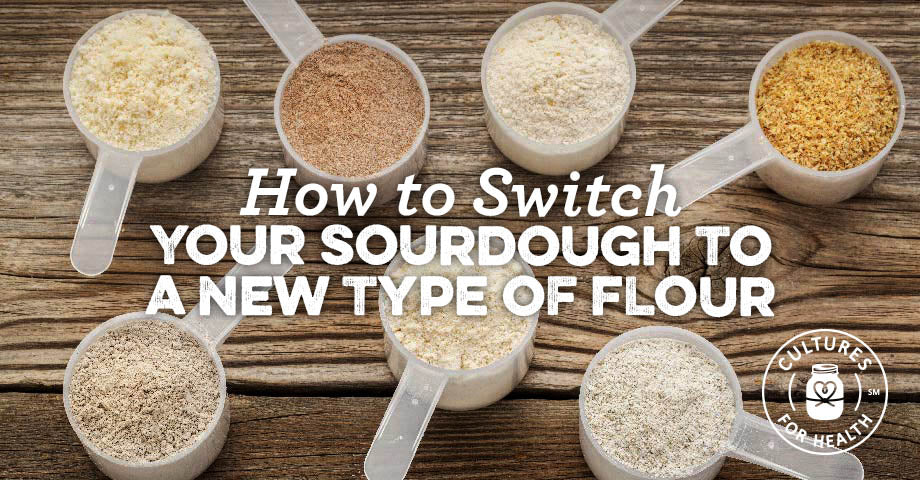
Sourdough comes in many forms: white-flour sandwich bread, whole-wheat peasant loaf, rustic spelt boule, or dense rye. All of these breads are delicious in their own way.
It is a simple task to use a different type of flour for baking, no matter what type of sourdough starter is used as leavening. If you prefer to branch out and try a completely new starter, there are a couple of choices.
Download our SOURDOUGH Guide and Recipe book today to help you switch your sourdough to a new type of flour.
SWITCHING TO A NEW TYPE OF SOURDOUGH STARTER
- You may choose to purchase a new type of sourdough starter and begin from scratch. Compare our list of sourdough starters and decide which is right for you.
- More practically, some of your current sourdough starters can be converted to a new type of flour. It is fairly easy to convert a starter between white, whole wheat, rye, spelt, or other gluten-containing flours.
- Switching to a gluten-free flour is a bit more tricky, as it tends to require more feedings to become vigorous and maintain its efficacy in baking. In this case, it may be easier, to begin with, an established gluten-free sourdough starter.
BEFORE YOU SWITCH
- Always revive a dried sourdough starter first with the flour type indicated.
- Do not attempt to switch flours until your sourdough starter has been fed for at least a week and is healthy and happy, bubbling and growing.
INSTRUCTIONS FOR SWITCHING TO A NEW FLOUR
- Divide the active starter into two portions.
- Place one-half safely in the refrigerator as a backup if the starter does not acclimate well to the new flour. This backup should be fed with its regular flour to keep it healthy.
- Feed the second half with the new flour at room temperature.
- Within a few feedings, the starter should be converted to the new flour.
- Once it is bubbling and growing reliably for a few consecutive feedings, it is ready to use for baking.

TROUBLESHOOTING A NEW FLOUR
- Not all flours work alike in sourdough, so the starter may go through an adjustment period in which it is not as vigorous.
- Whole grain flours tend to contain more organisms to feed the yeasts and bacteria. Switching from whole grain flour to white flour may cause a decline in the health of the starter.
- Rye flour, in particular, is very well-suited as food for sourdough starters. Switching a rye starter to a new flour may cause a change in the health of the starter.
- Flour that has just been ground can be a little "raw" for the starter to utilize. Aging freshly ground flour for a week or more allows for the development of more healthy organisms the sourdough starter can utilize.
- If, after an adjustment period, the sourdough starter appears to be less vigorous than before, try feeding it a blend of the new flour and the old flour for several feedings to give it a boost.
- If all else fails, discard a less-than-stellar new sourdough starter and return to the refrigerated portion of the original starter. Later, either repeat the flour switch as recommended above or try a different flour. As long as a portion of the original starter is always retained, endless attempts and trials can be made with different flours.
START TRYING A NEW SOURDOUGH STARTER NOW
The best way to experiment with sourdough flour and switch up your sourdough game is Cultures for Health.
We've got the largest selection of sourdough starter types that you can find anywhere, including:
- San Fransico Starter Culture
- Gluten-Free Starter Culture
- Whole Wheat Starter Culture
- Rye Starter Culture
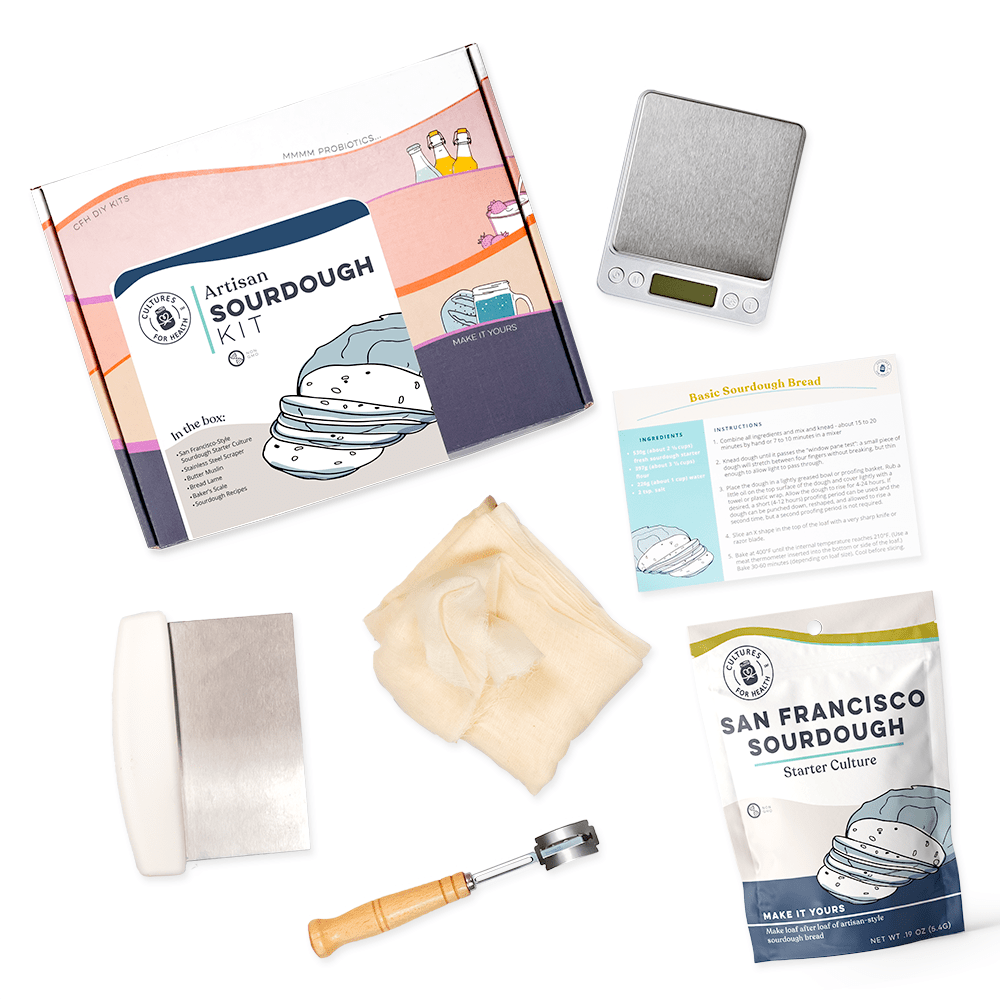
On top of all that, we have our amazing Artisan Starter Kit that has everything a beginner needs to start making their own sourdough now! This kit has the tools you need and the starter culture.
Click here to check out the Artisan Starter Kit to start making your sourdough today!