











15 minutes

180 minutes

3
INGREDIENTS AND EQUIPMENT AVAILABLE AT CULTURES FOR HEALTH
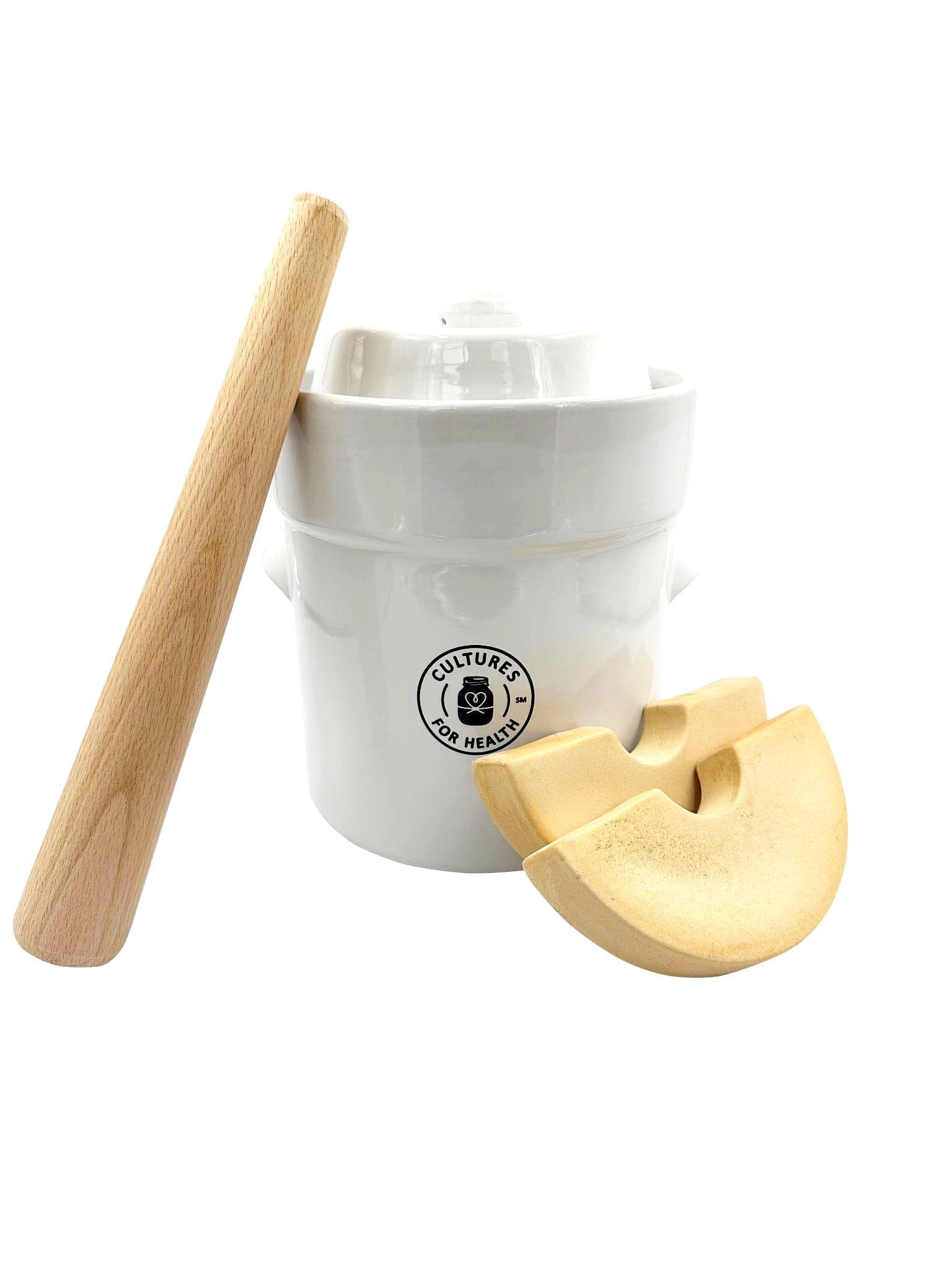
Fermented Vegetable Kit
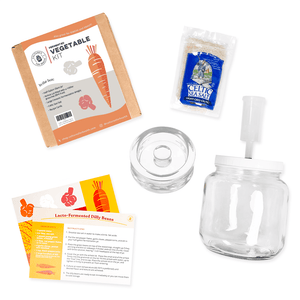
Fermented Vegetable Kit
$40.99
Make tasty fermented veggies at home with our DIY Fermented Vegetable Kit!
This kit is also great for making kimchi, sauerkraut, and more! Equipment in the kit may appear different than pictured.
Grey Celtic Sea Salt
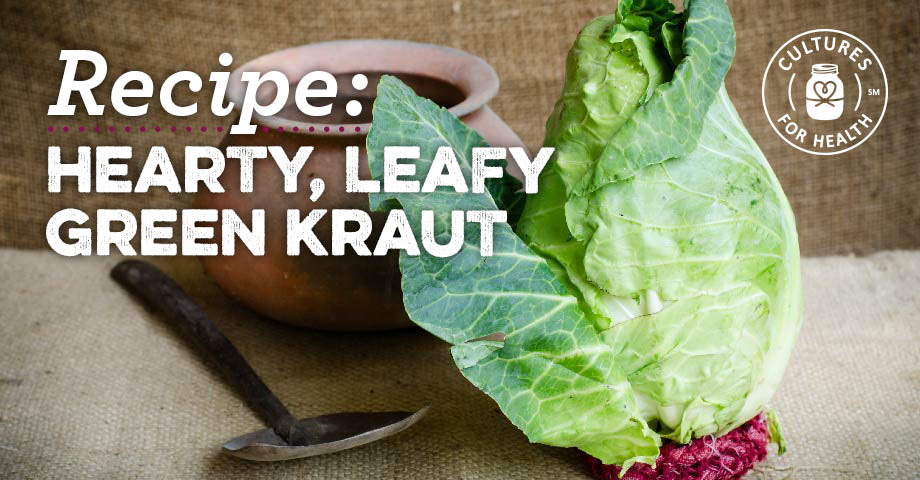
Kale, collards, mustard and turnip greens--all these leafy greens are delicious fresh, lightly steamed, or cooked. Because all of these are members of the cabbage family they also make wonderful kraut. But there are a few things to consider:
- They are much more pungent than cabbage and therefore can produce a strongly-flavored kraut.
- Different leafy greens have a different texture to them. Collard greens tend to be thicker and tougher, while mustard greens can be lighter. This can cause varying textures and rates of fermentation.
- A mix of sharper greens like kale and peppery ones like mustard can produce a well-rounded leafy green kraut.
- Goitrogens are still present in fermented greens so do be sensible about how much leafy green kraut you are consuming if this is a concern for you.
INGREDIENTS:
- 2 or more bunches shredded leafy greens, enough to fill a quart jar
- 1-3 Tbsp. sea salt
- 3 garlic cloves, peeled and smashed
INSTRUCTIONS:
- In a large bowl combine greens and salt. Massage the leaves with the salt and let rest 10 minutes so that the juices come out of them.
- Add half of the greens to a quart jar. Throw in the garlic cloves and pack the rest of the greens tightly on top, pushing them down so that the juices cover them.
-
Cover tightly and ferment 3 days or until they are bubbly and tangy to your liking. Transfer to cold storage.