|
Choosing equipment is an important part of the fermenting process. To get started making sauerkraut, pickles, kvass or another fermented vegetable, fruit or condiment, here is a basic supply list:
- Vegetable chopper such as a knife, mandolin slicer or a food processor
- Chopping board
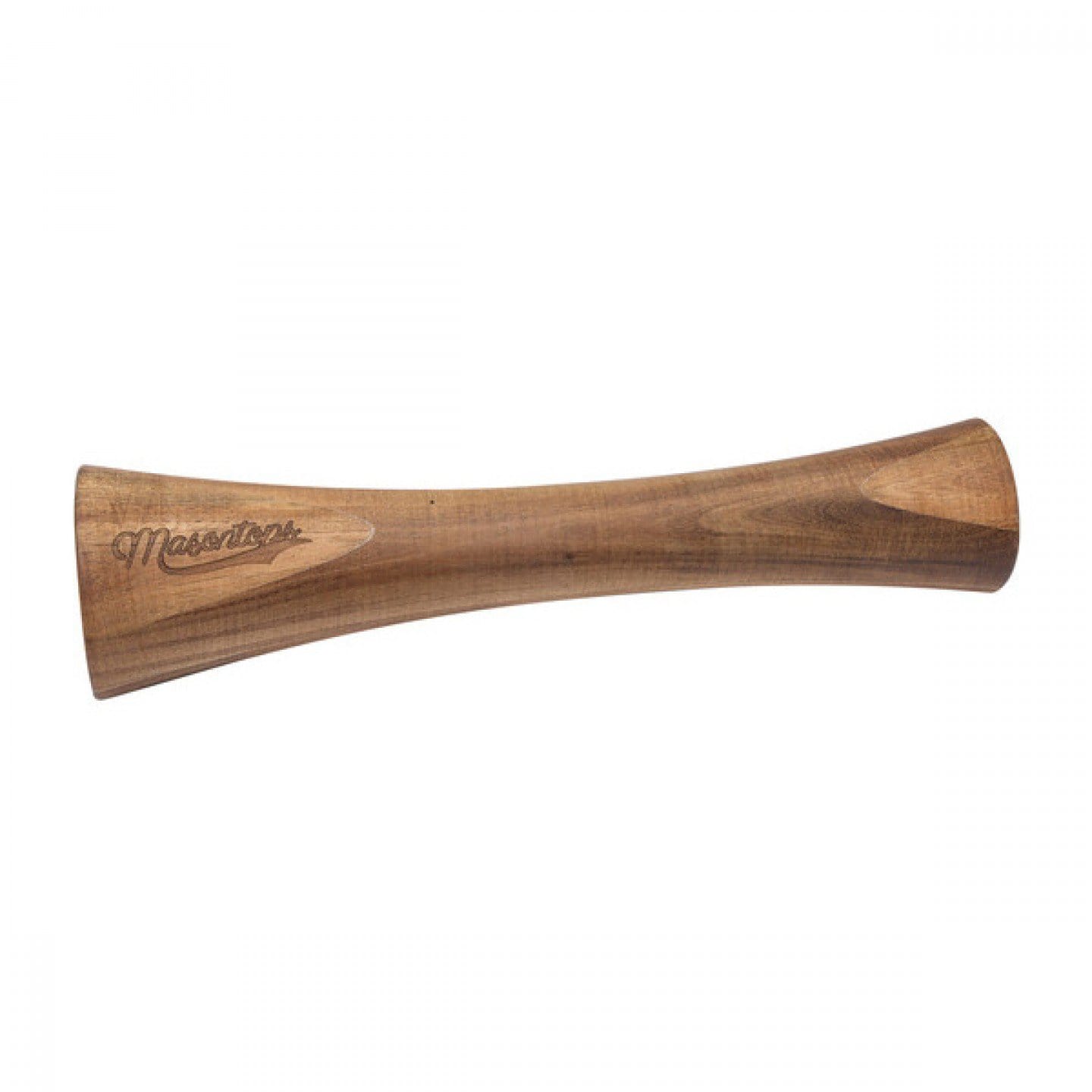
- A blunt meat pounder or potato masher to pound juices out of the vegetables
- Large container to hold vegetables for pounding
- Unrefined sea salt or pickling salt
- Starter culture such as whey, kefir grains, freeze-dried starter, etc. (optional, click here for more info)
- Filtered water to wash vegetables
- Fermenting vessel (see below)
Choosing a Fermenting Vessel
There is no shortage of options when it comes to choosing a container for fermenting your vegetables, fruits or condiments. Fermenting vessels range from wide-mouth glass jars to ceramic crocks.
Basic Vessel Requirements. A cylindrical shape is recommended and better facilitates the fermentation process over using a container with hard corners. In terms of materials, we strongly recommend using a glass or ceramic container. It is possible to use a plastic container but plastic can leach chemicals and is more prone to scratches and damage that can harbor harmful bacteria. If you do choose a plastic container, be sure it is food-grade plastic and has not previously held non-food substances. Do not ferment in metallic containers as they react with salt and the acids produced during fermentation.
Vessel Options. While a wide range of fermenting container options exist, here is a summary of the most popular options.
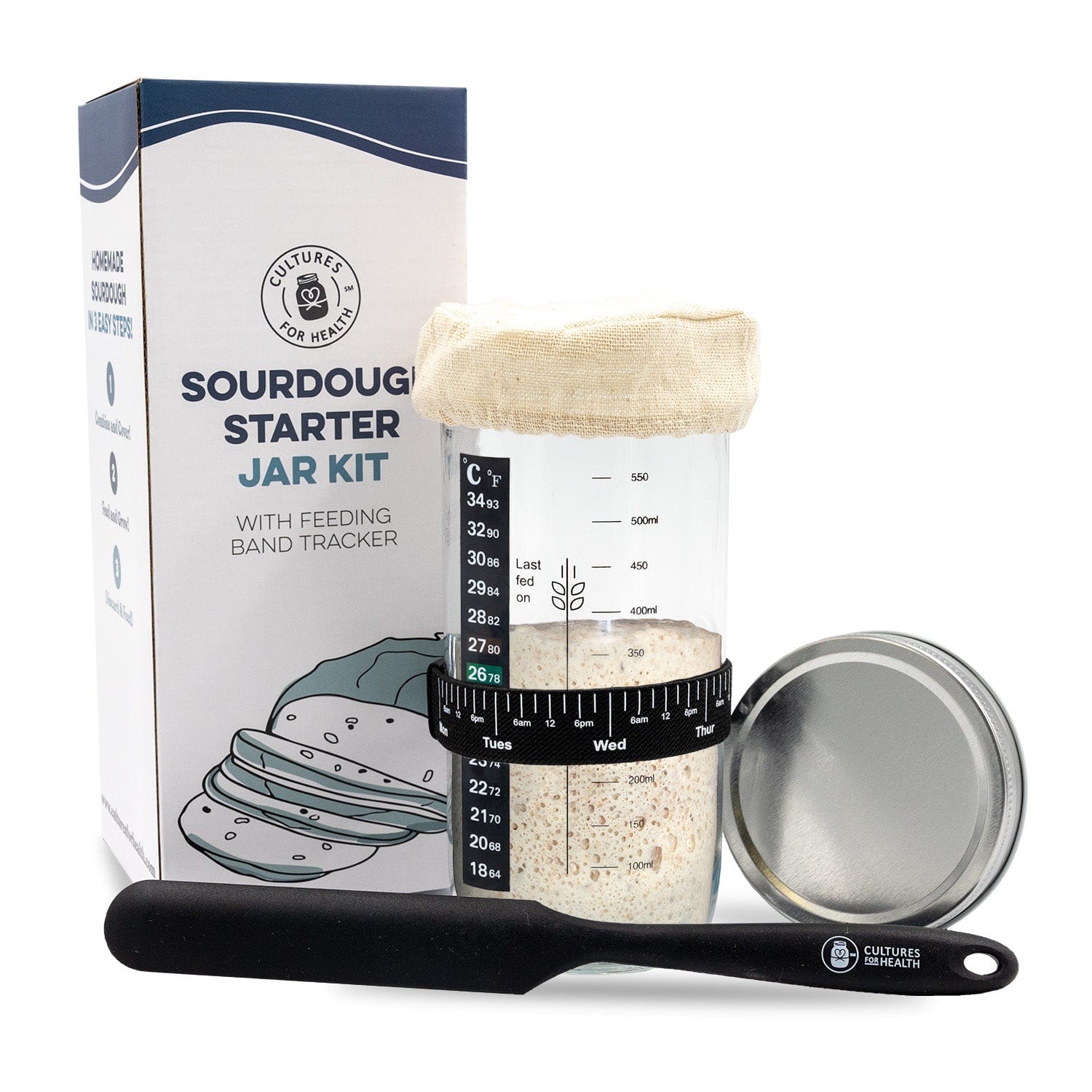
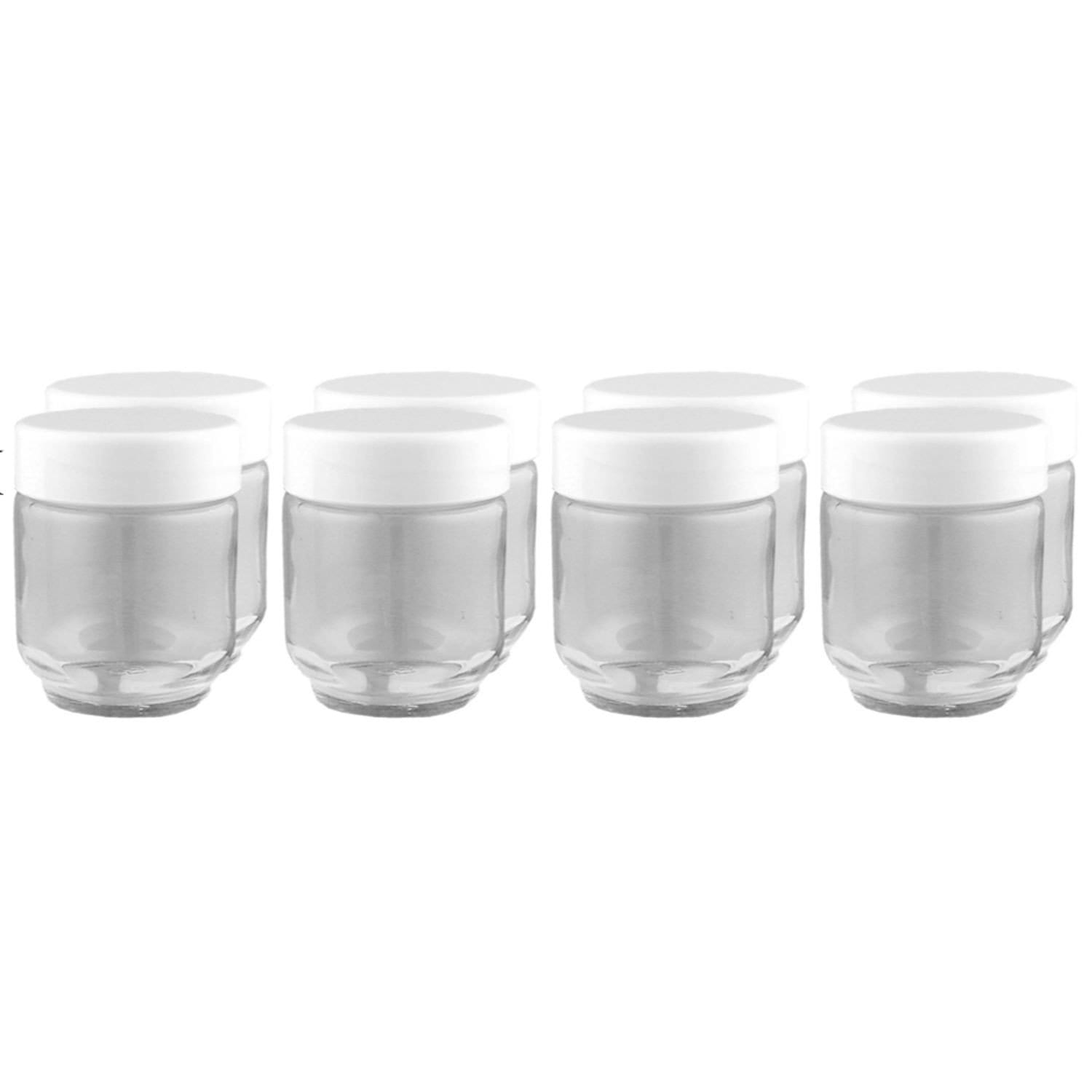
- Canning Jars or Similar-style Glass Jars. Canning jars are inexpensive and readily available fermenting containers. They also come in a variety of sizes, which can be useful for making smaller batches of condiments, salsa, etc. A separate weight and covering system is needed if using canning jars (see below).
- Ceramic Crock. Ceramic crocks can often be found at estate sales and make beautiful decorations as well as practical fermenting vessels. Make sure your crock is made of lead-free clay. If you use a ceramic crock, be sure to examine it for any cracks that can harbor harmful bacteria. Most crocks will require a separate weight and covering system (see below).
- Slow Cooker Insert. Ceramic inserts for old slow cookers can often be found at thrift stores and can make wonderful fermenting vessels. The round-shaped inserts are generally easier to work with as a weighting and cover system is required (see below) but the oval-shaped inserts can be used if necessary.
- Glass or Ceramic Bowl. Glass and ceramic bowls are also an economical and readily available option. A separate weight and covering system will be necessary (see below).
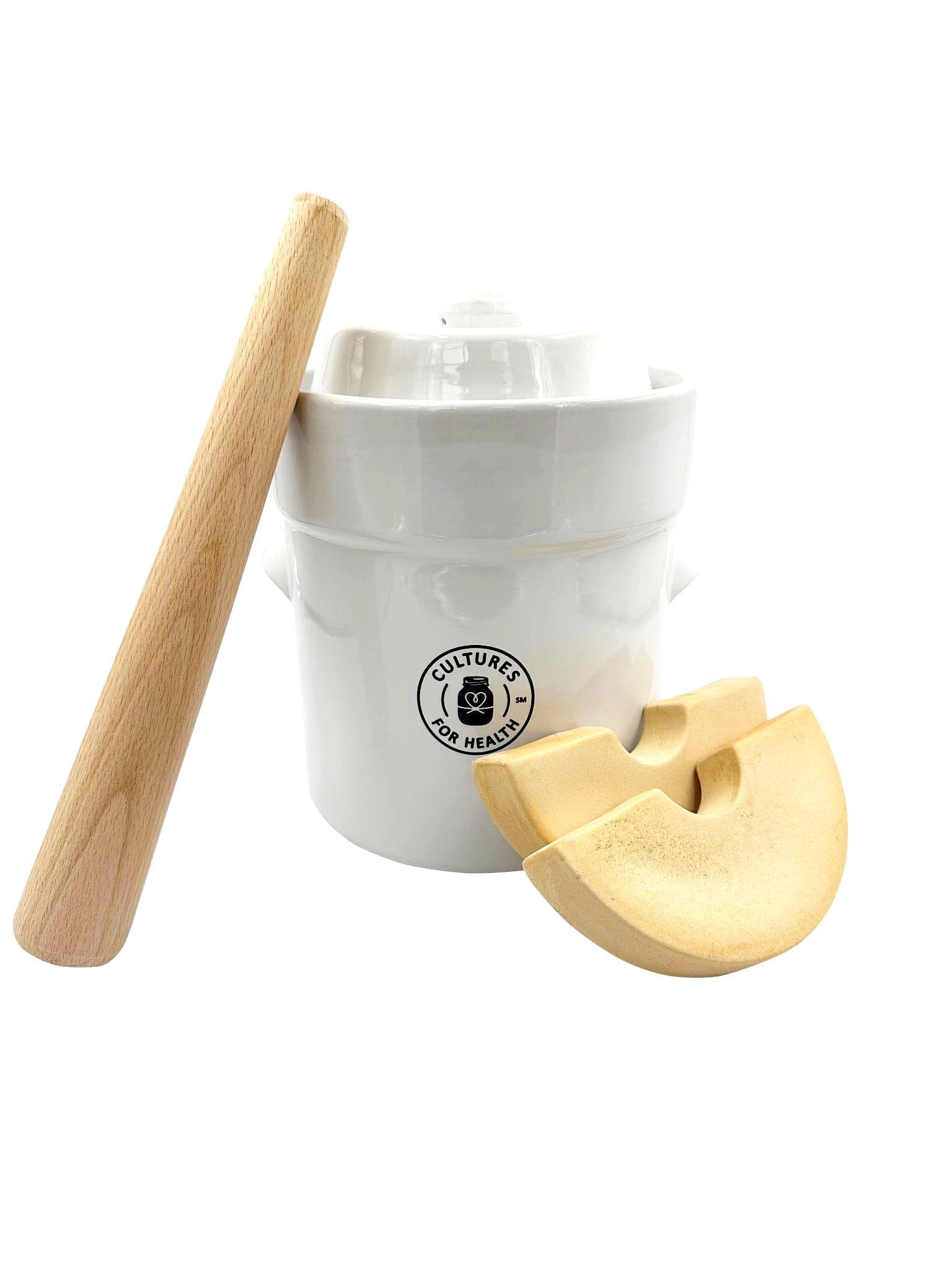
- Specialty Ceramic Fermenting Crock. Ceramic fermenting crocks such as the Harsch brand and Polish-style come complete with the pot, lid and internal weighing stones to keep the vegetables submerged under the brine. The lids are designed using a water-trough-airlock system to allow the natural gases to escape while sealing out oxygen thereby reducing or eliminating the threat of mold during the culturing process. They come in several sizes. When choosing the best size crock for your family, keep in mind that the crocks can only be filled to 80% capacity. Crocks should be checked regularly for cracks as cracks can harbor harmful bacteria. Specialty crocks are more expensive but are one of the best fermenting vessels.
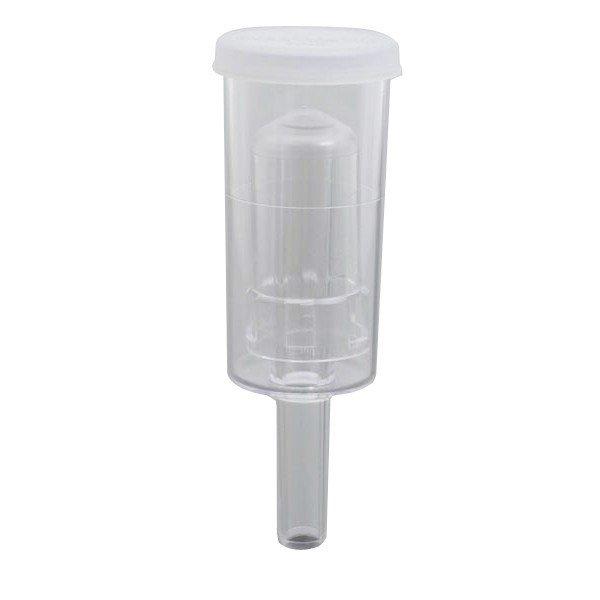
- Glass Jar with Airlock System. An alternative to specialty crocks are the more inexpensive glass jars equipped with an airlock system. These jars come equipped with a standard airlock system that allows gas from the vegetables to escape while sealing oxygen out thereby reducing or even eliminating the threat of mold during the culturing process. While a weight is not strictly necessary (see below), it will prevent the top layer of vegetables from changing color or drying out. The airlock-equipped jars come in several sizes.
Weighting and Covering Methods. The type of weighting and covering method used will depend on the type of food you are fermenting and your specific fermenting vessel.
Non-brine Fruits, Vegetables and Condiments. If you are culturing non-brine fruits, vegetables, condiments, etc. many recipes will call for simply placing a lid on the container and allowing the food to ferment for several days. A small amount of gas will be created during the 2-3 day period so use caution when removing the lid.
Vegetables in Brine. If you are culturing vegetables in a brine solution, a weight and cover system is a necessary component. Once you fill your vessel with vegetables, you will need to find a weighting mechanism that fits inside. Vegetables in brine will eventually float to the top during the fermentation process and exposure to air will make them grow mold so to keep them submerged under the protection of their juices and brine requires a weight system. Options for weighting vegetables include:
- A plate that fits snugly inside the vessel. A clean rock or similar weight object can be placed on top of the plate to weigh the plate down and keep the vegetables submerged.
- A smaller jar that fits snugly inside the vessel.The jar can be filled with water to weigh it down.
- A heavy glass or ceramic coaster.
- You can use other objects as a weight as long as they are clean and free of glues, etc.
- A zip-style plastic bag can be opened, placed in the vessel, filled with water and then closed. The weight of the water will weigh down the vegetables. If desired, additional brine can be poured over the bag.
Once your vegetables are weighed down, we recommend covering the top of the vessel with a lid, plastic or a tight-weave tea towel to keep bugs out and odors in. Be sure to secure towels with a very tight rubber band to keep bugs out. Please note, as the vegetables ferment, gases will be created that will need to escape. An ideal cover will allow the gas to escape while keeping the amount of oxygen reaching the vegetables to a minimum. The more oxygen that reaches the vegetables, the greater the chances are for the development of scum and mold.
If you forgo a cover and a weight and decide to submerge your vegetables by hand daily, some white mold may appear. If it does, just scrape it off daily. If some gets into your batch, it’s not harmful.
Want to learn more about fermenting vegetables, fruits and condiments at home?
How to Culture Vegetables at Home
Natural Fermentation: Salt vs. Whey vs. Starter Cultures
Recipes for Cultured Vegetables, Fruits and Condiments
All Cultured Produce Articles, Videos and Recipes
|
|