- Welcome, Guest! (Log In)
- View Cart
- Contact Us
- 1-800-962-1959
Details
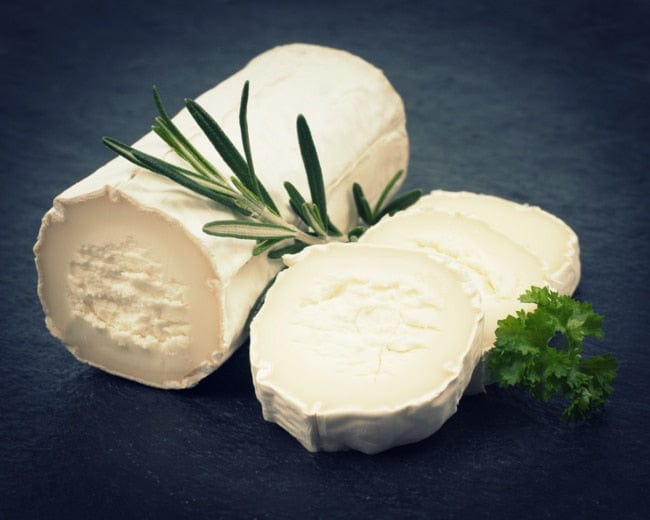
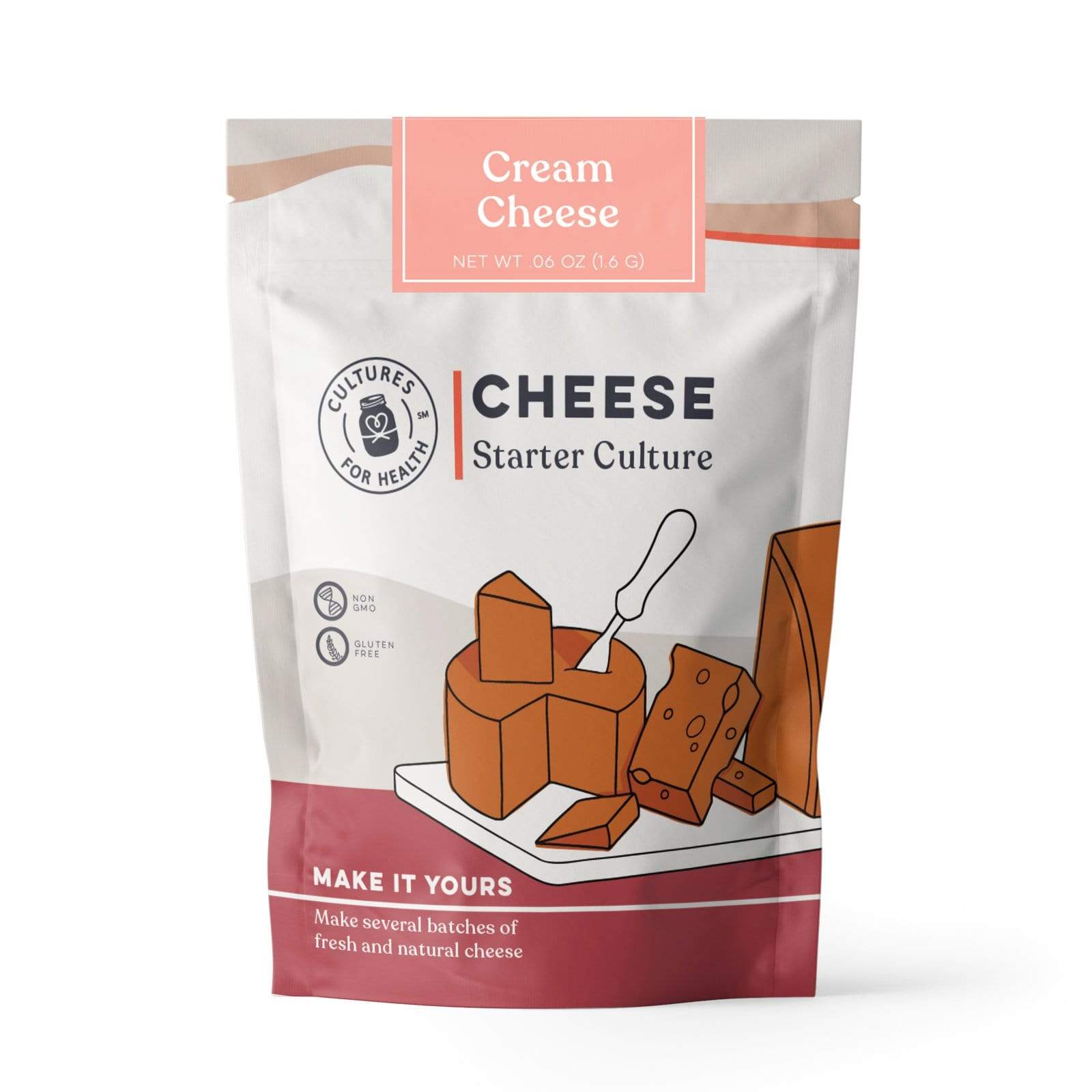
Cream cheese is a soft, mild-tasting cheese. Traditionally spread on bagels, used as a dip for fruit and vegetables, or as a key ingredient in recipes such as cheese cake, Cream Cheese is easy to make and a perfect option for beginning and experienced cheese makers alike. Each packet contains both starter culture and rennet. Just add milk! Full instructions included.
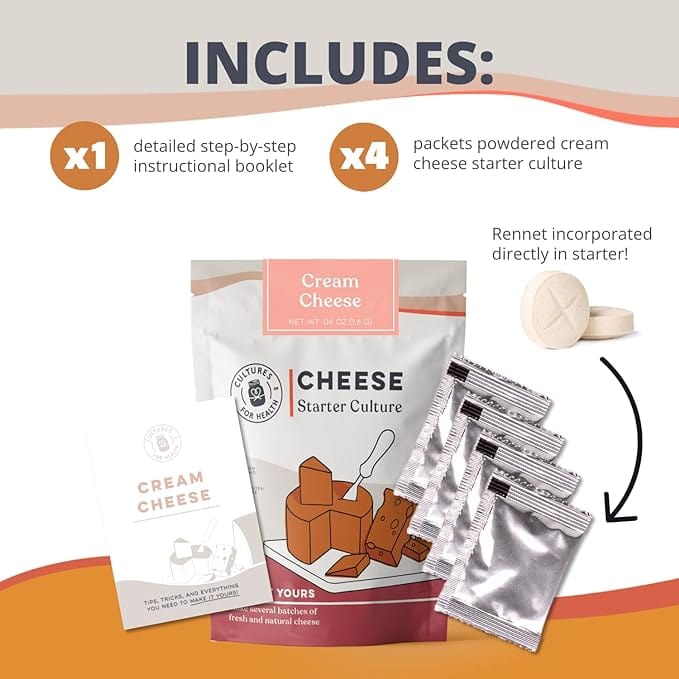
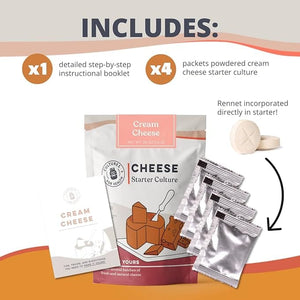
Includes four packets of direct-set starter culture and rennet to inoculate four batches of Cream Cheese.
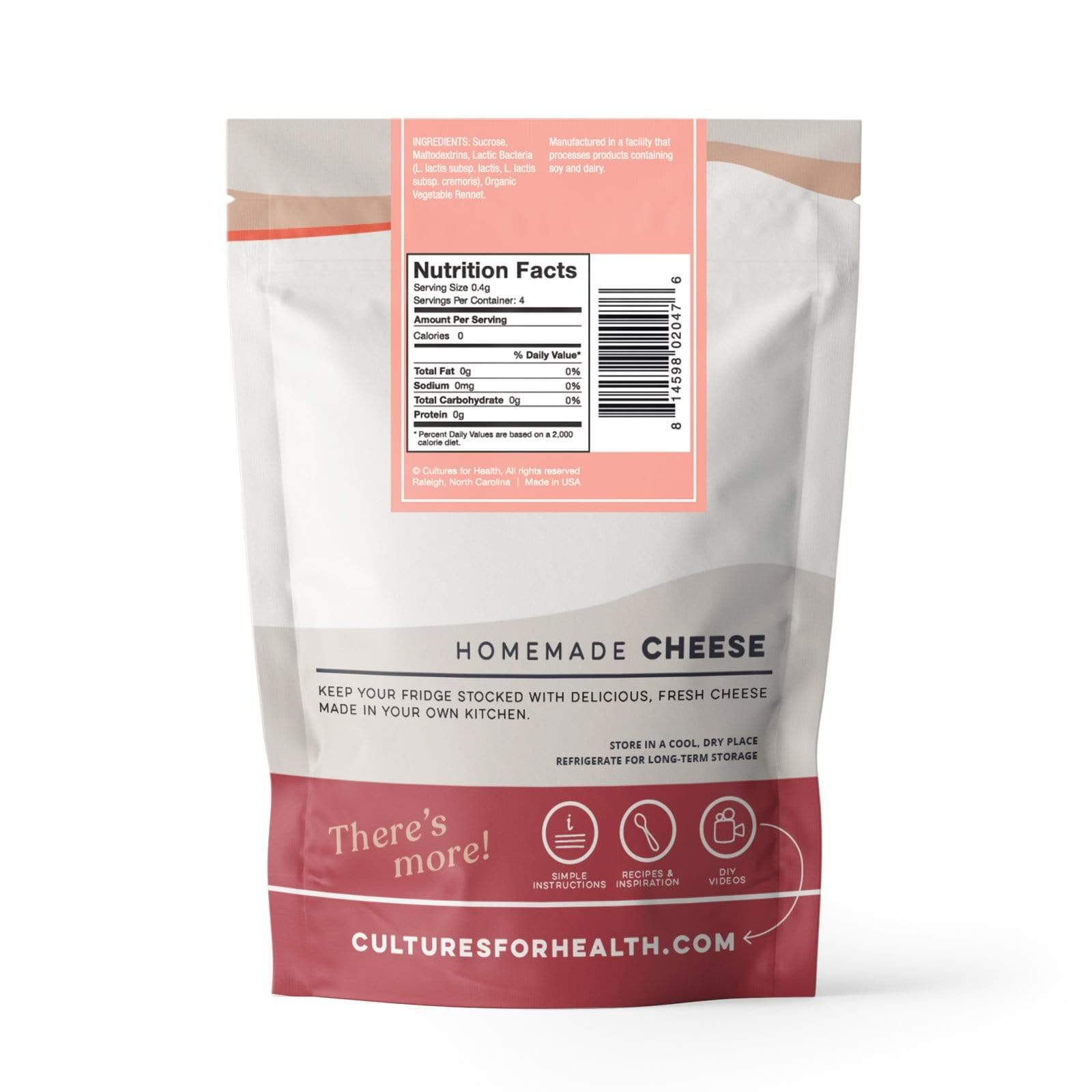
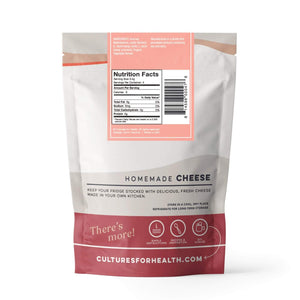
Cream Cheese Culture Includes: Sucrose, Maltodextrins, Lactic Bacteria (Lactococcus lactis subsp. Lactis, Lactococcus lactis supsp. cremoris), Rennet
Click here for instructions for making Cream Cheese.
What is a Direct-Set culture? Direct-Set cultures are a one-time-use culture, they cannot be recultured (i.e. perpetuated beyond the single batch). Direct-Set cultures are often preferred by cheese makers as they require no maintenance or care. Simply keep the packet in the freezer and remove the portion for your recipe when it's time to make cheese. Most Direct-Set cultures contain multiple doses to inoculate multiple batches.
Questions on Cream Cheese Starter Culture
9 Item(s)
- From Judy at 4/13/12 8:57 AM
- From Kathy at 4/23/12 5:08 PM
- From HJ at 4/29/12 11:51 PM
- How many ounces does ONE batch make?
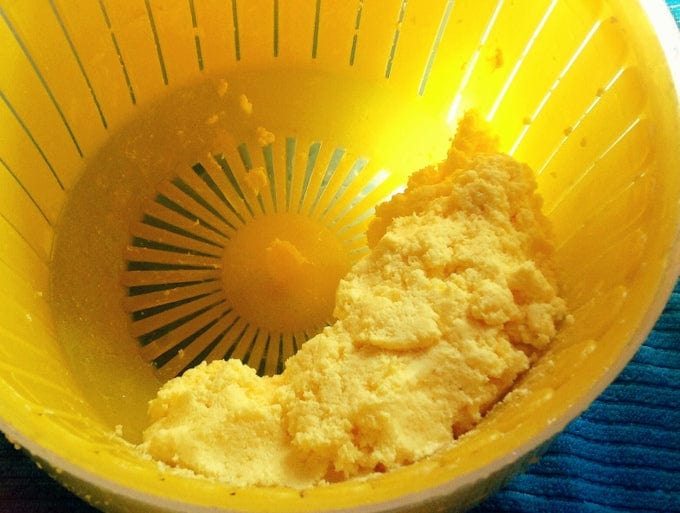
- Each packet of this product will culture between 2 and 4 quarts of milk. Once the milk is cultured, you need to strain it to get the thick consistency of cream cheese, which will reduce the volume... so depending on how much whey you strain out, you may get around half the volume (or more, or less).
- Do you find this question helpful? Yes No
- From Kathy at 5/1/12 2:27 PM
- When using raw milk, do I leave the cream in the milk or should I strain it off? Or, does it matter? I wanted to keep the cream and make butter with it.
- You can try skimming off the cream, but your cheese may turn out very dry and may not press or age properly. Reduced fat cheeses have additives, because taking the fat out changes the texture.
Try making butter from a different batch of milk, and save the fatty cream for the cream cheese, for best results. - Do you find this question helpful? Yes No
- From Jennifer at 5/23/12 8:45 PM
- Can this be used with non-dairy milk?
- We had our cheese expert test this. Here were her results: It does NOT work. I tried it with almond and rice milk, and while they are slightly soured, neither had sufficient solids to turn into anything. It does work with coconut, but not as well as dairy kefir grains do.
- Do you find this question helpful? Yes No
- From Diane at 1/4/13 10:00 AM
- Can I use this culture to make cheese with raw milk?
- Yes you can. There are instructions included with the starter, and here's a page that also has instructions and mentions raw milk: http://www.culturesforhealth.com/how-to-make-cream-cheese-recipe
- Do you find this question helpful? Yes No
- From Brianna at 2/3/13 8:55 PM
- Does whole milk need to be used? Or can skim milk be used?
- The fat in whole milk provides the smooth, creamy thickness that cream cheese is known for. If you use skim milk, you will probably get quite a bit of liquid drained off, and a thin, sparse "cream cheese." Commercially sold reduced-fat cream cheeses use thickeners and stabilizers for body and texture. If you add thickeners and/or stabilizers to skim milk, you could use this culture to make a fairly palatable cream cheese.
- Do you find this question helpful? Yes No
- From jackie at 2/28/13 7:41 PM
- From Tal at 5/10/13 3:30 AM
- Can the cream cheese made from this starter be frozen for use later? Should I salt it before freezing or after?
- You can freeze cream cheese, but the texture will likely change when thawed. It can be more crumbly. Whipping once thawed may help the consistency. Salt should be added prior to freezing.
- Do you find this question helpful? Yes No
Ask Your Own Question
Back to the product pageVideo Testimonials & Reviews
Attention!
Starter cultures, rennet for cheese making and cultured vegetables, juices and condiments are sensitive to excessive heat. Once your order has shipped, an e-mail with tracking information will be sent to you. We encourage you to use the tracking information to anticipate the arrival of your items so they can be removed from the mail box and stored in the refrigerator promptly.