














So, you're thinking about making milk kefir at home? The good news is that making homemade dairy kefir is very easy, once you get into a rhythm, and there are only a couple of supplies you will need...1) a culturing container and 2) a cover for the container.
Beyond those two items, any other supplies are purely optional.
MILK KEFIR CONTAINER
Material Options: What to Use
There are many containers to choose from, but some materials are clearly superior to others.
- Glass. Glass is hands-down the best option for culturing kefir. Glass won’t react to the acidity of the ferment. Glass doesn’t scratch easily, nor does it contain chemicals such as BPA. Glass containers are relatively easy and inexpensive to obtain. Canning jars are a great option.
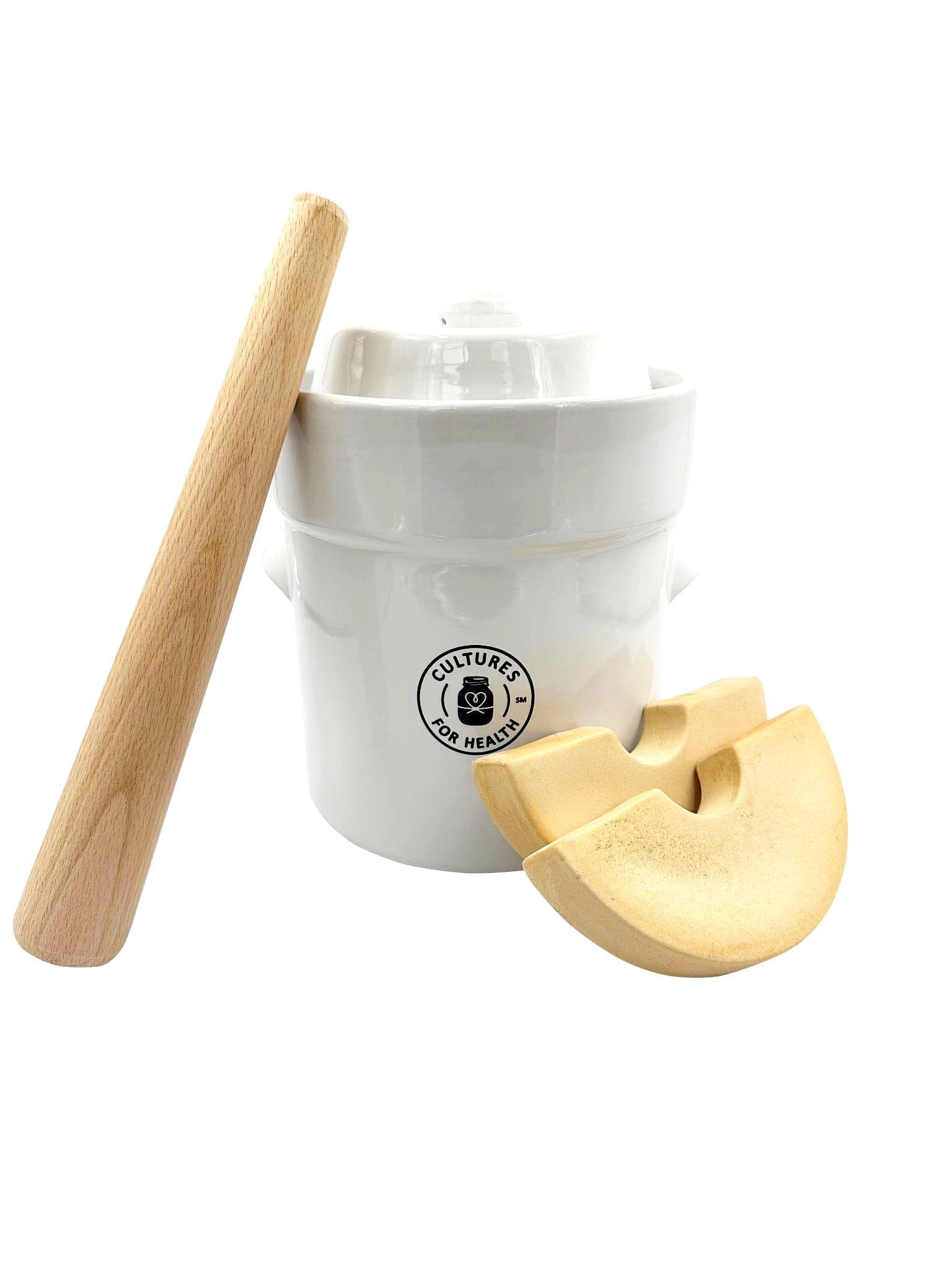
- Ceramic. If you would like to culture kefir in a ceramic container, be sure that it is coated in a food-grade glaze to avoid potential contact with lead.
- Porcelain. Food-grade porcelain is generally safe for culturing kefir. Avoid porcelain pieces such as vases or decorative pottery that are not-food grade.
Material Options: What to Avoid
- Plastic. Although technically plastic can be used to make kefir, we do not recommend it for several reasons. First, plastic can be damaged, and scratches in the plastic can harbor foreign bacteria. Second, plastic (even food-grade plastic) often contains undesirable chemicals that can be harmful to the kefir grains.
- Crystal. Because crystal contains lead we do not recommend using crystal containers for making kefir.
- Metal. Metal is generally detrimental to kefir and should not be used as a culturing vessel or for any item that will have contact with the kefir grains. The only exception is stainless steel. While we do not recommend using it, some people do have success doing so.
Container Size
Kefir can be made in a any size jar. When choosing the size of your culturing container, consider how much kefir you will consume, as each batch of kefir will culture in about 24 hours or less. It is better for the health of the kefir grains to continually make small batches than to make large batches and take breaks.

COVERING MILK KEFIR DURING FERMENTATION
You have lots of options for covering your culturing container. When choosing a cover, keep in mind...
- The cover should allow the culture to breathe.
- Effective coverings include tight-weave dish towels or fabric, a paper towel, a paper coffee filter, etc. Avoid loose-weave fabric and screens.
- You'll also want to secure the cover to keep out pests such as ants or fruit flies. You can do this with a tight rubber band or even the rings from canning jars.
While a tight-fitting lid should not be used during the fermentation process, it is handy to have a lid for storage after fermentation is complete. Plastic bpa-free lids are available for both wide-mouth and regular-mouth canning jars, which are commonly used for culturing milk kefir.
USING A PLASTIC STRAINER
Once the kefir has finished culturing, there are several ways to remove the kefir grains so they can be placed in fresh milk. We recommend a Plastic Fine Mesh Strainer as the best option, especially when working with new grains. Again, when straining grains, metal should be avoided.