Choosing a Yogurt Starter

There are many varieties of yogurt to choose from. All of them contain probiotic bacteria, and all of them will work with dairy milk or alternative milks. Yogurt has been developed in many places throughout the world, and as a result there can be variations in taste, consistency, and types of bacteria.

The type of yogurt culture you choose depends entirely on your personal preferences.

Taste

The characteristic tangy or sour taste of yogurt is due to the acidification of the milk during fermentation. This can range from a taste that is slightly more sour than fresh milk, to a tartness that is quite astringent. The tartness of the yogurt will depend on the type of bacteria culture that’s used, as well as how long the yogurt has fermented. (Longer fermentation means more tart.)

The acidity of yogurt tends to be in the range of pH 4. Yogurt must have a maximum pH of 4.4 to be sold legally in the United States.

Consistency

There is also a great range of firmness and textures in yogurt. The culture used, the length and temperature of culturing, and the type of milk used will all play a part in the consistency of yogurt.

One of the thinnest yogurts is Piimä. When this is made with cream, it becomes just slightly thickened, and is still thin enough to drink through a straw. It is probably the thinnest type of fermented milk that can still be called yogurt. From this very thin style, yogurt can range all the way to Greek-style yogurt, which can be thick enough to hold its shape on a plate.

Yogurt can be ropy (holds together like glue), creamy, or gelatinous. These variations are due mostly to the type of bacteria that is used.

Source

Yogurt cultures that have originated in different parts of the world have characteristic flavors and consistencies. People from different cultures often develop a taste for certain types of yogurt, and measure all other yogurts against their own “standard.”

Perpetuation

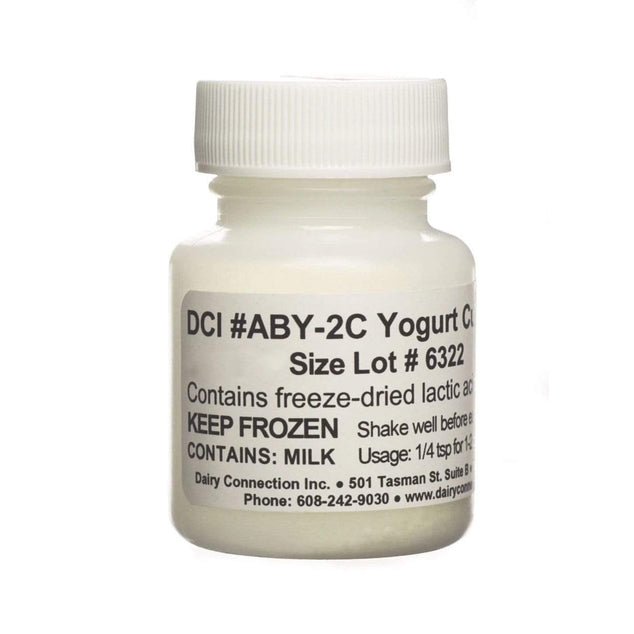
Direct-set cultures are powders that are added to a quantity of milk to produce a single batch of yogurt. With some care, a direct-set starter can be re-cultured two or three times by saving some of the yogurt and adding it to another batch of milk to produce additional yogurt. Eventually, however, a new direct-set starter must be used.

Reusable cultures can be propagated indefinitely. With each batch, some of the yogurt is saved to add to a new batch of milk to make more yogurt. Reusable cultures should be re-propagated at least every five to seven days to maintain the vigor of the bacteria.

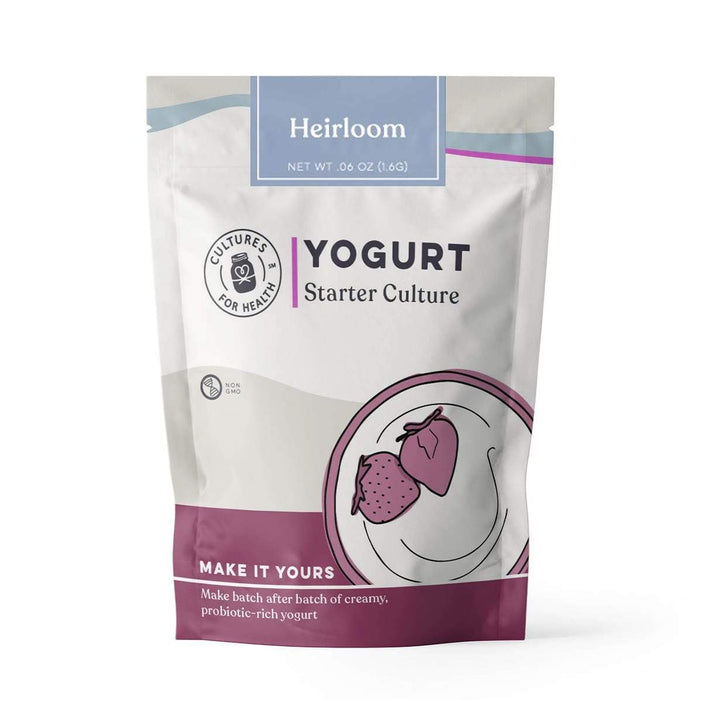
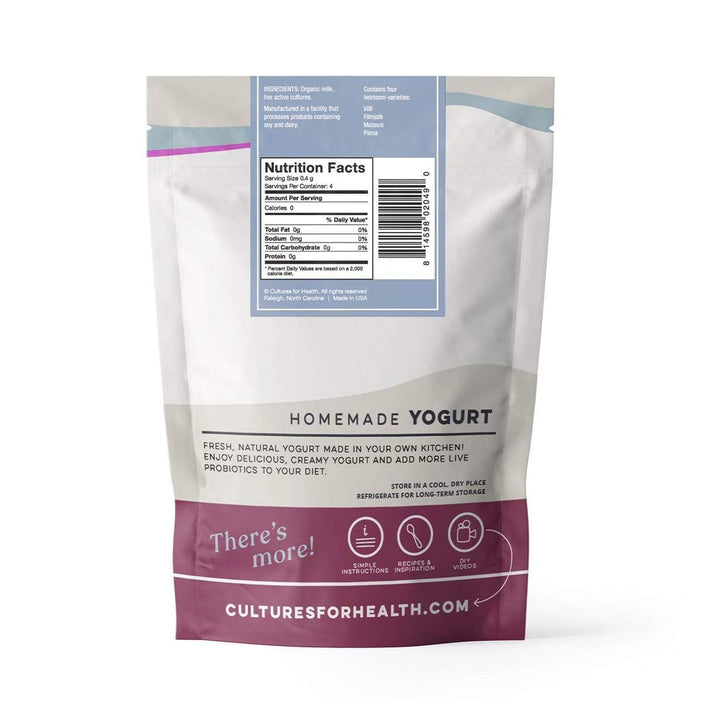
An heirloom cultures is a type of reusable culture that has been propagated from a particular region of the world, and that has a distinctive taste and consistency.


Culturing Temperature

Thermophilic means “heat-loving.” To make yogurt with a thermophilic culture, you must heat the milk to a temperature that will break down the milk proteins (about 180°F), then cool it back down to culturing temperature (around 110°F). The culture is added to the warm milk and kept at that temperature while it cultures; usually between 4 and 12 hours. Thermophilic cultures typically produce yogurt that is thicker than a yogurt from a mesophilic culture.

Mesophilic means “medium-loving,” indicating that a mesophilic culture will propagate best at a cozy room temperature (around 70° to 78°F). With a mesophilic culture, there is no need to preheat the milk. The culture is simply added to the milk and allowed to sit at room temperature as it cultures; usually between 12 and 24 hours. Mesophilic cultures typically produce yogurt that is not as thick as a yogurt from a thermophilic culture.

Comparison of Yogurt Cultures

These are the yogurt cultures sold by Cultures for Health. The different combinations of bacteria produce the specific characteristics of the various yogurts.


Culture Source Taste Consistency Process Bacteria
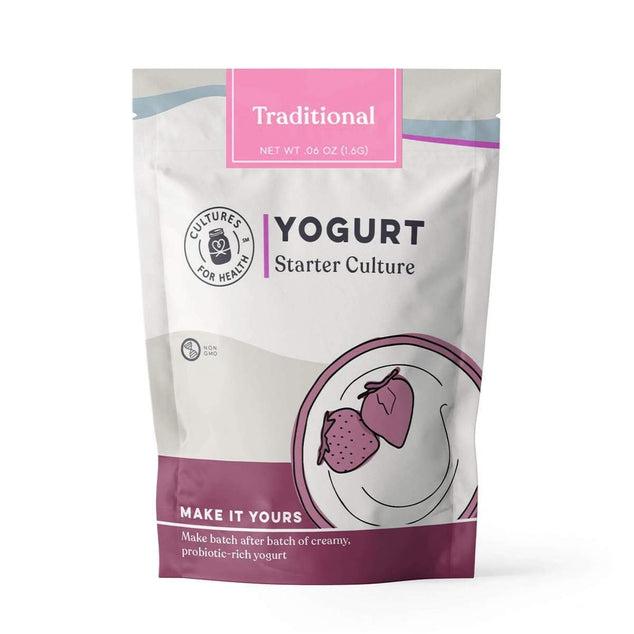
“Traditional Flavor”   Slightly tart Thick, smooth, with a firm body Direct-set, thermophilic -Streptococcus Thermophilus -Lactobacillus delbrueckii subsp. bulgaricus
 -Lactobacillus delbrueckii subsp. lactis
·Lactobacillus acidophilus
·Bifidobacterium lactis  
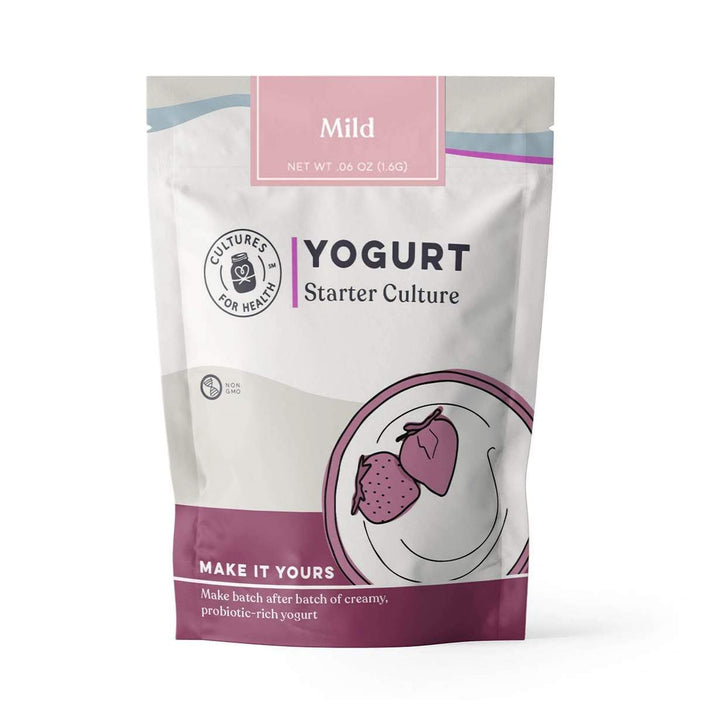
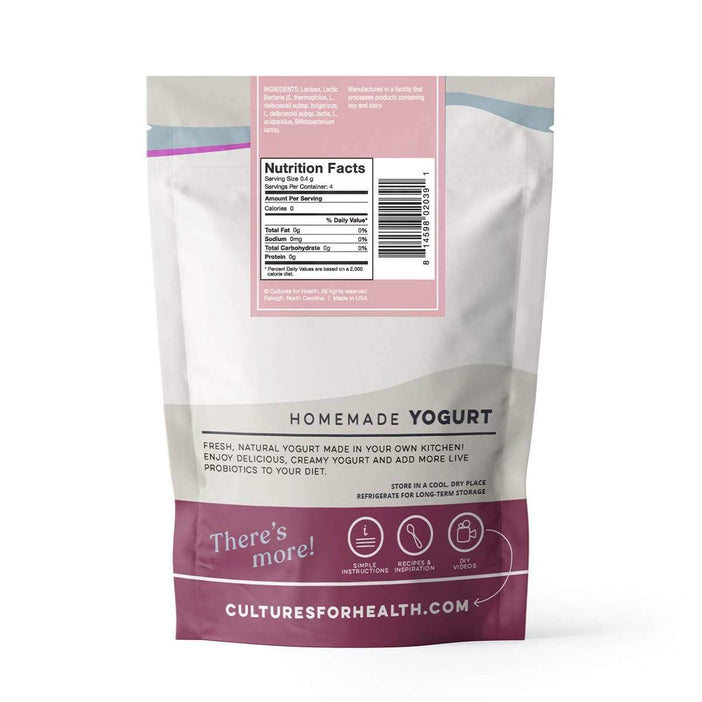
“Mild Flavor”
Mild yogurt flavor Thick, smooth, with a heavy body Direct-set, thermophilic   -Streptococcus Thermophilus -Lactobacillus delbrueckii subsp. bulgaricus
 -Lactobacillus delbrueckii subsp. lactis
·Lactobacillus acidophilus
·Bifidobacterium lactis
 
Viili: this is not the "ropey" variety of Viili; this variety has a more jelly-like consistency and is a good choice for children. Finland (originally from Sweden) Mild Moderately thick, jelly-like Heirloom, mesophilic ·Lactococcus lactis subsp. cremoris
·Lactococcus lactis subsp. lactis biovar. diacetylactis
·Leuconostoc mesenteroides subsp. cremoris
Filmjölk: has a different, non-yogurt taste sometimes described as slightly cheesy. Sweden Mild, almost cheesy Moderately thick, smooth Heirloom, mesophilic ·Lactococcus lactis
·Leuconostoc mesenteroides
Matsoni: The stronger flavor holds up beautifully to freezing making it a great choice for frozen yogurt. Georgia (Caucasus). Also known in Japan as Caspian Sea Yogurt. Somewhat tart, more strongly flavored than many yogurts Moderately thick, smooth Heirloom, mesophilic ·L. lactis subsp. cremoris
·Acetobacter orientalis
Piimä: Makes a wonderful base for smoothies or creamy salad dressings; also useful for adding bacteria to pasteurized milk while maintaining a beverage-like consistency Finland Fairly mild Thin, similar to buttermilk Heirloom, mesophilic ·S. lactis var. bollandicus
·S. taette
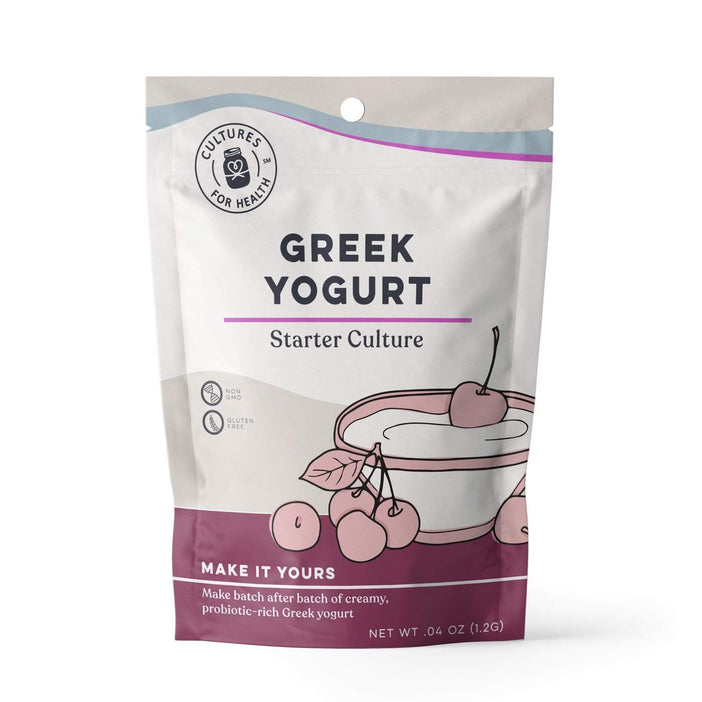
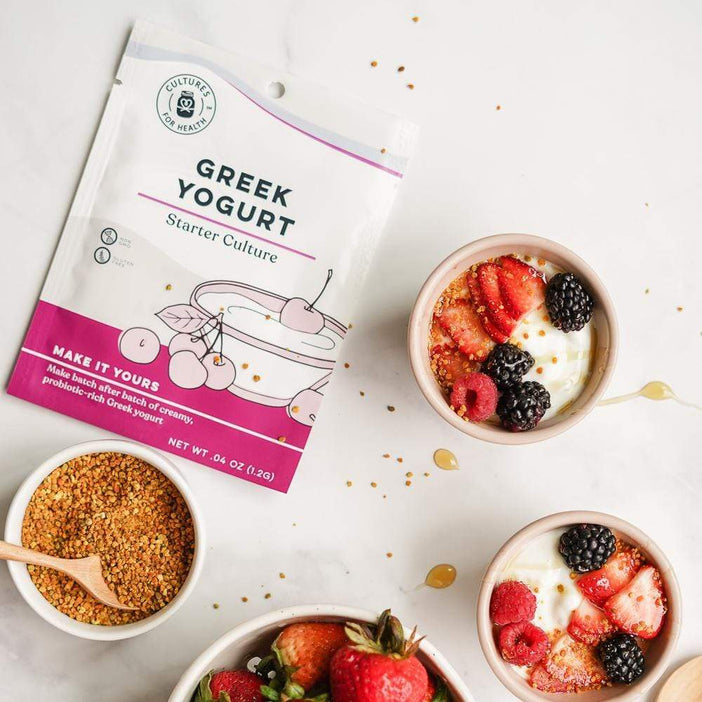
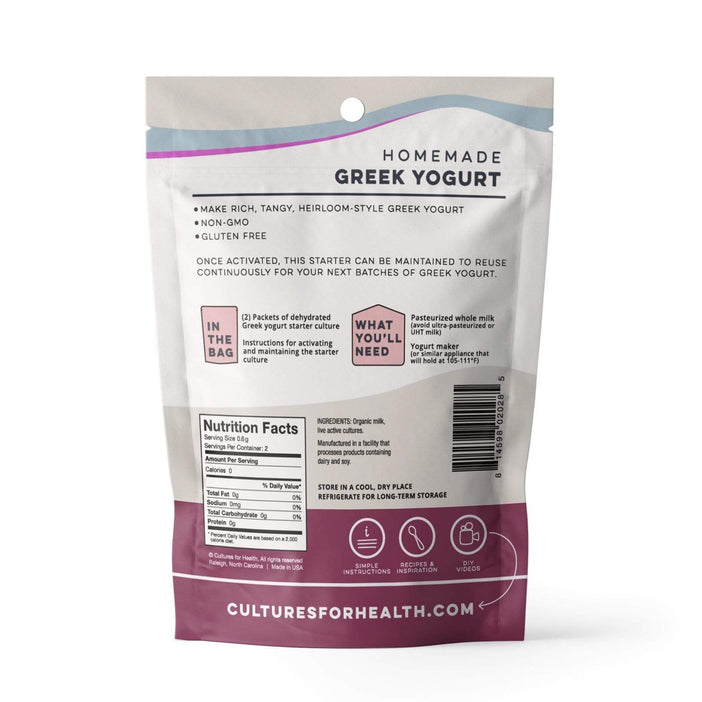
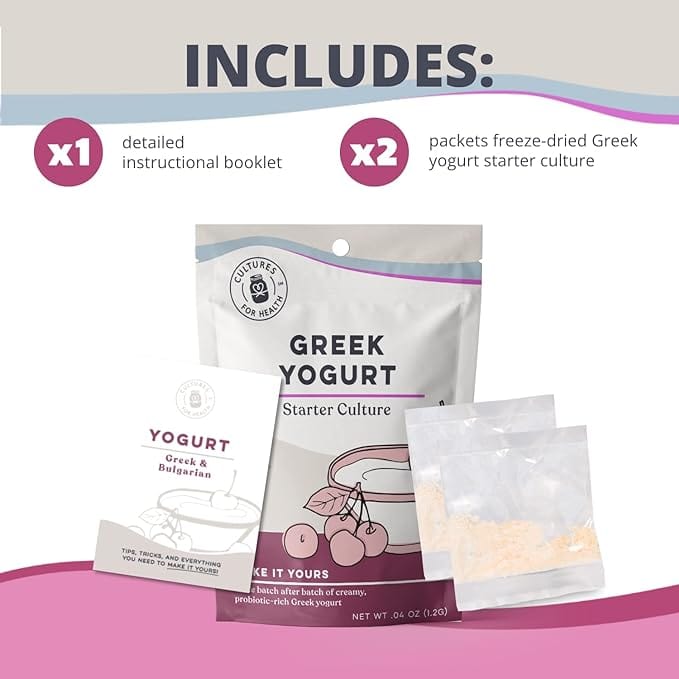
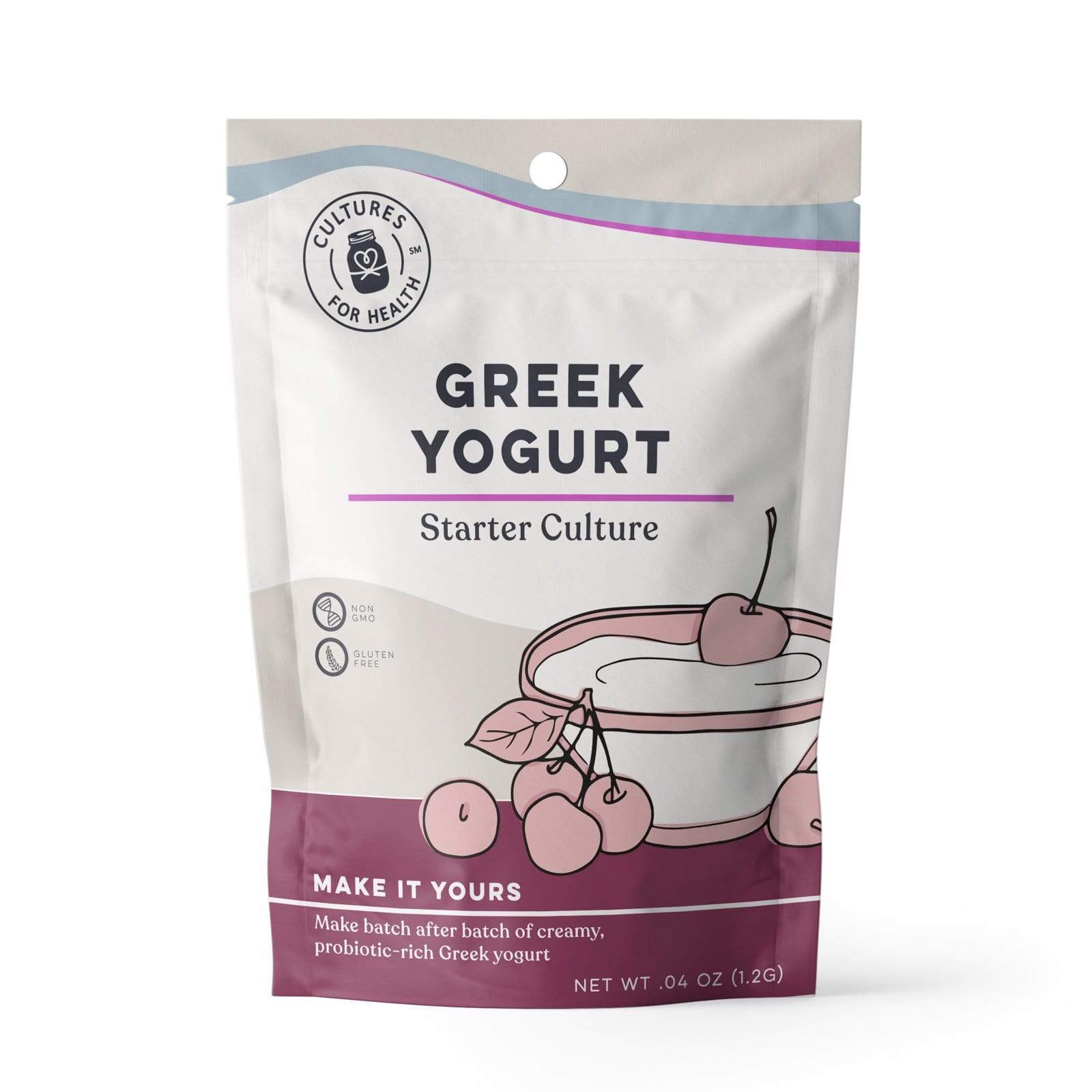
Greek: Can be strained to achieve the very thick consistency characteristic of commercial Greek-style yogurt. Greece Slightly tangy Semi-thick, smooth Reusable, thermophilic ·L. Bulgaricus
·S. Thermophilus
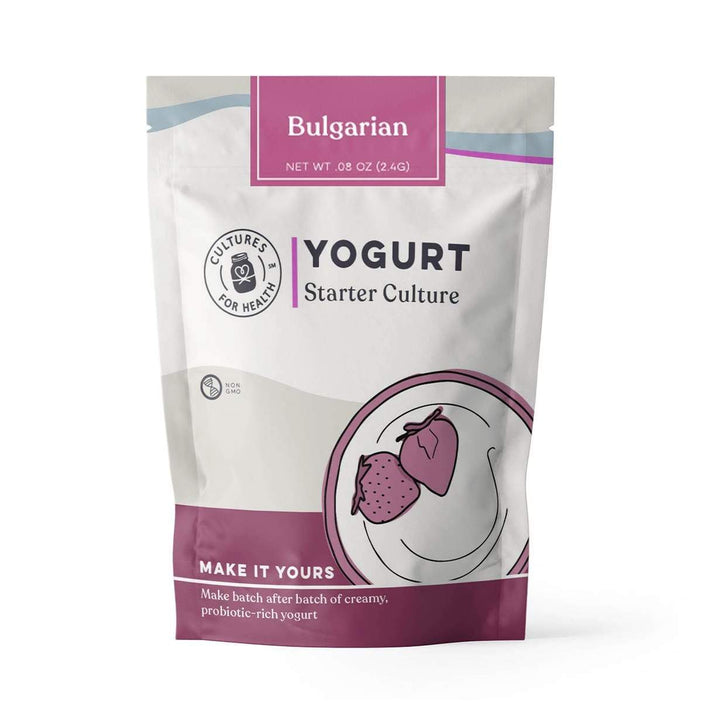
Bulgarian: Perhaps the most popular variety in the world and is a good choice if you are looking for classic yogurt taste Bulgaria Traditional yogurt taste Semi-thick, smooth Reusable, thermophilic ·L. Bulgaricus
·S. Thermophilus
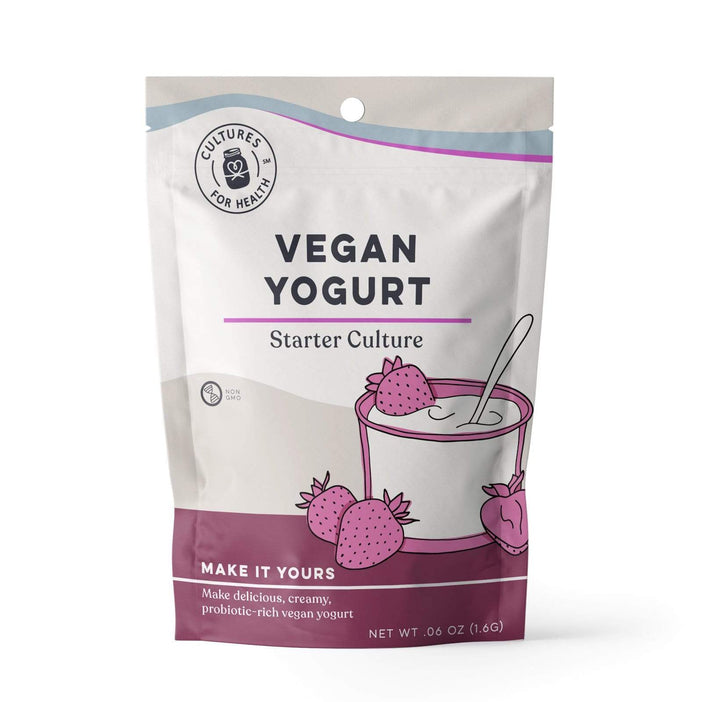
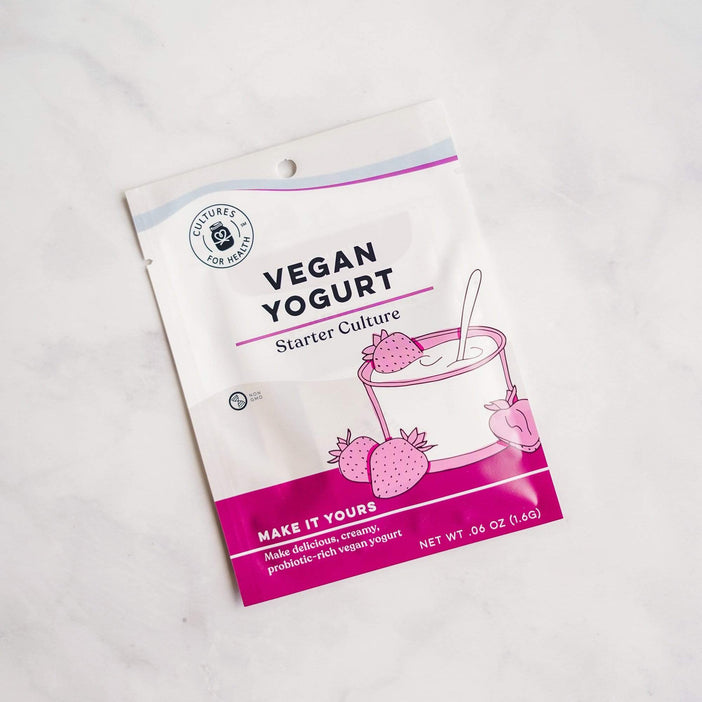
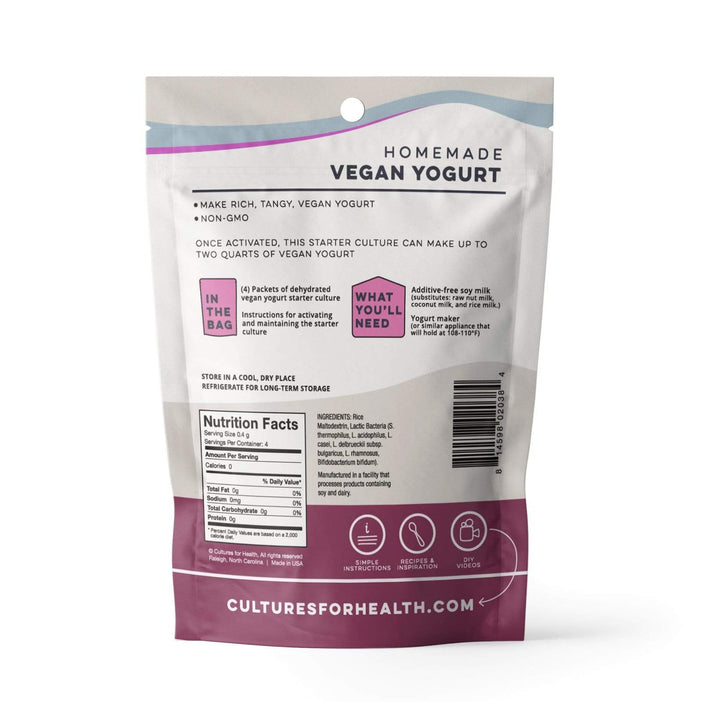
Vegan Dairy-Free: ideally suited for soy or rice milks, can also be used with nut milks.
Takes on the flavor of the milk in which it is cultured Usually thick and smooth; varies with the milk used Direct-set, thermophilic -Bifidobacterium bifidum
·Lactobacillus acidophilus
·Lactobacillus casei
·Lactobacillus delbrueckii subsp bulgaricus
·Lactobacillus rhamnosus
·Streptococcus thermophilus     
Kosher Yogurt Starter, Traditional Flavor: Certified Circle K (dairy) starter.
Traditional tart flavor Heavy body, smooth. Direct-set, thermophilic -Streptococcus Thermophilus -Lactobacillus delbrueckii subsp. bulgaricus
 -Lactobacillus delbrueckii subsp. lactis
·Lactobacillus acidophilus
·Bifidobacterium lactis   


Bacteria Strains

Various health claims have been made for yogurt in general, and for specific bacteria strains. While we cannot comment on health benefits or medical effects of our products, we encourage our customers to research this subject on their own.

In addition to any effects on their consumers’ health, different bacteria strains can also affect how yogurt develops and tastes.

For a product to be sold as “yogurt” in the United States, a culture must include Lactobacillus bulgaricus or Lactobacillus delbrueckii subsp. Bulgaricus, and Streptococcus thermophilus or Streptococcus salivarius subsp. Thermophilus. By this definition, cultured milk products that do not contain this combination are not yogurt, but do have many of the same properties as yogurt, including taste and consistency, and can be used like yogurt in recipes. They are often called "yogurt" as well.

Acetobacter orientalis is a bacteria native to Indonesia. It lowers the pH of the milk, and also produces gases during fermentation. It was first identified in Japan in what is known as Caspian Sea Yogurt (also known as Matsoni).

Bifidobacterium longum digests lactose and produces lactic acid, lowering the pH of milk and allowing the milk protein to coagulate. It makes up about 90% of the bacteria in the intestines of human infants and assists in the digestion of breast milk, but decreases over time and makes up only about 5% of the bacteria in the adult intestinal tract. Bifidobacterium longum is unique among intestinal organisms in that it is able to utilize non-digestible plant fibers when inulin (a soluble fiber) is present.

Lactobacillus acidophilus breaks down lactose and produces lactic acid as its sole product. L. acidophilus occurs naturally in the human digestive system and other parts of the body.

Lactobacillus delbrueckii subsp. bulgaricus breaks down lactose to produce lactic acid, which lowers the pH of milk and causes the protein to coagulate. It cannot ferment any sugar other than lactose.

Lactococcus lactis subsp. cremoris is a variety of Lactococci that has a pronounced ability to develop flavor in the foods it ferments. It digests lactose and produces lactic acid, lowering the pH of milk and allowing the milk protein to coagulate. It produces a characteristic gel-like polysaccharide that is typical of Viili yogurt.

Lactococcus lactis digests lactose and produces lactic acid, lowering the pH of milk and allowing the milk protein to coagulate. It can also be used to ferment vegetables and grains as well as non-dairy milks.

Lactococcus lactis subsp. lactis biovar. diacetylactis digests lactose and produces lactic acid, lowering the pH of milk and allowing the milk protein to coagulate. It has a tendency to dominate over other lactococci. This bacteria produces a characteristic buttery flavor and aroma in the milk products it ferments.

Leuconostoc mesenteroides is a mesophilic bacteria known for producing a sour taste and a gel-like texture. It’s generally found on crop plants, and can also be used to ferment vegetables. It also speeds up the process of acidification in milk and promotes an anaerobic (no oxygen) environment, which inhibits pathogenic bacteria.

Leuconostoc mesenteroides subsp. cremoris is a mesophilic bacteria that is often used to produce aroma during the culturing process.

S. lactis var. bollandicus, along with S. taette, is used to make Piima, a cultured milk that is often considered to be a type of yogurt. It produces a sour flavor.

Streptococcus thermophilus breaks down lactose, producing lactic acid, lowering the pH of the milk and causing the protein to coagulate. By law, in order to be sold as “yogurt,” a product must include this bacteria.

S. taette, along with S. lactis var. bollandicus, is used to make Piima, a cultured milk that is often considered to be a type of yogurt. S. taette produces a sour flavor and a viscous texture.


Homemade Yogurt
 

FREE eBOOK!

Get a free copy of our 
Learn to Make Yogurt eBook. 75+ page eBook including detailed instructions and recipes!


Related Articles & Recipes:


Related Products:

Bulgarian Yogurt Starter Yogurt Starter
Yogurt Maker Yogurt Makers
Cotton Bag for Making Yogurt Cheese Lebneh
Cotton Bag for Making Soft Cheese


<table style="width: 506px;" border="0" align="left">
<tbody>
<tr>
<td><span style="font-family: verdana,geneva; font-size: small;">&nbsp;</span> <br />
<p><span style="font-family: verdana,geneva; font-size: small;">Originally a simple fermented dairy product, yogurt now has many variations and personalities. It can be thin and runny, or thick and firm. It can be made from cow milk, goat milk, sheep milk, nut milk, soy milk, rice milk, and from numerous other creamy substances. In some countries the milk of buffalo, horses, yaks, or camels is used.</span><br /><br /><span style="font-family: verdana,geneva; font-size: small;">For most of this discussion, we&rsquo;ll refer to yogurt in its original form: a fermented dairy milk. This was how yogurt was first developed, and most of the yogurt in the world is made this way.</span><br /><br /><span style="font-family: verdana,geneva; font-size: small;">Essentially yogurt is the product of beneficial bacteria fermenting milk and turning it into a thickened, acidic food that will stay fresh longer than milk itself, and that contains millions of bacteria that are welcomed by the human gut.</span></p>
<h1><br /><strong><span style="font-family: verdana,geneva; font-size: small;">The History of Yogurt</span></strong></h1>
<p><span style="font-family: verdana,geneva; font-size: small;">The word yogurt comes from a Turkish word meaning to curdle or to thicken. Today it is spelled yogurt, yoghurt, or yogourt, with yogurt being the most common American spelling.</span><br /><br /><span style="font-family: verdana,geneva; font-size: small;">It&rsquo;s probable that the earliest yogurt was made by accident in Mesopotamia around 5,000 BC, when milk-producing animals were first domesticated. The milk was likely stored and transported in bags made from the stomachs of these animals, and the digestive juices and bacteria in the stomach linings made the milk coagulate and become acidic. Not only was it a new and interesting food, but the acidity and helped to keep it edible for longer</span> <span style="font-family: verdana,geneva; font-size: small;">than if it had just sat out in a bowl or jar.</span><br /><br /><span style="font-family: verdana,geneva; font-size: small;">There is also some evidence of yogurt being used as a cleaning product and a beauty lotion as early as 2000 BC. The acidity of the yogurt helps clean away dirt and rust, and also helps clear away dead skin and nourish healthy skin cells.</span><br /><br /><span style="font-family: verdana,geneva; font-size: small;">Yogurt was a popular food in the Middle East for thousands of years, and has been a staple of the Eastern European diet. It&rsquo;s now eaten throughout the world, as a main course, a snack, an ingredient in many recipes, and a condiment. It has gained considerable popularity in America in the last forty or fifty years, in keeping with general trends toward organic, cultured, and nutrient-dense foods.</span><br /><br /><span style="font-family: verdana,geneva; font-size: small;">Yogurt can be mildly tart or quite sour, and can be thick enough to stand up on a plate, or thin enough to pour, or anywhere in between. It contains protein and calcium as well as a variety of vitamins. Additionally, the process of yogurt fermentation is very similar to the process of digestion, so it can be easily consumed.</span><br /><br /><span style="font-family: verdana,geneva; font-size: small;">Many people eat yogurt plain, while others prefer to mix it with fruits or vegetables, or to add flavors or sweeteners. It is used in a variety of recipes as a flavor enhancer or leavening, and frequently enjoyed as a refreshing drink.</span></p>
<h1><br /><strong><span style="font-family: verdana,geneva; font-size: small;">Nutritional Content</span></strong></h1>
<p><span style="font-family: verdana,geneva; font-size: small;">Not only does yogurt contain the same amount of protein and fat as the milk from which it is made, it also contains calcium, riboflavin, vitamin B6, and vitamin B12. While numerous claims have been made regarding the health benefits and digestibility of yogurt, we don&rsquo;t comment on medical, health, or nutritional qualities of our products. However, a great deal of research on the subject is readily available on the Internet and in dozens of books.</span></p>
<h1><br /><strong><span style="font-family: verdana,geneva; font-size: small;">How is Yogurt Made?</span></strong></h1>
<p><strong><span style="font-family: verdana,geneva; font-size: small;">&nbsp;</span></strong><span style="font-family: verdana,geneva; font-size: small;">True yogurt is made from animal milk. Theoretically, the milk of any mammal could be used to make yogurt.</span><br /><br /><span style="font-family: verdana,geneva; font-size: small;">With care, yogurt cultures can also be used to ferment and coagulate non-dairy &ldquo;milks&rdquo; such as the creamy liquid obtained from nuts, rice, soy, or coconut. While these products are technically not really yogurt, they can be used and enjoyed just like dairy yogurt, alone or in recipes.</span><br /><br /><span style="font-family: verdana,geneva; font-size: small;">Put very simply, the process of turning milk into yogurt involves fermentation. Certain types of bacteria act on the lactose (milk sugar) that is in milk, and produce lactic acid. The lactic acid lowers the pH of the milk, and causes the milk protein to coagulate and make a firm mass. The acidified milk is an inhospitable environment for destructive bacteria, so the yogurt stays fresh longer than untreated milk.</span><br /><br /><span style="font-family: verdana,geneva; font-size: small;">The bacteria that does this is called beneficial bacteria, because it supports digestion and is nourishing, as opposed to pathogenic (harmful) bacteria that causes disease. The beneficial bacteria is called probiotic. It&nbsp; is similar or identical to the type of bacteria that lives in the human gut and which is responsible for the process of food absorption. When you use live cultures, the probiotics stay in the yogurt, and the yogurt can then be used as a starter to make more yogurt.</span></p>
<h1><br /><strong><span style="font-family: verdana,geneva; font-size: small;">Yogurt and Other Fermented Dairy Products</span></strong></h1>
<p><span style="font-family: verdana,geneva; font-size: small;">There are many different ways that beneficial bacteria can be introduced to milk and make an entirely new food. The main difference between the different fermented dairy products is the bacteria used to make them, resulting in different flavors and consistencies.</span><br /><br /><span style="font-family: verdana,geneva; font-size: small;"><em>Yogurt</em> can be cultured with a variety of different bacteria combinations, each of which gives the yogurt a characteristic taste and consistency. There are typically somewhere between the range of two to six different bacteria strains in yogurt, and they are similar to the bacteria found in the intestines.</span><br /><br /><span style="font-family: verdana,geneva; font-size: small;"><em>Kefir</em> is a thickened milk made from little clumps of yeast, bacteria, and milk proteins that ferment the milk. There are about thirty different bacteria strains present in kefir grains. It has a slightly sour flavor and sometimes a faint effervescence. Koumiss is a similar product, made from mare&rsquo;s milk.</span><br /><br /><span style="font-family: verdana,geneva; font-size: small;"><em>Buttermilk</em> is the name given to the whey that&rsquo;s left over when butter is made, but it more commonly refers to a milk drink made by adding bacteria to low-fat milk, producing a thickened product with a tangy flavor.</span><br /><br /><span style="font-family: verdana,geneva; font-size: small;"><em>Sour cream</em> is cream or high-fat milk that&rsquo;s been cultured and thickened. It&rsquo;s very slightly sour, and usually quite thick. It was originally made by letting fresh cream thicken naturally as a result of fermentation from the bacteria present in the cream. When cream is pasteurized and has no natural bacteria present, it must be fermented with added bacteria.</span><br /><br /><span style="font-family: verdana,geneva; font-size: small;"><em>Cr&egrave;me fraiche</em> is a European-style sour cream, slightly sweeter than what we are used to in America. It&rsquo;s also made by letting raw cream thicken naturally, or by adding buttermilk cultures to cream. Cr&egrave;me fraiche can be heated without curdling, unlike sour cream.</span><br /><br /><span style="font-family: verdana,geneva; font-size: small;">In recipes, you can often substitute one cultured milk product for another and get similar results. In fact, sometimes it is hard to tell the difference between a thin, tart yogurt and a thick, sour kefir or a creamy buttermilk!</span><br /><br /><span style="font-family: verdana,geneva; font-size: small;"><em>Soft and hard cheeses</em> are also made by culturing milk over a longer period of time. Some cheeses can be easily made by straining the moisture out of yogurt or sour cream, while others require additional fermentation and culturing steps.</span></p>
<ul>
</ul>
<ul>
</ul>
<ul>
</ul>
<ol> </ol>
<p><br /><br /></p>
</td>
<td>&nbsp; &nbsp; &nbsp; &nbsp; &nbsp; &nbsp; &nbsp; &nbsp; &nbsp; &nbsp; &nbsp; &nbsp; &nbsp; &nbsp; &nbsp; &nbsp; &nbsp; &nbsp; &nbsp; &nbsp; &nbsp; &nbsp; &nbsp; &nbsp;&nbsp; <br /></td>
</tr>
<tr>
<td>&nbsp;</td>
<td>&nbsp;</td>
</tr>
</tbody>
</table>
<table style="width: 200px;" border="0" align="left">
<tbody>
<tr>
<td colspan="2"><img src="http://d2pdixw6ufb0t8.cloudfront.net/media//Greek_Yogurt_200px_1.jpg" alt="Yogurt" /><br /></td>
</tr>
<tr>
<td colspan="2">
<p><span style="font-family: verdana,geneva;"><br /><strong>Related Articles &amp; Recipes:</strong></span></p>
<ul>
<li><a title="Yogurt Making How-to Videos" href="http://www.culturesforhealth.com/how-to-videos#yogurt_video" target="_blank"><span style="font-family: verdana,geneva; font-size: small;">Yogurt Making How-to Videos</span></a></li>
<li><a title="How to Make Lebneh" href="http://www.culturesforhealth.com/how-to-make-lebneh-yogurt-cheese" target="_blank"><span style="font-family: verdana,geneva; font-size: small;">How to Make Lebneh (aka Yogurt Cheese)</span></a><span style="font-family: verdana,geneva;">&nbsp;</span></li>
<li><span style="font-family: verdana,geneva;"><a title="Yogurt FAQ" href="http://www.culturesforhealth.com/expert-advice/Yogurt-Starter-FAQ.html" target="_blank">Yogurt FAQ</a><br /></span></li>
</ul>
<p>&nbsp;</p>
</td>
</tr>
<tr>
<td colspan="2">
<p><strong><span style="font-family: verdana,geneva;">Related Products:</span></strong></p>
</td>
</tr>
<tr>
<td><a title="Yogurt Starter" href="http://www.culturesforhealth.com/starter-cultures/yogurt-starter.html" target="_blank"><img src="http://d2pdixw6ufb0t8.cloudfront.net/media//Bulgarian_75px.jpg" alt="Bulgarian Yogurt Starter" /></a></td>
<td><a title="Yogurt Starter" href="http://www.culturesforhealth.com/starter-cultures/yogurt-starter.html" target="_blank"><span style="font-family: verdana,geneva;">Yogurt Starter</span></a></td>
</tr>
<tr>
<td><a title="Yogurt Makers" href="http://www.culturesforhealth.com/kitchen-appliances-1/yogurt-makers.html" target="_blank"><img src="http://d2pdixw6ufb0t8.cloudfront.net/media//Euro_Cuisine_Yogurt_Maker_YM80_75px.jpg" alt="Yogurt Maker" /></a></td>
<td><a title="Yogurt Starter" href="http://www.culturesforhealth.com/starter-cultures/yogurt-starter.html" target="_blank"><span style="font-family: verdana,geneva;"></span></a><a title="Yogurt Makers" href="http://www.culturesforhealth.com/kitchen-appliances-1/yogurt-makers.html" target="_blank"><span style="font-family: verdana,geneva; font-size: small;">Yogurt Makers</span></a></td>
</tr>
<tr>
<td><a title="Cotton Bag for Making Soft Cheese" href="http://www.culturesforhealth.com/cotton-bag-for-making-soft-cheese.html" target="_blank"><img src="http://d2pdixw6ufb0t8.cloudfront.net/media//Soft_Cheese_Bag_75px.jpg" alt="Cotton Bag for Making Yogurt Cheese Lebneh" /></a><br /></td>
<td><a title="Cotton Bag for Making Soft Cheese" href="http://www.culturesforhealth.com/cotton-bag-for-making-soft-cheese.html" target="_blank"><span style="font-family: verdana,geneva;">Cotton Bag for Making Soft Cheese</span></a></td>
</tr>
</tbody>
</table>