Details
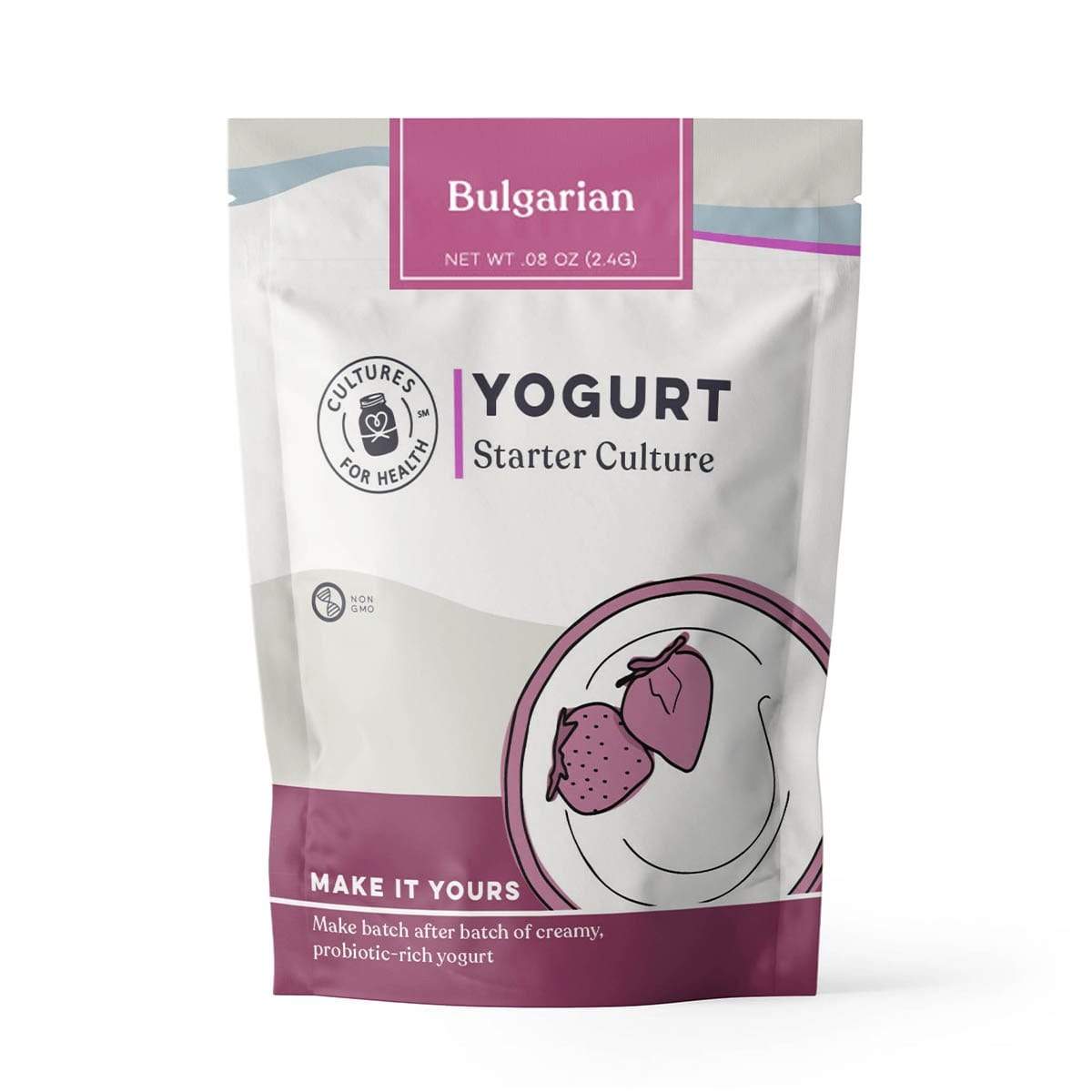
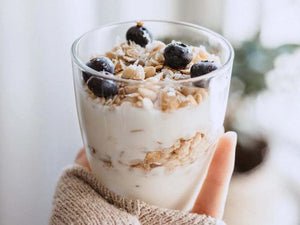
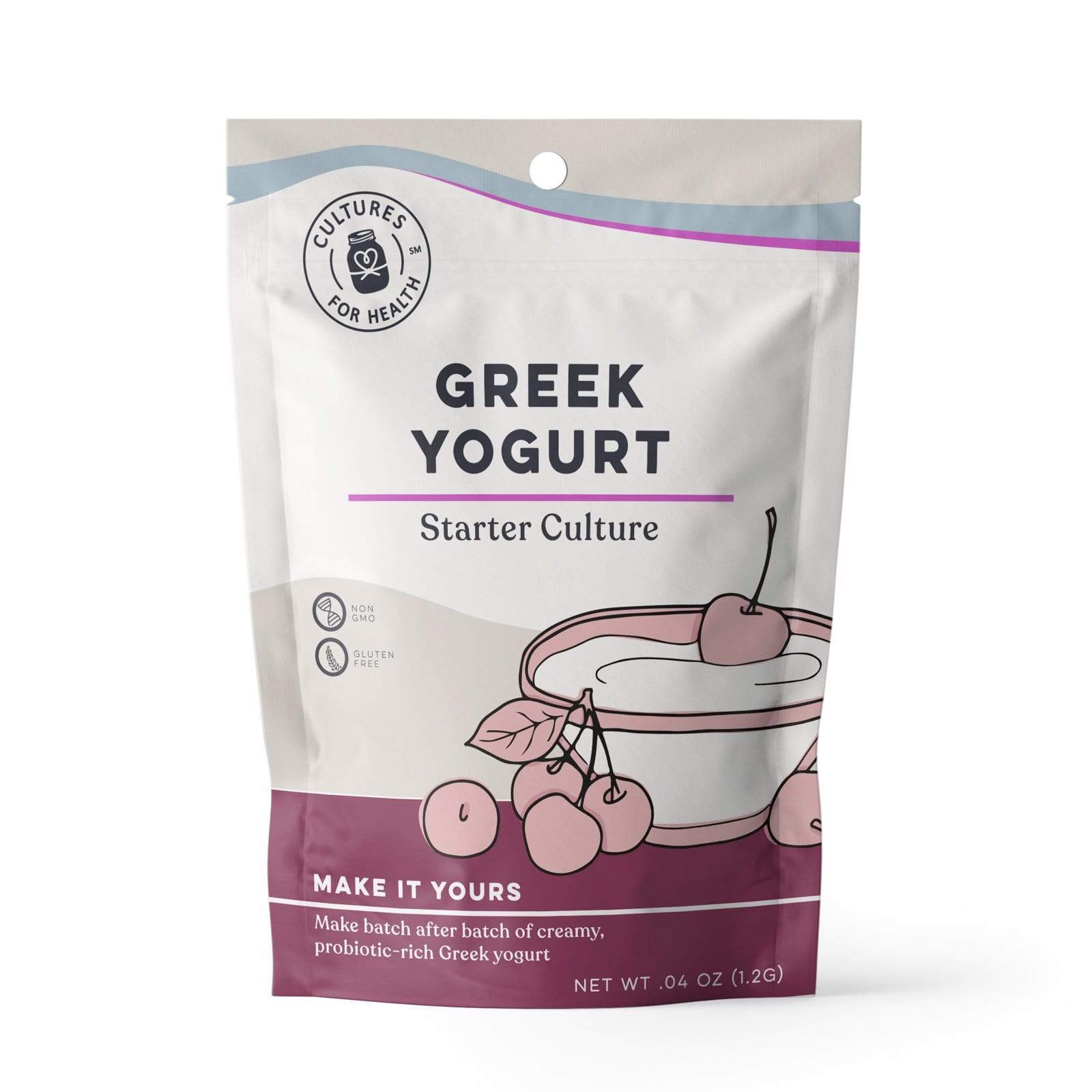
Our Bulgarian starter culture makes a rich and creamy homemade yogurt. The Bulgarian variety of yogurt is perhaps the most popular variety of yogurt in the world. It is easy to make and the culture perpetuates from one batch to the next making it an economical variety to use for homemade yogurt. It is best made with whole milk and will be even more decadent if made with one part cream to three parts whole milk. Low fat milk can be used but will result in a thinner consistency. If you are looking to replicate the taste of commercial yogurt at home, this is an excellent yogurt starter.
Our Bulgarian yogurt starter culture contains live active bacteria. No need to continually buy yogurt starter! One packet of yogurt culture can be used to make unlimited amounts of homemade yogurt as it can be serial cultured--a small amount of yogurt from the current batch is then reserved to inoculate the next batch of homemade yogurt. With care, this yogurt culture can be used to make homemade yogurt indefinitely. In addition, making yogurt at home is an economical option as making yogurt at home generally saves about 50% over buying yogurt at the grocery store.
How to Make Bulgarian Yogurt: Our Bulgarian starter culture is a Thermophilic yogurt culture and cultures with the aid of a yogurt maker or similar heat source (click here for alternatives to a yogurt making appliance). Our Bulgarian starter culture can be serial cultured--a small amount of yogurt from the current batch is then reserved to inoculate the next batch of homemade yogurt. With care, our Bulgarian culture can be used to make homemade yogurt indefinitely.
This yogurt starter can be used with goat milk although due to the lower fat content of goat milk, the resulting yogurt may be significantly less thick than yogurt made with whole cow milk.
Full instructions for making yogurt using our Bulgarian starter culture can be found here and will be shipped with your order. Our instruction sheet also includes special instructions for customers wishing to make yogurt with raw milk.
Using alternative milks: Bulgarian Yogurt starter may be used with alternative milks (soy, coconut, etc.) but is unlikely to reculture beyond the first few generations. Therefore we strongly recommend keeping a back-up dairy-based culture on hand for making yogurt with alternative milks. Bulgarian yogurt starter can be used with goat milk although due to the nature of goat milk, the resulting yogurt may be significantly less thick than yogurt made with whole cow milk. We do not recommend using UHT (aka ultra-pasteurized) milk when working with any starter culture.
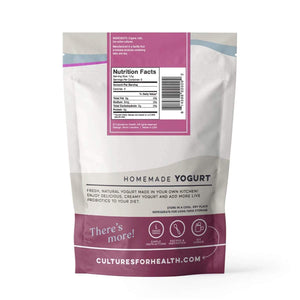
Ingredients: Organic milk, live active bacteria (L. Bulgaricum, S. Thermophilus).
Produced or packaged in a facility that also manufactures products made with wheat, dairy, soy, eggs, nuts, and fish.
Shipping Information: Our Bulgarian starter culture is shipped in a barrier sealed packet as a freeze dried yogurt culture in a dairy carrier. Please keep it in a cool dry place until you are ready to make your first batch of homemade yogurt. We ship enough yogurt culture to make two batches of yogurt starter. We recommend that you reserve the second packet of yogurt starter in the refrigerator or freezer to use as a back-up.
Detailed culturing instructions will be included with your order and can be found here.
Questions on Bulgarian Yogurt Starter
8 Item(s)
- From Martha at 3/8/11 9:42 AM
- Hi, I cultured the starter and it came out very thick. I did my first batch of yogurt and I really liked it. Then I did my second batch and it was pretty thin - kind of like a yogurt drink. So, I threw out that starter and cultured a new starter and it is still thin. What could I be doing wrong? Also, I am not using the raw milk method.
Thanks
Martha
- There are a couple of reasons your yogurt could be coming out too thin, and a few ways that you can get it to thicken up.
1. When you heat up the milk, bring it to 160 and hold it there for about 20 minutes before letting it cool down.
2. Add some cream or half-and-half to the milk to increase the fat content, which will make a thicker yogurt.
3. Use a little LESS starter yogurt. If you use too much culture, it can run out of food before it finished culturing.
4. Check the culturing temperature. Too warm or too cool can affect the thickness of the finished project.
5. Whisk some milk powder into the heated milk to provide more milk solids. - Do you find this question helpful? Yes No
- Hi, I cultured the starter and it came out very thick. I did my first batch of yogurt and I really liked it. Then I did my second batch and it was pretty thin - kind of like a yogurt drink. So, I threw out that starter and cultured a new starter and it is still thin. What could I be doing wrong? Also, I am not using the raw milk method.
- From Marisa at 5/17/11 5:03 AM
- In the description it says that goat's milk can be used but the product will be very thin because of the lower fat content. Will the results be similar if I use fat free milk?
- Hello Marisa,
Yes, a higher fat content will produce a thicker yogurt, and a lower fat content tends to produce a thinner yogurt.
Hope that helps,
Erin
Customer Support
Cultures for Health LLC
13023 NE Highway 99 Suite 7-4
Vancouver WA 98686
1-800-962-1959
customersupport@culturesforhealth.com
www.culturesforhealth.com
Information provided in this communication is not designed to and does not provide medical advice, professional diagnosis, opinion, treatment or services to you or to any other individual. This is general information for educational purposes only. The information provided in this site, or through linkages to other sites, is not a substitute for medical or professional care, and you should not use the information in place of a visit, call consultation or the advice of your physician or other healthcare provider. Cultures for Health, LLC is not liable or responsible for any advice, course of treatment, diagnosis or any other information, services or product you obtain through Cultures for Health, LLC.
- Do you find this question helpful? Yes No
- From BIll at 5/25/11 8:45 AM
- I want to make bulgarian yogurt from raw milk, but I have a question about the instructions. When it says that you must use a starter from the mother batch does that mean the first batch of yogurt that you make with your starter? I need to know the answer before I order. Thank You
- Yes, to activate the culture, you must make a small mother batch from the starter that we send you. Once you have done that, you will use the mother batch to inoculate the milk for a full batch of yogurt. After that you can reculture - that is, use yogurt from a previous batch to start a new batch.
- Do you find this question helpful? Yes No
- From Andrew at 6/22/11 10:46 PM
- How many batches do you find it's OK to make - taking some from one batch and using it to culture the next?
As you do this, doesn't the bacteria content drift? That is..won't it contain more and more of the bacteria native to the milk? (I'm using raw milk, so there are live bacteria in it, naturally). - If you are heating the raw milk to 160 then cooling it, you are effectively pasteurizing it, so the yogurt culture is the dominant (if not only) bacteria, and you can re-culture indefinitely.
If you are only heating the raw milk to 110 (culturing temperature), you don't re-culture from the previous batch. Instead, you keep a mother culture going, which you make by sterilizing milk so that the ambient bacteria in the raw milk does not interfere with the yogurt culture. - Do you find this question helpful? Yes No
- How many batches do you find it's OK to make - taking some from one batch and using it to culture the next?
- From Gerd A Zimmermann at 8/8/11 6:03 PM
- The starter you sell is good for how manny batches to start? Normally I use the Culture bacteria each time fresh.
- To make the Bulgarian yogurt, you will start by using the culture we send you to make a small amount as a "starter" (about a cupful) then use some of that starter to make up to two quarts of yogurt. You can then use some of that yogurt to make a new batch of yogurt, and so on, for as many batches as you want.
If you want to start fresh each time with a new culture, you might want to consider the direct-set style of starter: Traditional Flavor or Mild Flavor. Those are meant to be used fresh each time. - Do you find this question helpful? Yes No
- From Kathy at 10/27/11 11:49 AM
- Not a question but mostly a comment.
For those that are ending up with a thin yogurt, My first batch I used cheesecloth and drained half of the whey. Put it back in a bowl and use a hand mixer to make it smooth. The second batch I made I heated to 160, but set over night at 100 more than 8 hours. It was very good.
The other day about 3 pm I heated a gallon and half of lightly pasturized whole milk to 170 degrees. I let it cool to 110. I used about 1 cup of tempered yogurt from the previous batch mixed it in very well and let it sit in a covered stainless steel pan overnight in the set at 100 degrees. The next morning about 8 am I turned off the heat. about noon,when it was cooled. I drained probably a quart of whey from the yogurt. Since it was lumpy I used the hand blender to make it smooth and pourable but thick. Put up 5 quarts in sterilized jars. Set them in the fridge. It is not sour, not runny, not like thick pudding the way my yogurt maker does, just the way I like. - Kathy, thanks so much for sharing your experience with making bulgarian yogurt. I'm glad you found a method that works for you.
- Do you find this question helpful? Yes No
- Not a question but mostly a comment.
- From Catherine at 11/9/11 2:25 PM
- All the cream I find has "carrageenan" in it. Can I still use this to make my yogurt?
- Carageenan should be just fine as it is just a seaweed thickener. However, you will not want to use ultra-pastuerized cream or milk. Also, if you are trying to perpetuate the culture, then you will want to use more milk because the culture needs the lactose in milk in order to continue growth. Perhaps half and half?
- Do you find this question helpful? Yes No
- From marcia at 12/5/11 6:45 AM
- When ready to add the started yogurt to the heated and somewhat cooled down milk...what is ideal temperature of the yogurt started to be added? is it room temp. or directly from the refrigerator into the cooled down milk ? Thank you so much Marcia
- Let the yogurt set at room temperature while you are preparing the milk. This will allow your starter yogurt to warm up and be more easily and thoroughly incorporated into the milk.
- Do you find this question helpful? Yes No
Ask Your Own Question
Back to the product pageCustomer Reviews
- Awesome Yogurt Review by Mama_Z
-
I love this yogurt starter. My yogurt turned out so good, just like back home in Bulgaria. I can't believe I am making my own yogurt, always wanted to, and finally tried it. First try didn't work because the temperature was way too hot, but customer service rep. was so helpful tried it again with the second half of the starter kit and voila. Awesome thick creamy yogurt (Posted on October 2, 2011)Price Value Quality
- Good, but not in goat milk Review by Mamamoose
-
I'm a little disapointedI couldn't get the starter to work with my goat milk, but the customer service is amazing and I wouldbuy it again to use in cow milk. It makesa nice thick yogurt, that is delicious! (Posted on July 15, 2011)Value Quality Price
- So Good! Review by Harvey
-
Homemade and very delightfull (Posted on April 9, 2011)Price Value Quality
Attention!
Starter cultures, rennet for cheese making and cultured vegetables, juices and condiments are sensitive to excessive heat. Once your order has shipped, an e-mail with tracking information will be sent to you. We encourage you to use the tracking information to anticipate the arrival of your items so they can be removed from the mail box and stored in the refrigerator promptly.