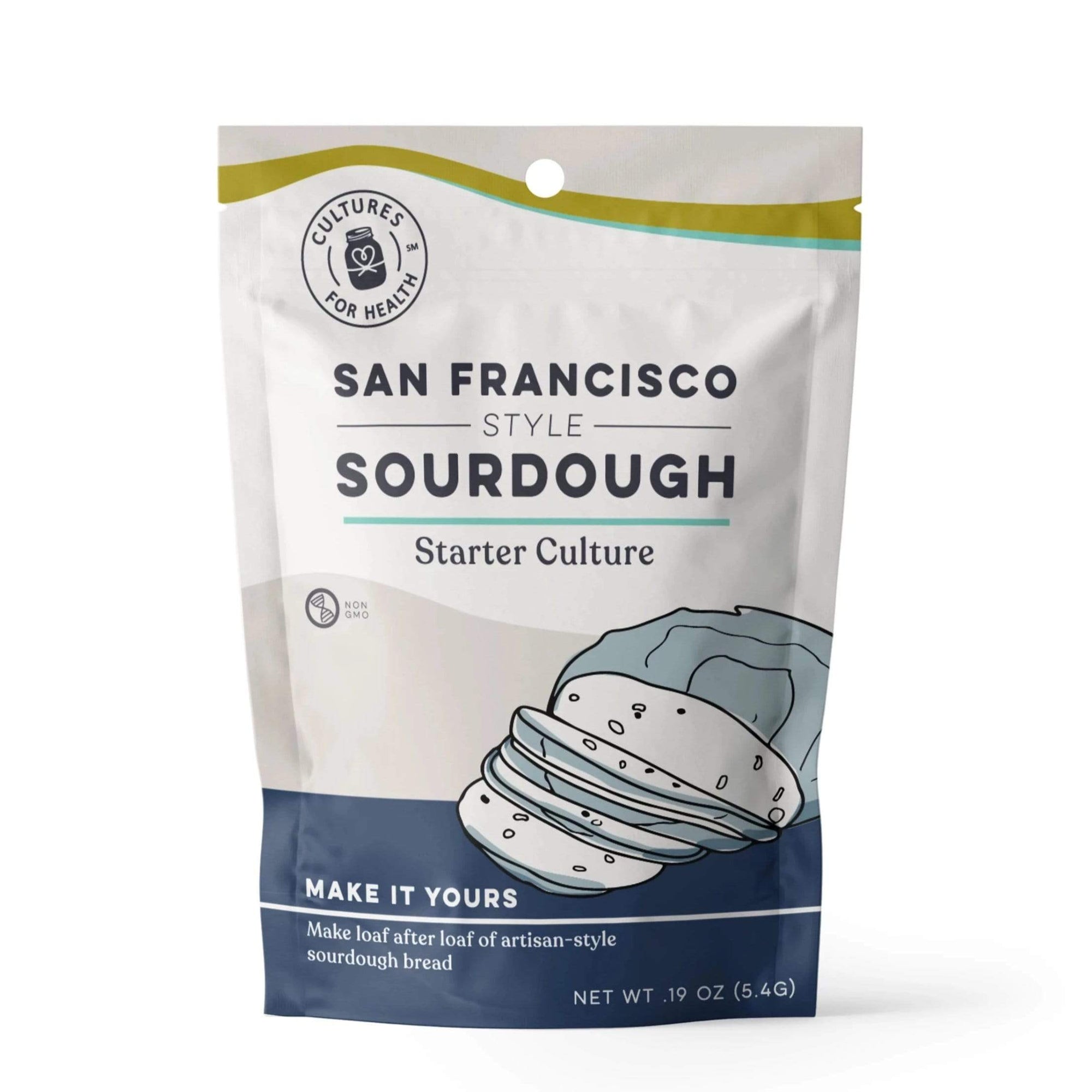



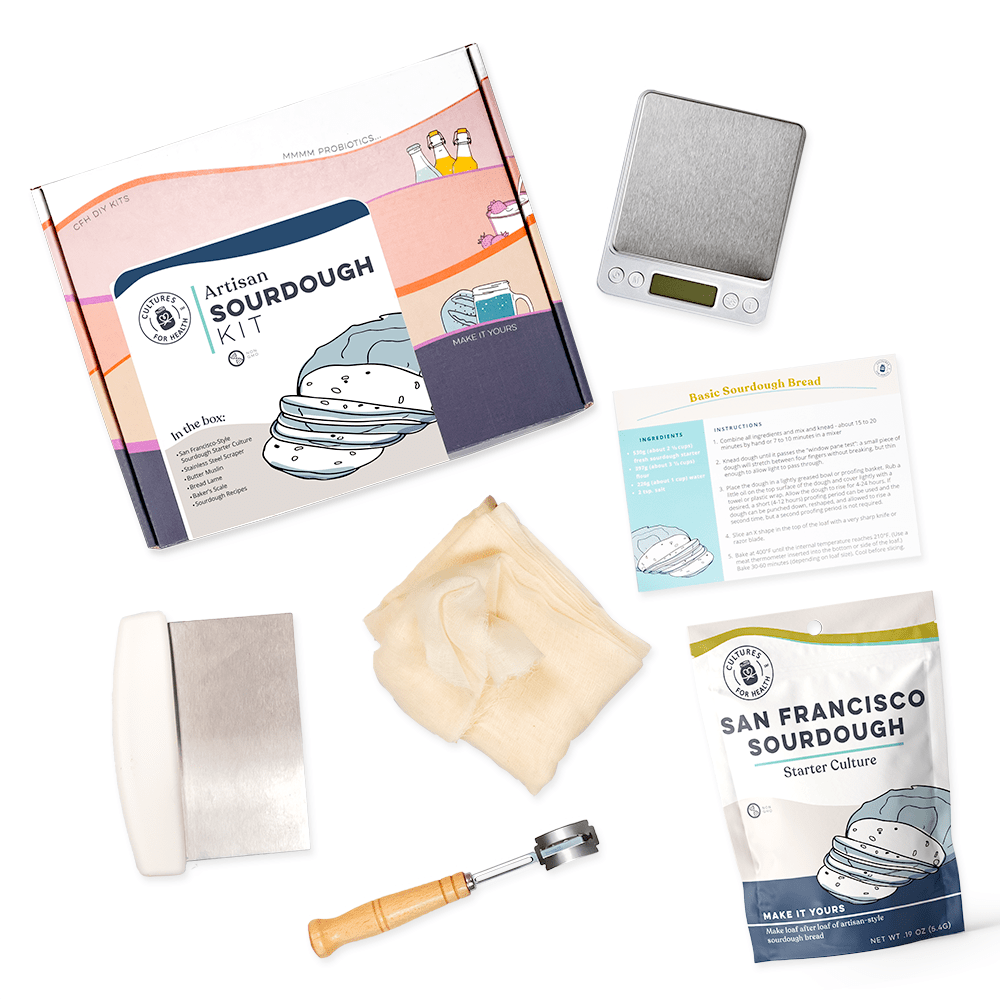










Make delicious sourdough bread and other baked goods at home using an established sourdough starter. It's so easy!
BEFORE YOU BEGIN
Our sourdough starters are sold in a dehydrated state so that they are shelf-stable and safe for shipping. Store the dehydrated culture in a cool, dry place until ready to activate.
A Note About Our Instructions
Since this video was produced we've made some changes to our instructions on activating a sourdough starter. For best results, please follow the instructions included with your sourdough starter culture.
Below the video you'll find both the original and newer methodology for activating the starter culture. The methodology you use to activate and care for your starter is completely up to you based on what you find easiest for your lifestyle.
With that said, sourdough is a very forgiving culture and one of the easiest to work with, so we are confident that you will be successful despite which methodology you choose. If you have any concerns regarding your starter culture feel free to reach out - we're here to help!

A Note About the Gluten-free Sourdough Starter
Gluten-free Brown Rice Sourdough Starter requires slightly different ingredient ratios and feeding schedules. Please refer to the instructions included with your sourdough starter for best results.
WHAT YOU'LL NEED TO ACTIVATE A SOURDOUGH STARTER
Equipment
- Quart-size glass jar
- Non-metal stirring utensil
- Tight-weave cloth or paper coffee filter
- Rubber band to secure the cover to the jar
Ingredients
- 1 packet dehydrated sourdough starter
- Unchlorinated, unfluoridated water
- Appropriate flour for your sourdough starter (check enclosed instructions)
INSTRUCTIONS FOR ACTIVATING A SOURDOUGH STARTER
- Add packet of starter to 1 Tbsp. flour and 1 Tbsp. of room temperature water in a quart-size glass jar and stir thoroughly. Cover the jar with a coffee filter or breathable material secured with rubber band and culture the starter in a warm place (70-80°F) for 12-24 hours.
- After 12-24 hours, feed the starter with an additional 2 Tbsp. of flour and 2 tbsp water. Stir thoroughly.
- Your starter should have the consistency of pancake batter. Add flour or water to adjust as necessary.
- After 12-24 hours, feed the starter with an additional 1/4 cup of flour and 1/4 cup water. Stir thoroughly.
- After 12-24 hours, feed the starter with an additional ½ cup of flour and ½ cup water. Stir thoroughly.
- Discard down to ½ cup starter and then feed the starter with ½ cup water and ½ cup flour. Stir thoroughly.
- Repeat step 5 every 12-24 hours for 3-7 days. Do this until the starter has the consistency of pancake batter and is bubbling regularly within a few hours of feeding. That’s when your starter is activated and ready to use!
WHAT TO DO WITH ACTIVATED SOURDOUGH STARTER
Once your sourdough starter is active and bubbly for 3 consecutive feedings, you have a few choices. You may: