Products > Yogurt Starter

Displaying 1 - 6 of 6 Product(s):
Sort By:
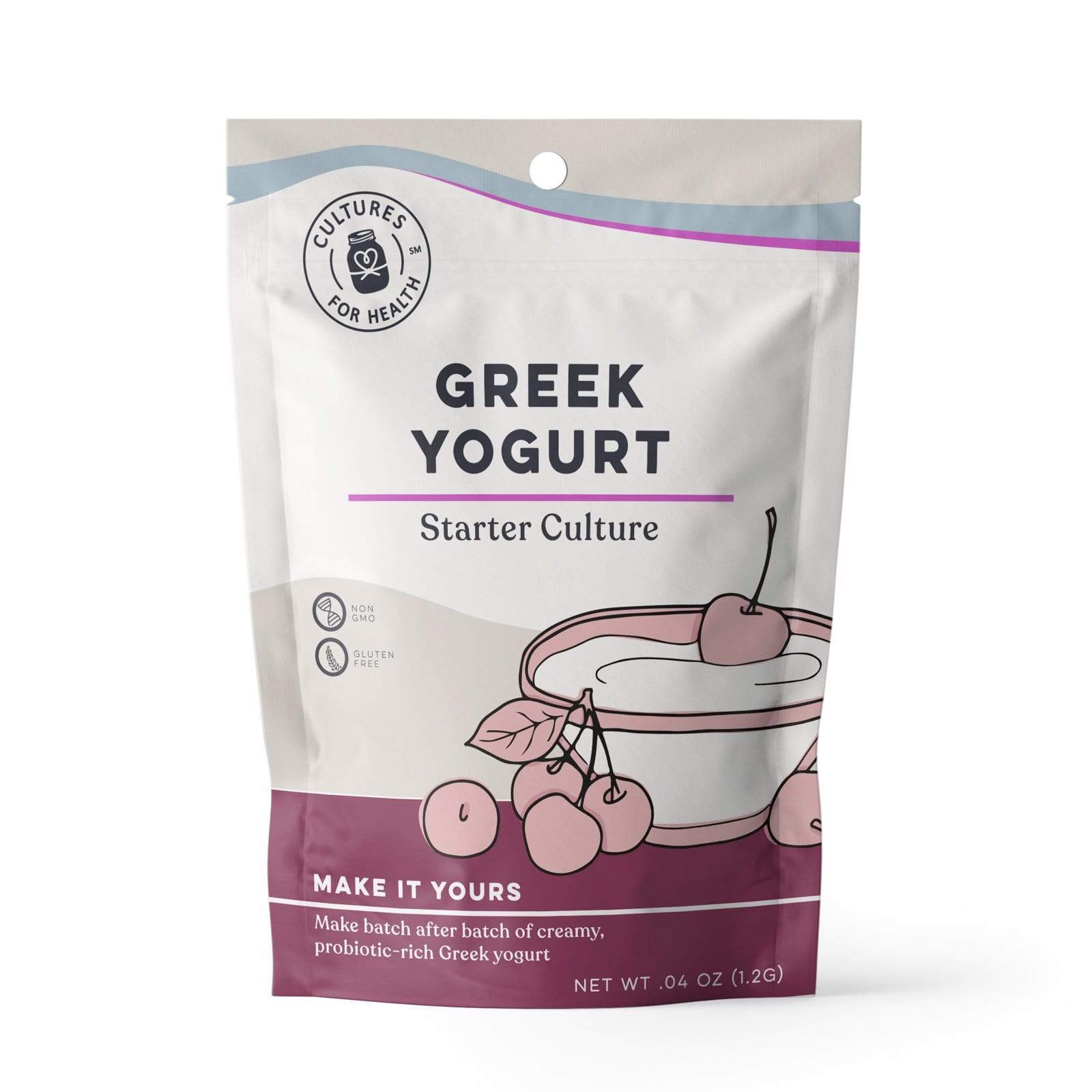
Greek Yogurt Starter Homemade

Our Traditional Greek yogurt culture makes a slightly tangy, rich and decadent homemade yogurt.  Use with a yogurt maker or similar appliance.

$11.99
Yogurt Starter Homemade Yogurt

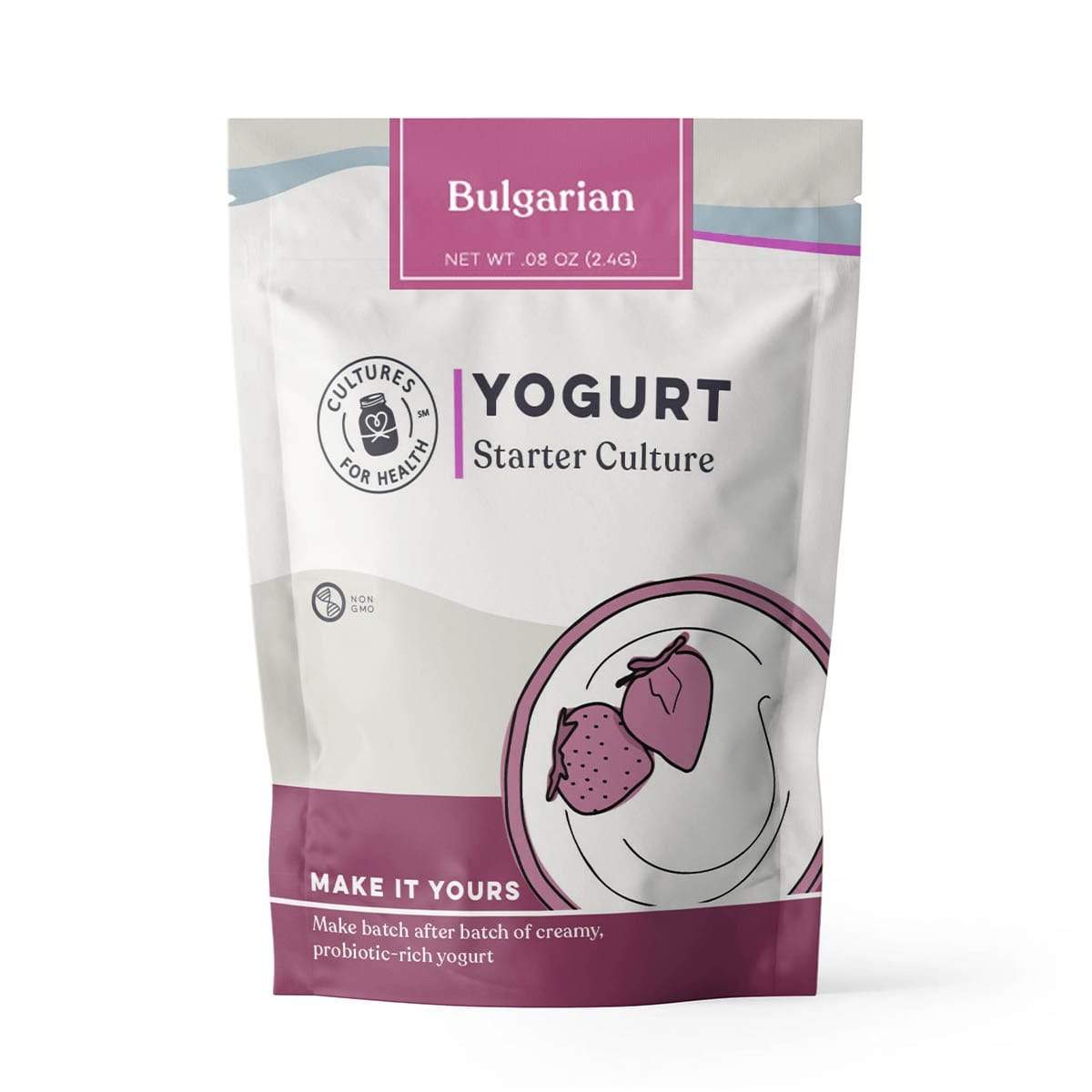
Perhaps one of the most popular yogurt varieties in the world, our Bulgarian yogurt culture produces a rich creamy homemade yogurt, perfect for the home yogurt making appliance and is most similar to commercial yogurt in terms of taste

$11.99
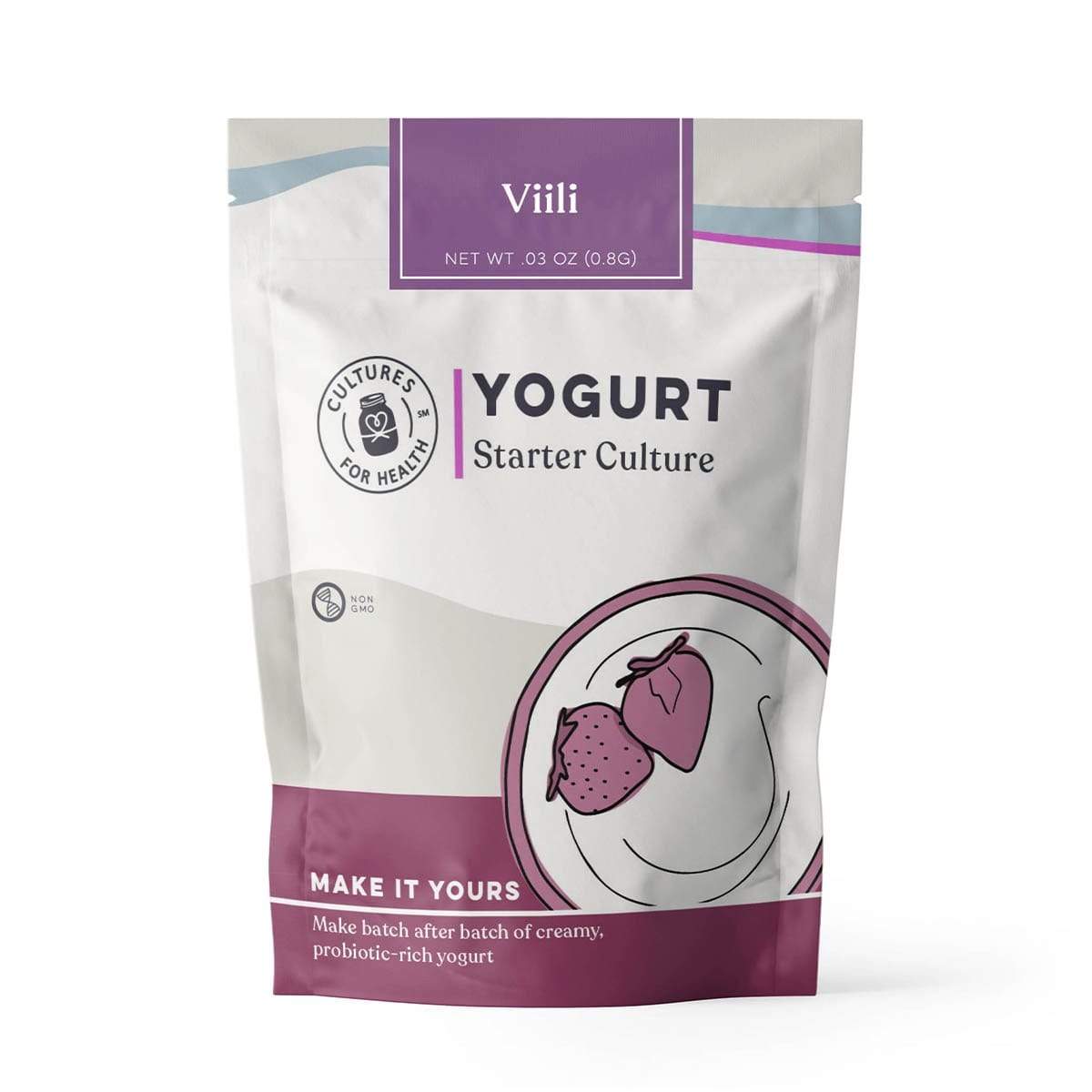
Viili Starter for Homemade Yogurt

Originating in Finland, Viili yogurt is a thicker yogurt which thrives on cream. A perfect yogurt to use in parfaits or in place of sour cream in recipes.  Our most popular yogurt culture!

$11.99
Filmjölk Yogurt Starter for Homemade Yogurt

Filmjölk is a soft custard yogurt originating in Finland. Generally less sour than yogurt, Filmjölk makes an excellent substitute for buttermilk in recipes and tends to have a slightly cheesy flavor.

$11.99
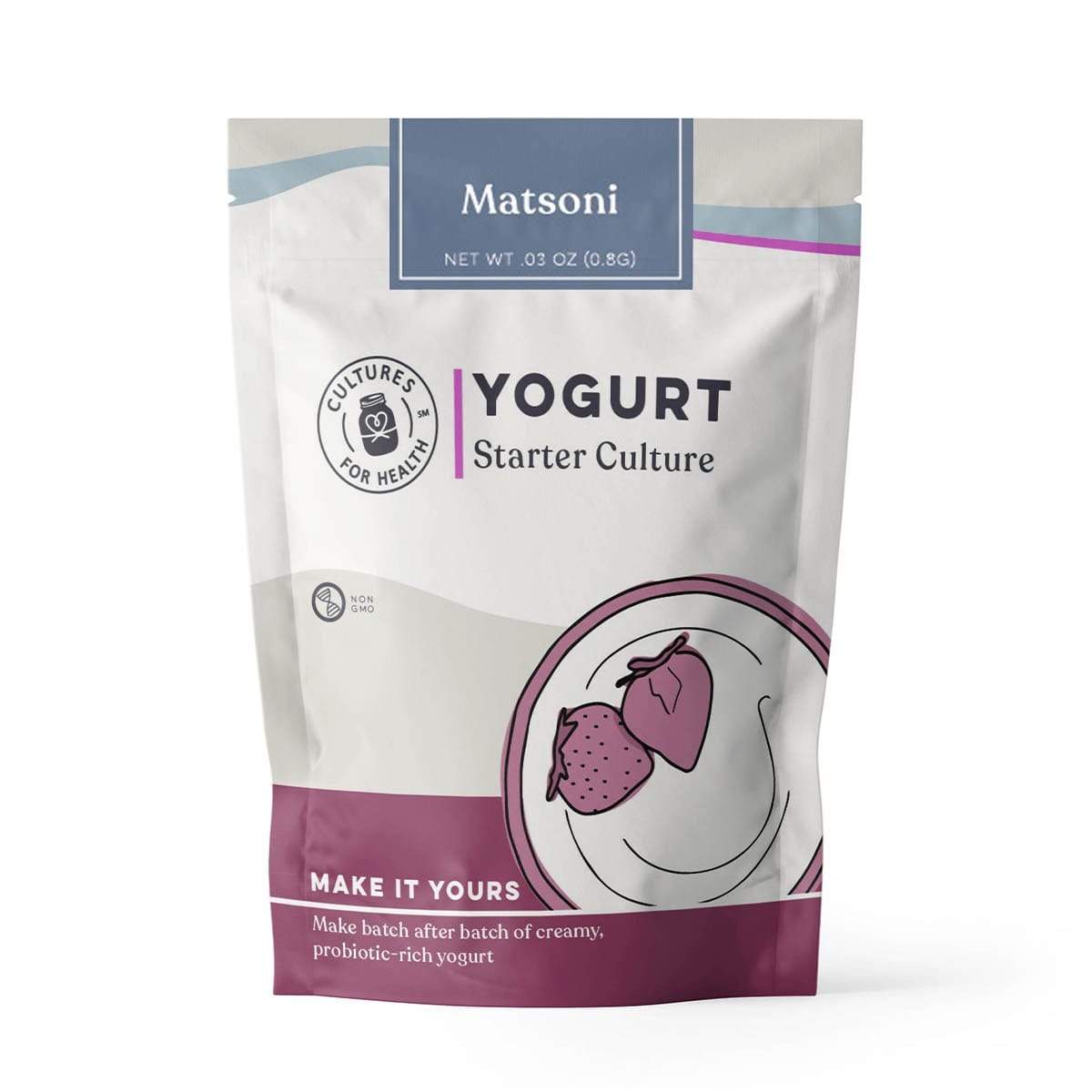
Matsoni Yogurt Starter (aka Caspian Sea Yogurt) for Homemade Yogurt

Originating in The Republic of Georgia, Matsoni yogurt is also known in Japan as Caspian Sea Yogurt. A slightly tart yogurt, Matsoni is excellent sweetened with a bit of honey or served over fruit.

$11.99
Yogurt Starter for Homemade Yogurt

Originating from Scandinavia, Piimä yogurt is more of a thin cultured beverage has a number of uses including making an excellent base for salad dressing, cultured butter or for making Piimä cream. 

$11.99

General Yogurt Starter Information

Our starter cultures are are traditional yogurt cultures--passed down through the generations rather than manufactured in a laboratory.  We perpetuate the yogurt cultures using only certified organic whole milk.  Our yogurt starters do not contain additives or stabilizers, just live active cultures and organic milk. 

Why Make Homemade Yogurt?

Making yogurt at home saves money!  Everyone is looking for ways to trim their grocery budget and making your own yogurt fits the bill perfectly.  Our starter cultures are easy to use and don't require you to buy a new starter culture for each batch.  Instead a small amount of each batch of yogurt is used to make the next batch (see below).  Once you've purchased the initial starter culture, you can make yogurt for just the cost of milk--a 50-80% savings!  Many of our customers use our cultures specifically to save money on organic yogurt for their children.

Making homemade yogurt is easy!  Making yogurt may sound intimidating but it's actually a simple process and anyone can do it in just a few minutes a week.  Each packet of starter culture comes complete with detailed directions to help you be successful making your own yogurt.

Control the ingredients in your yogurt!  Our yogurt starters work with organic and non-organic milk; homogenized and non-homogenized milk; whole and low fat milk (see note below) and raw and pasteurized milk.  In addition, our starter cultures do not contain or require any additives or stabilizers--you can easily make chemical free yogurt!  Finally, making homemade yogurt gives you control over the amount of sugar the yogurt contains.  Add a little sweetener or none at all.  Use an unrefined sugar such as honey or maple syrup or skip the sugar altogether and add some stevia.  Flavorings can be as natural as some fresh or frozen fruit or as elaborate as cocoa powder and roasted nuts.

Make truly raw yogurt!  If you are a fan of raw milk, check out our collection of mesophilic (low temp, room temp, counter-top) yogurt cultures including Viili, Filmjolk, Matsoni and Piima.  These varieties of yogurt culture on your counter at room temperature--no need to heat your raw milk!  Note, these yogurt varieties are also work well with pasteurized milk.

The Benefits of a Reusable Yogurt Starter (vs. One-Time Use Starter Cultures)

Regardless of whether a yogurt maker type starter culture or a counter-top starter culture is the best type for your yogurt making adventures, all of our yogurt cultures are reusable—a small portion of each batch of yogurt is used to inoculate the next batch of homemade yogurt.  No more having to buy yogurt starter!  Using a reusable yogurt culture allows you to make unlimited amounts of yogurt.  If buying yogurt is consuming a chunk of your grocery budget, we recommend a reusable starter culture for making yogurt. 

With our yogurt cultures, your initial batch of yogurt is made with a packet of dehydrated starter culture.  This yogurt is then used as a mother culture to inoculate the next batch of yogurt.  A bit of batch A is used to make batch B, a bit of batch B is used to make batch C and so on.  With care, the yogurt cultures will perpetuate indefinitely. 

Make Healthier Yogurt with Natural Yogurt Starter

Besides saving money, another benefit of making your own yogurt is the ability to feed your family yogurt without additives or stabilizers which are commonly added to commercial varieties of yogurt. Next time you visit your local grocery store, check the back of the container of yogurt. Many brands include a number of chemical additives and stabilizers to make the yogurt unnaturally thick, sweet, etc.  Making homemade yogurt using a natural yogurt starter means the ability to avoid additives including sugar. 

In addition, you can choose the quality of milk you use when making yogurt.  Our yogurt cultures work with homogenized and non-homogenized milk, pasteurized and raw milk and low fat or whole milk. Making homemade yogurt also offers an affordable organic option since the cost of homemade yogurt is the same as organic milk (our cultures also can be used with non-organic milk if you prefer).

It is possible to use low fat milk to make yogurt but if you choose not use whole milk please be aware that your yogurt will not be as thick and creamy.  Natural yogurt (made without additives or stabilizers) requires fat to make it thick and rich.  Without fat, the yogurt is likely to be runny. 

Why Use a CFH Yogurt Starter over the Health Food Store Varieties?

Why not just use a starter culture from your local health food store?  Our starter cultures offer several advantages over brands commonly available in health food stores. 

  • First, our starter cultures are reusable.  You can use a small amount of yogurt from a previous batch to inoculate the next batch.  With the yogurt cultures available at the health food store, you are stuck buying new packets of starter cultures for each batch of yogurt. 
  • Second, our starter cultures are truly natural cultures—passed down through the generations, not manufactured in a laboratory. Our yogurt cultures also contain only two ingredients: live active cultures and organic milk.
  • Finally, with our Viili, Filmjolk (Fil Mjolk), Matsoni and Piima cultures, you have the option of making truly raw yogurt as these yogurt starters culture at room temperature--they don't require heat to culture!  You can use these starter cultures to make truly raw yogurt the easy way.  Simply mix the yogurt starter into the raw milk, cover and allow the yogurt to sit at room temperature for 12-18 hours followed by 6 hours in the refrigerator.  Raw milk becomes truly raw yogurt!  Please note, when making raw yogurt, you will want to maintain a “pure starter culture” also known as a "mother culture".  Essentially you will be heating a small amount of milk to use as a starter culture to inoculate each batch of raw yogurt.  Taking this extra step will ensure that your yogurt culture perpetuates and is a truly reusable starter culture.  Full instructions for making a pure starter culture and making raw yogurt will accompany each order of Viili, Filmjolk, Matsoni or Piima yogurt. 

Counter-Top Yogurt Starters vs. Yogourmet Starter

Save Money with Our Yogurt Starters and other Starter Cultures

Ultimately, making yogurt saves you money!  All of our starter cultures are reusable so once you purchase a starter culture, all you will need is milk and then any flavoring you wish to add.  When comparing organic commercial yogurt to organic homemade yogurt, commercial yogurt can cost $.09-$.19 an ounce while organic yogurt you make yourself costs just the cost of organic milk, about $.04 an ounce.  A savings of 50%-80%!  Remember that we also carry other starter cultures which can save you money including cultured buttermilk, kefir and kombucha.

Two Types of Yogurt Cultures

There are two types of yogurt cultures: Mesophilic and Thermophilic.  Mesophilic cultures are also known as room temperature or counter top yogurt varieties as they culture best at room temperature (70-78 degrees).  You do not need a yogurt maker to use a mesophilic culture.  Thermophilic cultures require heat to culture properly so using a thermophilic culture requires a way to keep the yogurt at 110 degrees for 4-8 hours (depending on the variety).  Yogurt making appliances are a popular choice when working with a thermophilic culture but other methods can work quite well including a crock pot, an oven with a low temperature setting, etc.

Yogurt Maker Varieties of Yogurt Starter vs. Room Temperature Varieties

Yogurt Starter for the Yogurt Maker:

If you have a yogurt maker or other heated appliance, such as a slow cooker or cube-shaped dehydrator which can be set to 110 degrees and prefer to use a heat-loving (thermophilic) starter culture, our Greek and Bulgarian varieties make fantastically thick and delicious yogurt.  The thickest yogurt will always come from a thermophilic (heated) yogurt culture. 

  • Greek: Our Greek yogurt starter is quite popular and is best when cultured with one part cream and three parts whole milk.  Although you can make Greek yogurt with low fat milk, it will not be nearly as thick and you may want to strain it a bit using a tea towel or paper coffee filter to remove some of the whey and achieve a thicker consistency. 
  • Bulgarian: Bulgarian yogurt is perhaps one of the most popular types in the world.  It is thick, delicious and easy to make. 

Room Temperature Yogurt Cultures:

We offer six varieties of yogurt starter including two varieties that work well with a yogurt maker or similar appliance (e.g. slow cooker) and four varieties that culture on your counter-top at room temperature.  While many customers are familiar with making yogurt using a yogurt maker, our counter-top (room temperature) yogurt cultures offer a distinct advantage as they do not require a yogurt making appliance or any electricity at all!  Simply stir the yogurt cultures into the milk, cover and allow the mixture to culture at room temperature (70-78 degrees) for 12-18 hours followed by 6 hours in the fridge.  That’s it!  Easy to make homemade yogurt for your family.  We have four types of room temperature (counter-top) starter cultures. 

  • Viili: Our Viili starter is the most popular among our customers.  It produces a reasonably thick yogurt with a bit of a gelatinous texture.  It’s mild flavor makes it popular among our customers trying to switch their children off of commercial yogurt. 
  • Filmjolk: Our Filmjolk (Fil Mjolk) starter culture has a bit of a cheesy taste and is a wonderful substitute for buttermilk in recipes.  If strained of most of the whey, it also makes a fantastic cream cheese.
  • Matsoni: Our Matsoni culture is the most tart among our counter-top (room temperature) starter cultures but is not as tart as our thermophilic (heat-loving; yogurt maker appropriate) starter cultures.  Matsoni yogurt has a viscous consistency and with it's more tart flavor, makes a fabulous frozen yogurt. Click here to view our frozen yogurt recipe.
  • Piima: Our Piima starter produces a product which is more of a cultured beverage than a traditional yogurt.  While technically a yogurt, it is quite runny but makes wonderful smoothies or can be added to cream to create Piima Cream.  The Piima culture is often used by people who want to add beneficial bacteria to pasteurized milk while maintaining a general milk consistency (the Piima culture only thickens the milk a bit and has a similar consistency to cultured buttermilk). 

Filmjolk Yogurt Starter Information

Filmjolk Yogurt Starter Review

Viili Yogurt Starter Information

Piima Yogurt Information


How to Make Homemade Yogurt

Mesophilic (low temperature) varieties: Viili, Filmjolk, Matsoni and Piima

  1. To make the initial mother culture: Add the dried starter culture from the packet to milk (straight from the fridge).  Mix well, cover lightly and allow the mixture to sit at room temperature (70-78 degrees) for 24-48 hours.  Once the yogurt has set, place the yogurt in the fridge for at least 6 hours before proceeding to step 2.  This is the mother culture you will use to make your first batch of homemade yogurt.
  2. To make a batch of yogurt: Add 1 tablespoon of the mother culture from step 1 to one cup of milk (straight from the fridge).  Larger amounts can be made by adhering to the ratio 1 tablespoon yogurt from the mother culture to 1 cup new milk (e.g. 1/4 cup yogurt from the mother culture can be added to one quart of milk to make a quart of yogurt).  Mix well, cover lightly and allow the mixture to culture for 12-18 hours at room temperature (70-78 degrees).  Once the yogurt is set, place the yogurt in the fridge for at least 6 hours before eating.
  3. When it's time to make more yogurt, simply take yogurt from the batch made in step 2 and use it as the starter culture for your new batch (using the same ratios and procedures outlined in step 2).  Proceed with each batch in this same manner making a new batch of yogurt at least once every 7 days.  Click here to view our yogurt making instructions (full instructions will also be included with your order).  Raw milk users should note an extra step will be required to keep a pure mother culture (instructions will be included with your order and can be found here).

How to Make Yogurt at Room Temperature

Viili Yogurt Starter Instructions

Filmjölk (Fil Mjolk) Yogurt Starter Instructions

Matsoni Yogurt Starter Instructions

Piimä Yogurt Starter Instructions

Thermophilic (high temperature) varieties: Greek & Bulgarian

  1. To make the initial mother culture: Heat one cup of milk to 160 degrees and allow the milk to cool to 110 degrees.  Mix in the dried starter culture, cover lightly and allow the mixture to culture at 110 degrees for 6-12 hours (a yogurt maker works well for keeping the mixture at the proper temperature).  One the yogurt is set, allow it to cool for up to 2 hours then place the yogurt in the refrigerator for at least 6 hours to halt the culturing process.  This is the mother culture you will use to make your first batch of homemade yogurt.
  2. To make your first batch of yogurt: Heat an amount of milk equal to the amount of yogurt you wish to make (i.e. one quart of milk for one quart of yogurt, etc.) to 160 degrees and allow the milk to cool to 110 degrees.  Add heaping teaspoon of the mother culture from step 1 to one cup of milk (for larger quantities, just adhere to this same ratio--a quart of yogurt can be made using approximately 2 tablespoons of yogurt from the mother culture).  Mix well, cover lightly and allow the mixture to culture at 110 degrees for 4-8 hours depending on the variety.  Once the yogurt is set, allow the yogurt to cool for up to 2 hours then place the yogurt in the refrigerator for at least 6 hours before eating.
  3. When it's time to make more yogurt, simply use yogurt from the batch made in step two as a starter culture for making the next batch (using the same procedures and ratios indicated in step 2).  Proceed with each batch in the same manner making a new batch of yogurt at least once every 7 days.  

Greek Yogurt Starter Instructions

Bulgarian Yogurt Starter Instructions

Making Homemade Yogurt with Low Fat Milk

Straining Yogurt Information

Making Yogurt using Raw Milk

Making truly raw yogurt is easy with the right yogurt culture.  While other yogurt making methods require heating milk to 160 degrees, our mesophilic (room temperature or counter-top) yogurts culture at room temperature--no need to heat your milk.  Just add the starter culture to raw milk straight from the fridge, cover with a cloth and allow the mixture to sit at room temperature (70-78 degrees) for 12-18 hours followed by 6+ hours in the refrigerator.  It's really that easy to have true raw milk yogurt!  The only caveat is that in order for your yogurt culture to perpetuate, you will need to maintain a pure mother culture to use as a starter culture.  Making and maintaining a mother culture is easy (full instructions will be included with each order) and simply involves heating and cooling a small amount of milk to use to make yogurt which is then used as the starter culture for each batch of yogurt.  Using this method preserves and maintains the health of your starter culture while still allowing 15/16 of your yogurt to be made with truly raw yogurt.  Check out our selection of mesophilic (low temp, counter-top) yogurt cultures including Viili, Filmjolk, Matsoni and Piima.  In addition, see the link below for information about how to use our Greek and Bulgarian starter cultures with raw milk.

Flavoring Homemade Yogurt

Once you’ve made homemade yogurt using our starter cultures, you have a number of options for flavoring. 

  • Sweeteners: Making homemade yogurt is a wonderful way to avoid processed and refined sweeteners.  Raw honey makes a fantastic sweetener as does maple syrup.  Regular sugar is also an option.  If you are looking for a sugar-free alternative, the herb stevia offers sweetness without the sugar or calories.  Stevia is available at most health food stores.  
  • Flavoring: Flavoring homemade yogurt is easy as there are so many options!  Try some fresh or frozen fruit.  All-fruit (aka sugar-free) jam is also a great option as it can be easily mixed into the yogurt.  Flavor extracts such as vanilla, lemon, orange, etc. also make delicious yogurt.  Feeling adventurous?  Try adding cocoa powder to your yogurt for a chocolate yogurt treat! 

It is very important though to remove a small amount of yogurt from your current batch to use to inoculate the next batch of yogurt prior to adding any sweetener or flavorings.  We also recommend that if you are adding honey, not to add the honey until shortly before eating the yogurt.  Honey is antibacterial in nature and as bacteria is a main component of yogurt (and something many people consider to be a benefit), honey can have an adverse effect on the yogurt. 

How to Flavor Homemade Yogurt

Other Ideas for Using Yogurt

Yogurt isn't limited to just eating with granola and a spoon!  There are many ways to use yogurt including making smoothies, frozen yogurt, breads, sour cream (or Piima Cream), cultured butter and many more.  Yogurt can also be used to soak grains and flour when making baked goods (as described in Nourishing Traditions). 

Click here to view many wonderful recipes using homemade yogurt