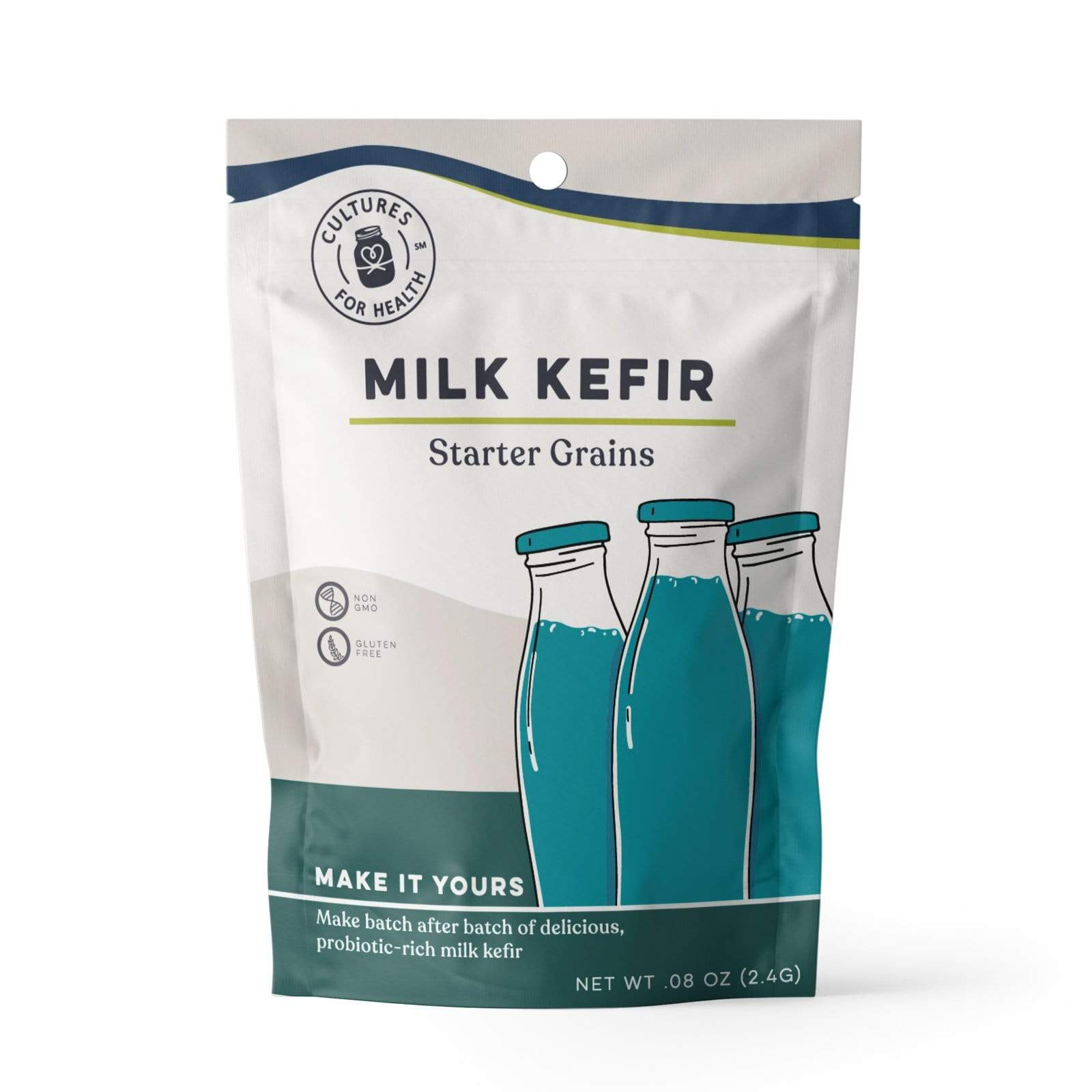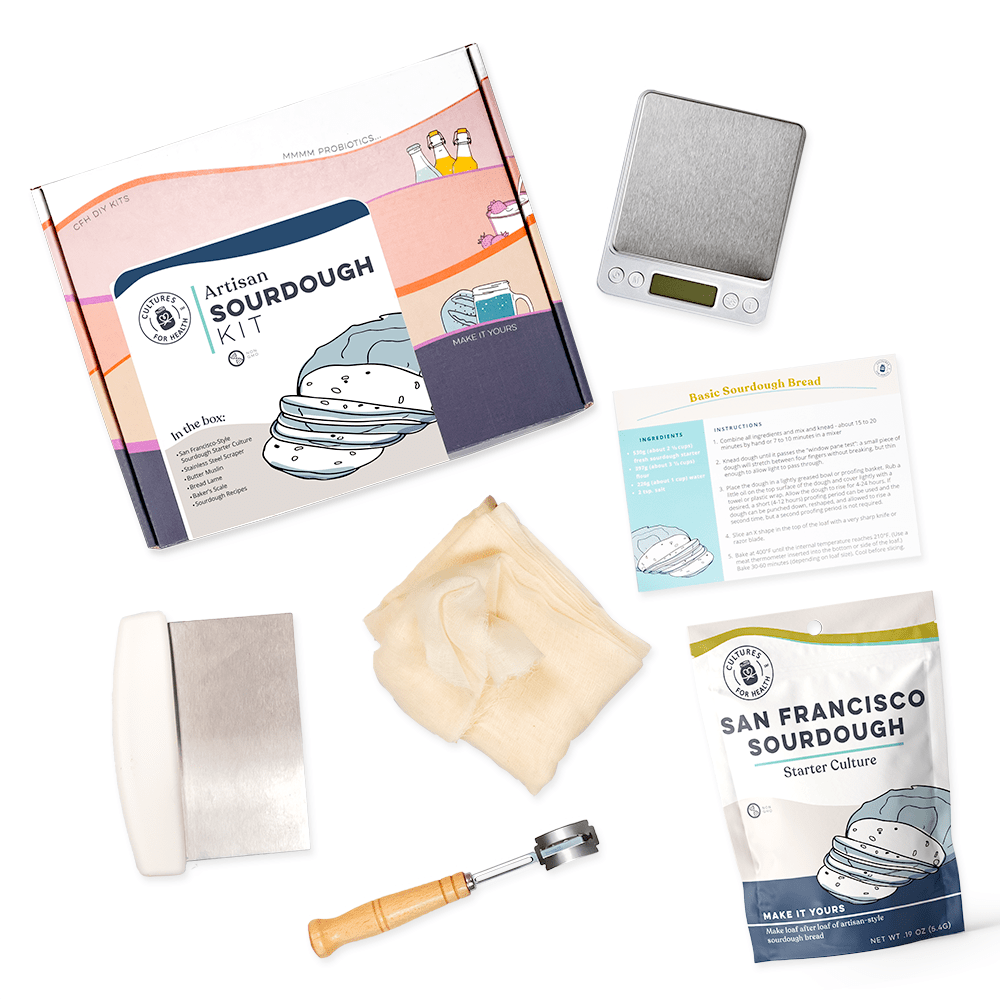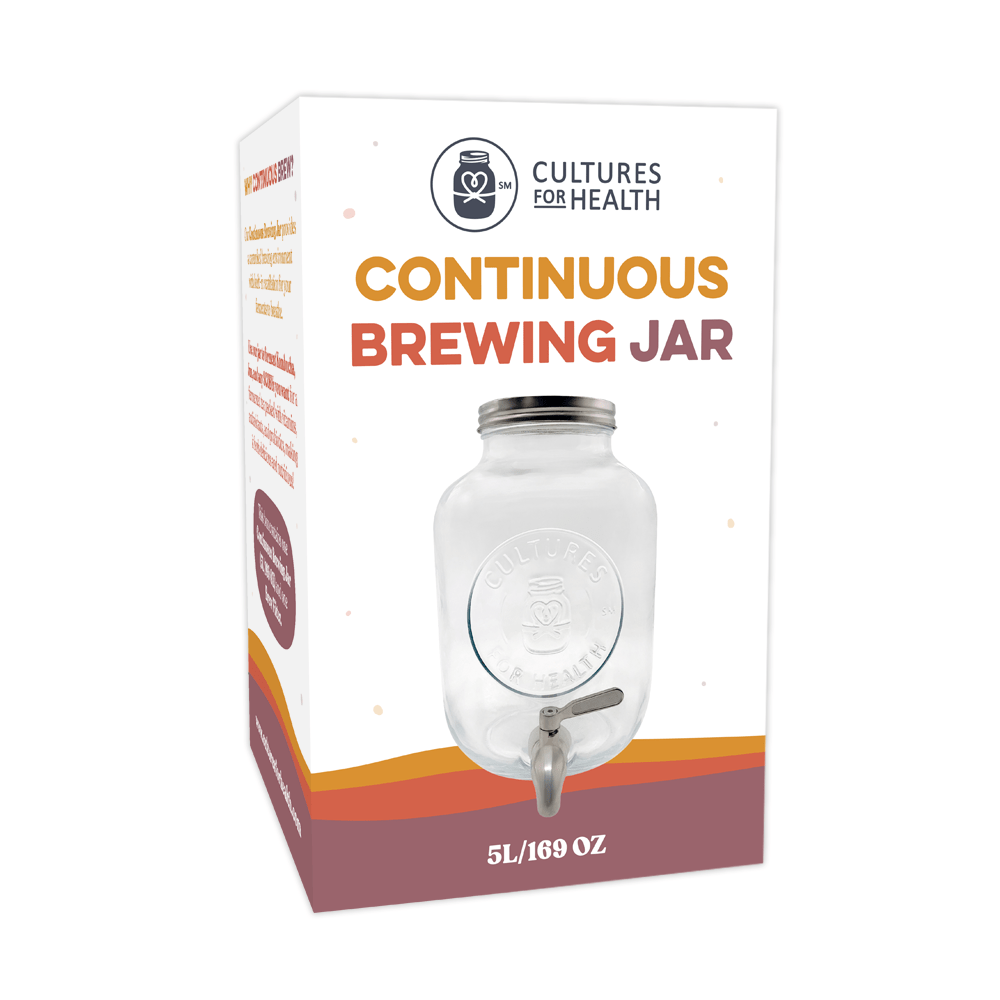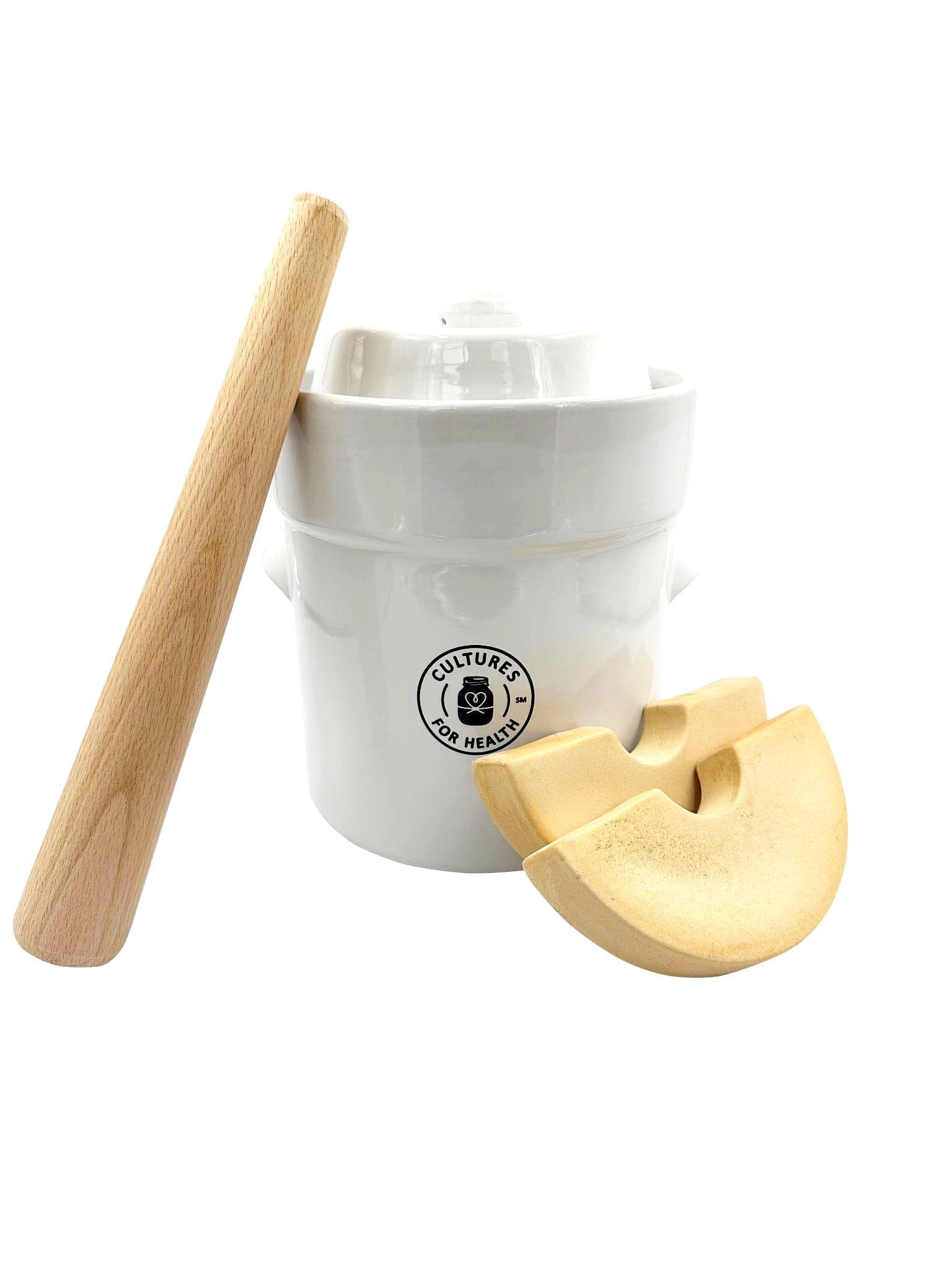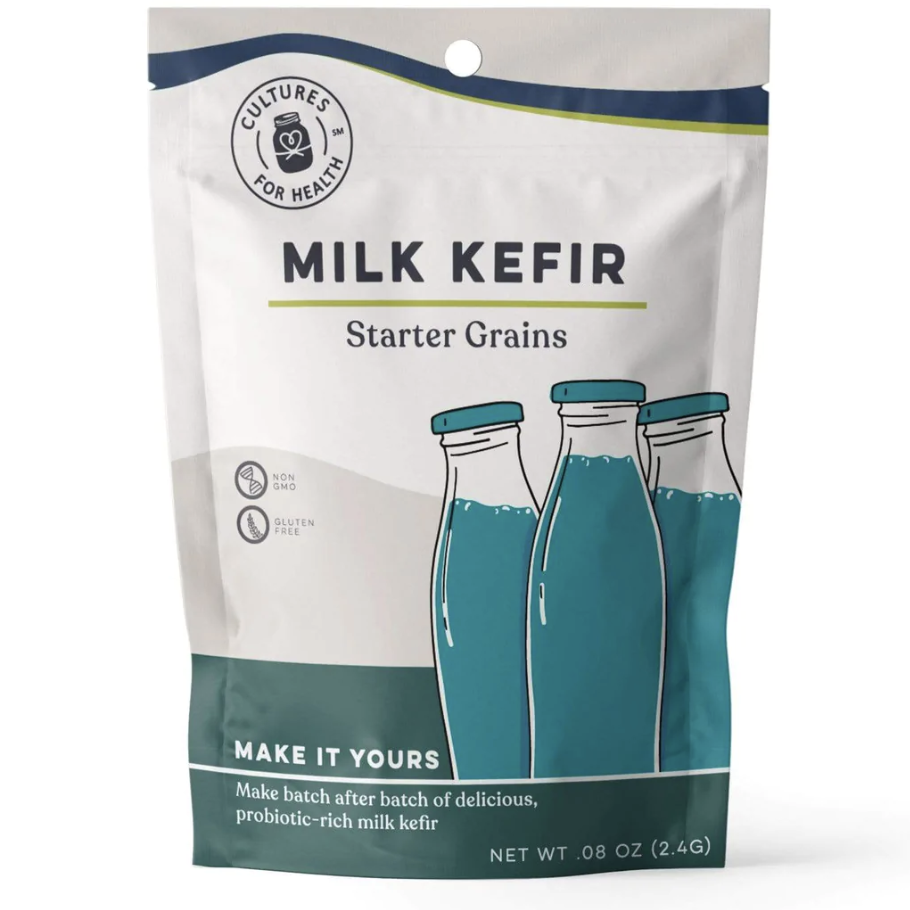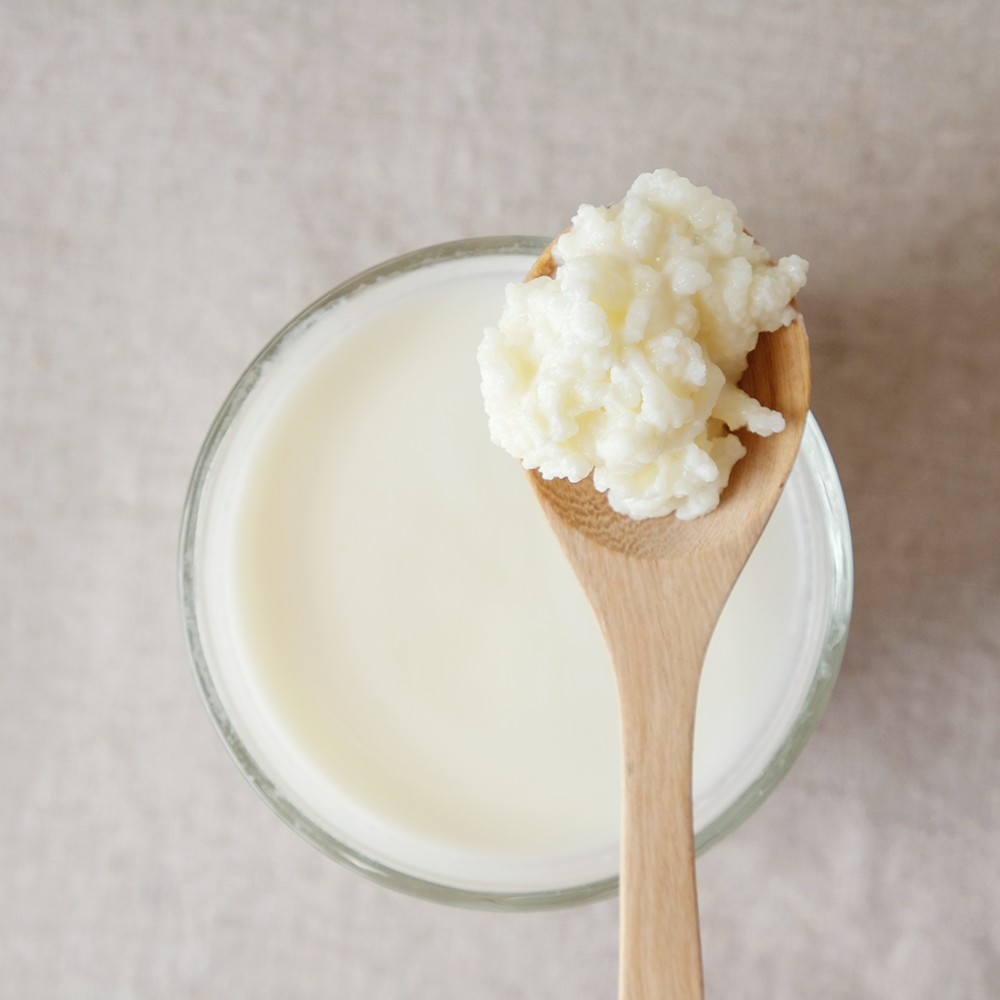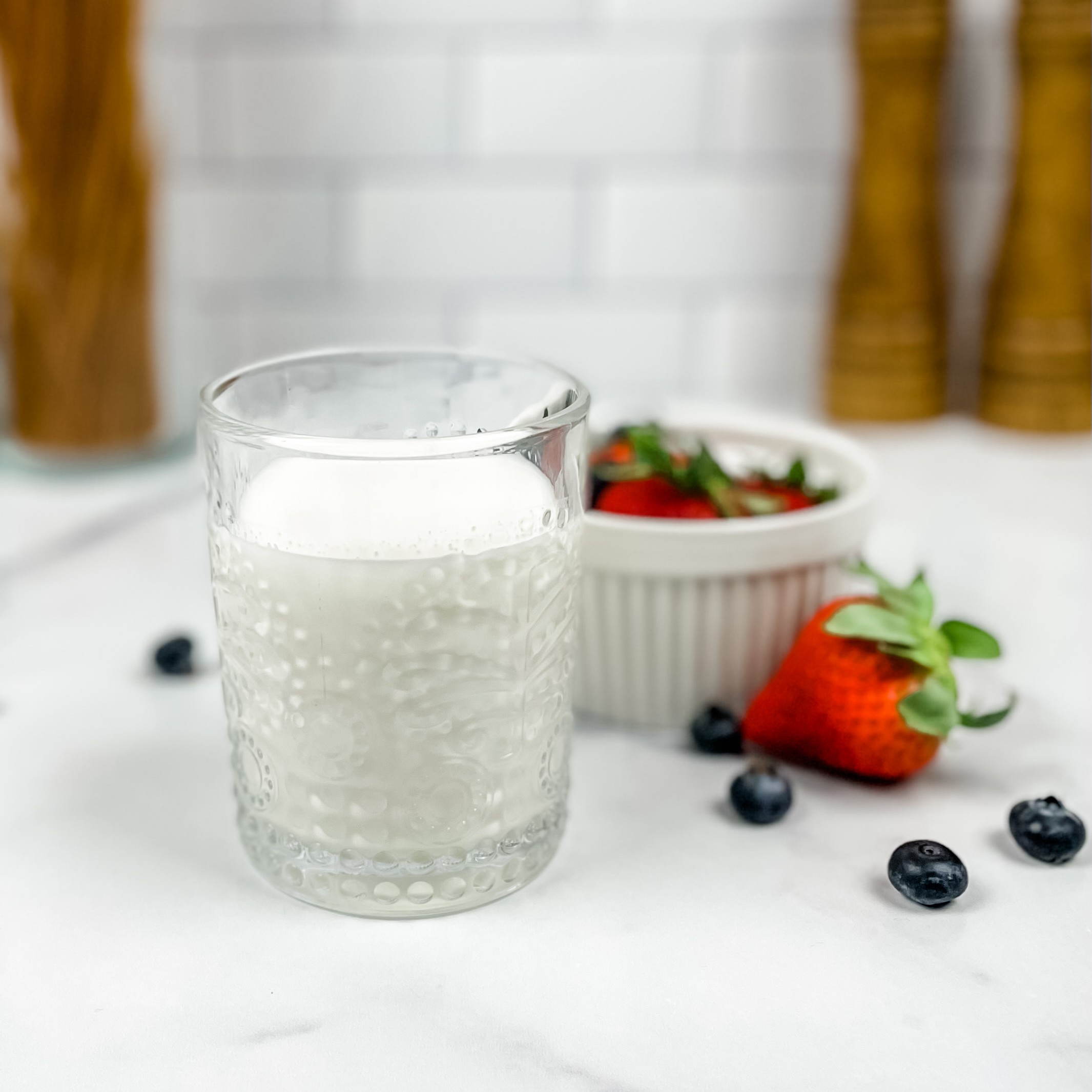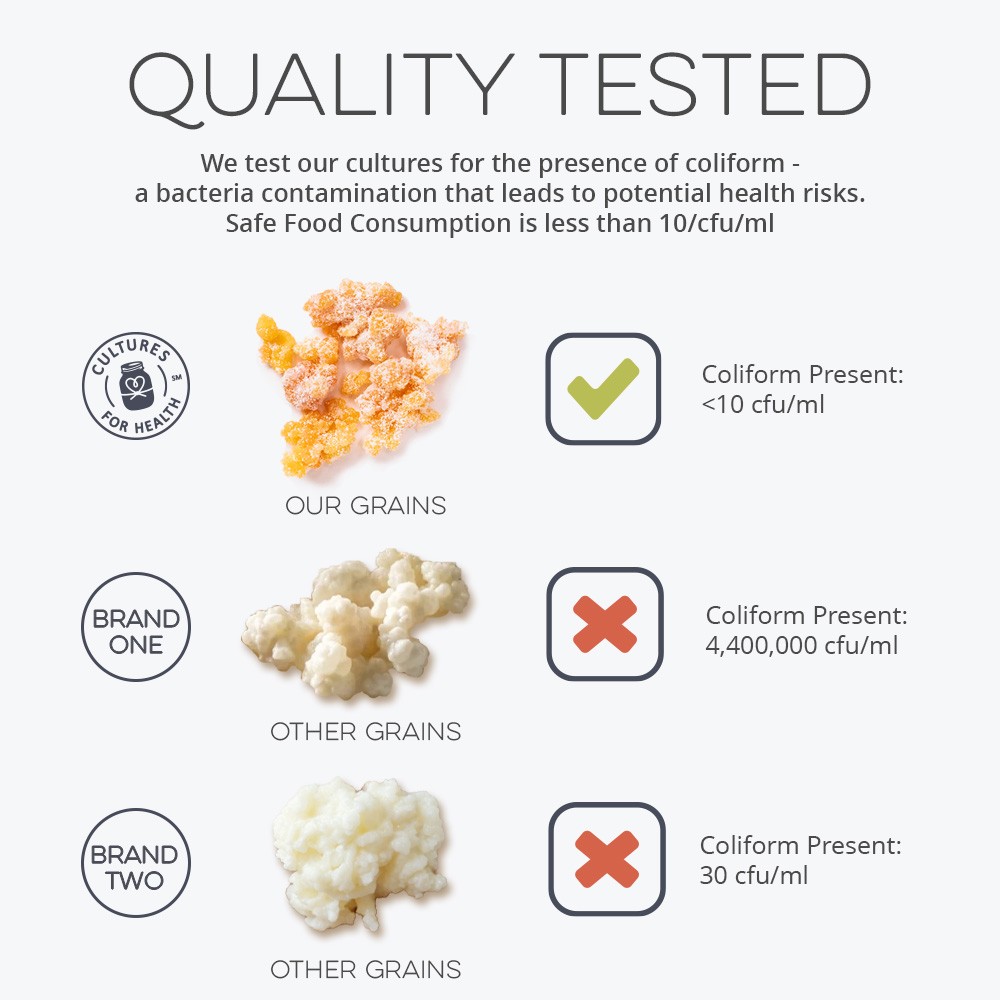
Kefir is a probiotic beverage made of a culture of yeast and bacteria which exist in a symbiotic relationship. There are two types of kefir: Milk Kefir (aka Dairy Kefir) and Water Kefir (aka Sugar Kefir). Milk kefir is made by placing either kefir grains or a powdered kefir starter culture in either cow, goat or coconut milk for 12-48 hours until the milk thickens and turns to kefir. The culture consumes the lactose and converts the milk to a probiotic beverage. Water kefir is made by placing kefir grains in sugar water, fruit juice or coconut juice where the culture consumes the sugar and converts the liquid to a probiotic beverage. There are two types of kefir cultures: Kefir Grains are a reusable culture which with care, can last indefinitely. Powdered kefir starter culture is also available and it can be used a few times before being discarded. Kefir grains are not actual "grains" such as wheat, spelt, rye, etc. but rather are a mixture of yeast and bacteria living in a symbiotic relationship. The term "grains" likely refers to the shape of the culture. In the case of the milk kefir variety, the grains look like cauliflower or a thin net or mushroom (depending on the variety). In the water kefir variety, the grains are individual transparent crystal looking pieces.
While the cultures for milk kefir and water kefir do require different liquids to culture properly, the kefir which results is very similar regardless of which type of kefir you culture. Generally speaking, water kefir is less concentrated in terms of probiotics than is milk kefir but with it's water base, it is much easier for the average person to consume larger amounts of water kefir than dairy kefir and most individuals find there is no difference in the benefits derived from drinking either variety.
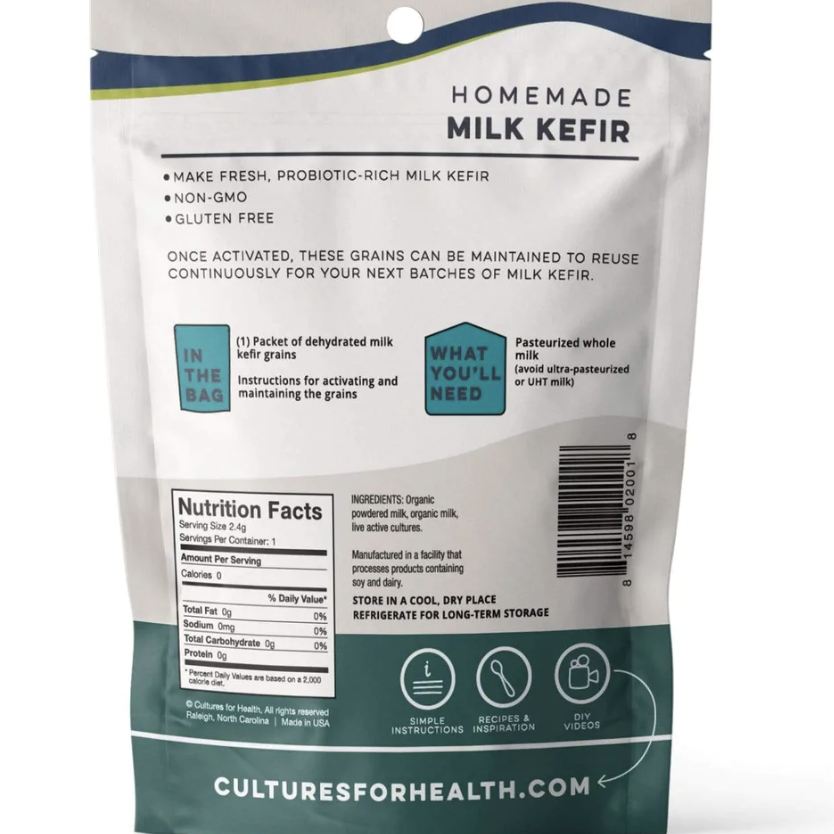
Our kefir grains are grown in only organic ingredients. More specifically, our milk kefir grains contain certified organic whole milk and are packaged in organic dry powdered milk. Our water kefir grains contain organic sugars including organic molasses. Neither milk kefir or water kefir grains contains any gluten. Water kefir grains do not contain dairy and are vegan (please note, all of our starter cultures are processed in a shared facility so there is a small chance of trace amounts of gluten, dairy, nuts or soy being present in any of our cultures).
There are two types of kefir: milk kefir and water kefir. Both milk kefir and water kefir are probiotic beverages which can be flavored. There are several key differences:
- Milk kefir is generally made with cow milk or goat milk but milk kefir grains can also be used to culture coconut milk. Water kefir is made from sugar water, juice or coconut water.
- Milk kefir is more concentrated than water kefir but has the same basic probiotic qualities. Because of it's water base, its easier to drink more water kefir than milk kefir which makes up for the less concentrated form.
- Milk kefir can be used in place of yogurt and buttermilk in recipes. Milk kefir makes wonderful probiotic smoothies. Just replace all or part of the yogurt from your favorite smoothie recipe or click here for smoothie recipes. Water kefir can be used as the liquid base in smoothie recipes.
- The taste of milk kefir is dependent on a few factors including the level of fermentation. Fermentation is influenced by both the ambient temperature and the length of the fermentation period. Generally speaking, milk kefir is similar to other cultured milk products (i.e. yogurt, buttermilk, etc.) in that it has a sour taste but milk kefir is also known for having an effervescent texture. It is known in some circles as the champagne of milk for this bubbly texture. Many people consume milk kefir plain but you can also flavor it with fruit (fresh or frozen) or flavor extracts (e.g. vanilla extract) and sweeten it with honey, stevia, agave or sugar. The taste of water kefir is dependent on the specific flavoring used--we do not recommend consuming water kefir without flavoring as it is not terribly pleasant tasting. Water kefir is actually quite sweet and can stand up to strong flavors such as lemon juice (a very pleasant tasting lemonade beverage can be made by adding 1/4 cup lemon juice to each quart of water kefir made with white sugar).
- Milk kefir is generally made with cow or goat milk although coconut milk can also be used. No other ingredients are required (unless you desire flavorings which should be added only after the culturing process is complete). Water kefir is typically made with sugar water although fruit juice or coconut water can also be used. Sugar water can be made using a ratio of 1/4 cup sugar (white sugar, rapadura or sucanat are all good choices) per quart of filtered water.
- Milk kefir can be flavored by blending it with fresh or frozen fruit or by adding flavor extracts such as vanilla extract. Milk kefir can be sweetened using honey, agave, stevia or sugar. Water kefir is naturally sweet as it contains fructose (20% of the sugar used to make the kefir remains but virtually all of it has been converted to fructose from it's original glucose-fructose state). We strongly suggest flavoring water kefir before consuming. Water kefir can be flavored using fruit juice or flavor extracts (e.g. vanilla extract). Some customers prefer to flavor water kefir while it is culturing by adding fresh or dried fruit. If you choose this method be sure to separate the kefir grains from the fruit (a cotton muslin bag works well for this) and to change fresh fruit out daily.
- Each packet of milk kefir grains contains enough grains to culture up to one quart of milk kefir. Each packet of water kefir grains contains enough grains to culture up to three quarts of water kefir.
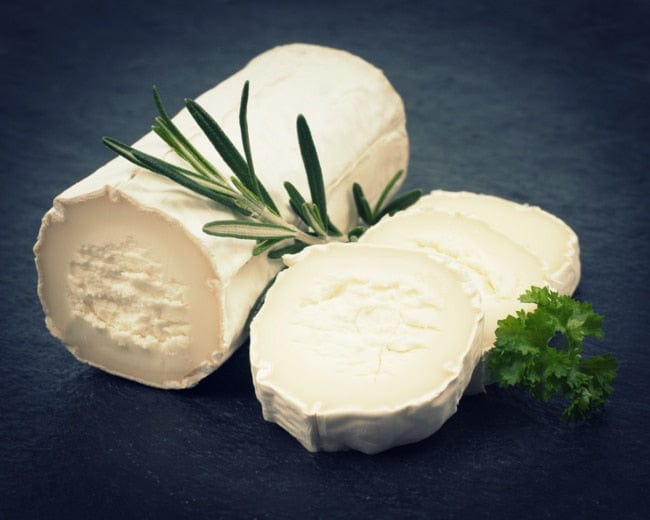
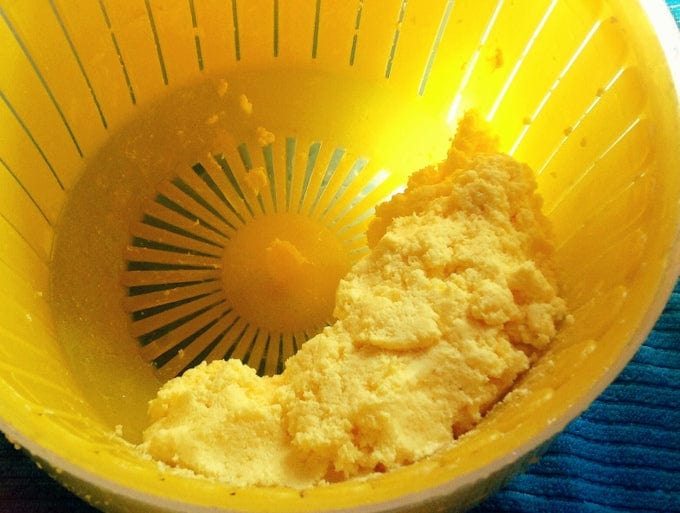
- Milk kefir grains can be used to culture cream to make a sour cream type condiment. Milk kefir can also be strained through cheesecloth or a tight-weave towel. Straining the kefir yields kefir cheese which can be mixed with herbs (makes a wonderful soft cheese for crackers, bread or dipping vegetables). The whey which is drained from the kefir can be used for soaking grains or to culture vegetables.
There are three primary differences between kefir grains and the powdered kefir starter culture:
- Kefir grains are reusable in the long term. With care, kefir grains should be available to produce batch after batch of kefir for many years. The powdered kefir starter culture can generally be used several times before a new packet must be obtained.
- Kefir made from grains contains more probiotic strains than does kefir made with the powdered starter culture. Kefir grains generally contain about 30 strains of probiotics where the powdered culture has closer to 8 strains.
- Kefir grains are a naturally occurring culture that has been passed down through the generations; the powdered starter culture was created in a laboratory.
- The initial investment in the powdered kefir starter culture is less costly than buying a set of kefir grains but in the long run, kefir grain are less costly.
- The powdered kefir starter culture is an excellent choice for individuals who want to make kefir on a periodic rather than continual basis. While kefir grains can be kept in hibernation (in the refrigerator) from time to time, in the long run, they are healthier and happier culturing batch after batch of kefir.
Generally speaking, we recommend kefir grains over the kefir starter cultures (more economical, more strains of probiotics, etc.). However, there are certain circumstances under which a kefir starter culture might be a better option. If you are looking to make kefir for only a short period of time or infrequently, kefir starter is a better choice than the grains. If you are going to be traveling, kefir starter can easily be packed in a suitcase whereas grains would be problematic (probably not the best thing to try to take through airport security!).
- Milk Kefir: Add the kefir culture to cow, goat or coconut milk, cover the container with a towel, paper towel, coffee filter, etc. and secure with a rubber band (allows the culture to breathe and gas to escape while keeping bugs out). Allow the milk to culture for 12-48 hours until the milk thickens and turns to kefir. If using kefir grains, remove the grains and add them to a new batch of milk while you consume the batch you just made. If using the powdered starter culture, reserve a small amount of the batch to use as a starter culture for making the next batch. Complete instructions will be included with your order.
- Water Kefir: Add the kefir culture to sugar water, fruit juice or coconut water, cover the container with a towel, paper towel, coffee filter, etc. (allows the culture to breathe and gas to escape while keeping the bugs out). Allow the liquid to culture for 24-48 hours. Remove the grains and place them in a new jar of sugar water, fruit juice or coconut water while you consume the batch you just made. Complete instructions will be included with your order.
Milk Kefir: Milk kefir grains can be used with animal milk (cow or goat) or coconut milk. When choosing a milk to use for making kefir, be sure to avoid UHT (ultra-high temperature aka ultra pasteurized) milk which has been heated to an extremely high temperature and doesn't generally kefir well or properly feed the grains. Milk kefir can be made with whole or low fat milk, homogenized or non-homogenized milk and pasteurized or raw milk. We do recommend using organic milk if possible to minimize the number of chemicals the kefir grains are exposed to.
Water Kefir: Water kefir can be made with sugar water, fruit juice or coconut water. If using sugar water, a couple of factors should be kept in mind when choosing a sugar type and water source:
- We recommend using either an organic white sugar (aka Evaporated Cane Crystals) or a whole/less processed sugar such as Rapadura or Sucanat which contains molasses. White sugar produces a mild tasting water kefir which is a good background for flavorings such as fruit juice. A less processed sugar like Rapadura or Sucanat produces a much stronger tasting kefir but contains more minerals which promotes the long term health of the kefir grains. Ultimately, choose the sugar type which yields the kefir you most enjoy drinking.
- Water kefir grains thrive on minerals and so the higher the mineral level of the water, the better it will be for the long term health of the kefir grains. Well water or spring water are the best choices. It is important to avoid water which has limited mineral content such as water processed through a carbon-activated filter. If using tap water which contains chlorine, either aerate the water (you can use a blender or set the water out overnight) or boil the water to neutralize the chlorine before using the water to make kefir.
If using fruit juice, be sure to use 100% fruit juice with no additives. Organic juice is preferable to reduce the amount of chemicals present which may potentially damage the culture. Apple juice and grape juice are the most popular choices for making fruit juice kefir but other juices often work well too. Do not dilute the juice when making kefir! Diluting the juice will throw off the sugar ratio and potentially damage the grains (by starving them).
Coconut water can be found in fresh coconuts or canned at your local health food store. Try to find a brand without additives. Coconut water should not be diluted when used to make kefir.
Milk Kefir: Milk kefir can be flavored using fresh or frozen fruit, flavor extracts (e.g. vanilla extract), etc. and can be sweetened with raw honey, agave, stevia or sugar. Click here for recipes for flavoring milk kefir.
Water Kefir: Water kefir can be flavored using fresh, frozen or dried fruit, flavor extracts (e.g. vanilla extract) or fruit juice. While, water kefir can be flavored during the fermentation process by adding fresh, frozen or dried fruit to the culturing kefir, we do recommend whenever possible, waiting until the culturing process is complete and the grains are removed before adding anything to the mix. Adding fruit often works okay but you do run the risk of contaminating the grains. If you decide to add the fruit during the culturing process be sure to separate the fruit from the kefir grains (a cotton muslin bag works well for this) to avoid having to remove tiny pieces of fruit (it tends to disintegrate into tiny pieces) from the kefir grain. Just place either the grains or the fruit in the bag. If using fresh or frozen fruit, be sure to change the fruit out daily. If using dried fruit, the fruit can stay in the liquid for the entire culturing process. To flavor the kefir after removing the grains (recommended), just add fruit, fruit juice and/or a flavor extract (e.g. vanilla extract). If using juice or a flavor extract, the kefir can be consumed immediately if desired. Use 1/4 - 1/2 cup juice per quart of water kefir (less juice for stronger flavors like lemon juice; more juice for lighter flavors like pomegranate juice). Generally 1/2 -1 tablespoon of flavor extract is sufficient for each quart of water kefir. If adding fruit, we recommend waiting a few days to allow the flavors to infuse the kefir (fresh fruit must be changed out daily; dried fruit can be left in the kefir for up to a week).
Because of their small size, kefir grains can be difficult to remove from finished kefir but there are several methods which make this easier:
- Our favorite method is to use a fine mesh plastic strainer set. For water kefir, simply pour the kefir through the strainer to capture your the grains. For milk kefir, you may need to use your fingers to gently work the kefir through the strainer set. Using this method for milk kefir has the added benefit of improving the consistency of the kefir as it moves through the strainer.
- Another great option is to use a cotton muslin bag to contain the grains (water kefir or milk kefir). Be sure to secure the bag at the top so the grains don't escape! Using this method, you can simply remove the bag from the finished kefir and place it in the next batch. The only caveat is to be sure you are using a bag large enough to accommodate some growth from the grains. They should be able to move around freely within the bag.
- As your milk kefir grains grow, you may be able to remove them with your hand. Just be sure to wash and rinse your hands thoroughly before attempting this method.
If you are going on vacation or simply need to take a break from making kefir, here are the instructions for doing so:
- Milk Kefir: Place the kefir grains in fresh milk (at least one pint of milk), cover with a tight fitting lid and place the container in the refrigerator (preferably the coldest part of the refrigerator but we don't recommend allowing them to freeze). Provide the grains fresh milk at least every three weeks.
- Water Kefir: Place the kefir grains in fresh sugar water (1/4 cup sugar per quart of water), cover with a tight fitting lid and place the container in the refrigerator. Provide the grains fresh sugar water at least every two weeks.
Kefir is incredibly versatile! Besides drinking it, kefir can be used in a number of recipes. Generally speaking, milk kefir can be used in place of milk, yogurt or buttermilk in recipes and of course kefir makes a wonderful addition to your favorite smoothie recipe (replace all or part of the yogurt called for in the recipe with kefir). Water kefir can be used as a liquid base in your favorite smoothie or to make a wonderful soda-type beverage. Click here for more information on making a probitoic type of soda pop using water kefir.
Here are a few of the many recipes for using kefir:
Sweetened Kefir
- 1 cup Milk Kefir
- Sweetener of your choice to taste: options include
- 2 tsp. Sugar (Sucanat or Rapadura work well)
- 1 tsp. Raw Honey or Agave
- 1 tbsp. Maple Syrup
Blend together and serve.
Fruit Kefir
- 1 cup Milk Kefir
- 1/2 - 1 cup Fruit (fresh or frozen)
- 1/4 tsp. Vanilla Extract (optional)
- Sweetener to taste if desired (raw honey, agave, stevia, maple syrup, sugar, etc.)
Puree fruit in a blender until smooth. Add kefir, vanilla and sweetener. Blend together and serve cold.
Blueberry Kefir Smoothie
- 3/4 cup Milk Kefir
- 1/2 cup Juice (orange and grapefruit work well)
- 1 cup Blueberries
- 1 Banana
Add all ingredients to a blender and process until smooth. Serve chilled or at room temperature. Makes one serving.
Tropical Smoothie
- 1 Frozen Banana
- 1 cup Fresh Pineapple
- 2 tbsp. Coconut Milk (optional)
- 3/4 cup Milk Kefir
- Sweetener to taste if desired (raw honey, stevia, maple syrup, agave, sugar, etc.)
Add all ingredients to a blender and process until smooth. Best served chilled. Makes two servings.
Kefir Biscuits
- 2 cups Flour (preferably sprouted flour)
- 1/4 tsp Baking Soda
- 1 tbsp Baking Powder
- 1 tsp Salt
- 6 tbsp. Butter (very cold)
- 3/4 cup Kefir
If using non-sprouted flour, 12-24 hours prior to making biscuits, mix the flour and kefir together. Cover and allow the flour to soak. If using sprouted flour, mix the kefir and flour together after mixing the butter with the flour. Preheat the oven to 450 degrees. Cut the butter into chunks then work it into the flour/kefir mixture along with the baking soda, baking powder and salt. Do not over mix. If the mixture is too dry, add a bit more kefir. Turn the dough onto a lightly floured board. Gently pat the dough to 1/2 inch thick (this will yield lighter biscuits than using a rolling pin). Use a round cutter to cut out the biscuits. Place biscuits on a cookie sheet. If you want biscuits with soft edges (and a higher rise), place the rounds touching each other. If you want biscuits with crusty sides, place the rounds about 1 inch apart. Bake for 10-12 minutes until golden brown. Makes 10 biscuits.
Chocolate Kefir Bread
- 1 cup Organic Sugar (can use Rapadura or Sucanat)
- 1/2 cup Butter, softened
- 2 Eggs
- 1 cup Kefir
- 1 3/4 cup Flour (preferably Sprouted Flour)
- 1/2 cup Organic Unsweetened Cocoa
- 1/2 tsp. Baking Powder
- 1/2 tsp. Baking Soda
- 1/2 tsp. Salt
- 1/3 cup Nuts, chopped (optional)
If using non-sprouted flour, 12-24 hours prior to making bread, mix the flour and kefir together. Cover and allow to soak. Heat oven to 350 degrees. Grease the bottom only of an 8"x4" or 9"x5" loaf pan. In a large bowl, combine the sugar and butter, blend well. Add the eggs and blend well. Add the flour and kefir mixture. Add the cocoa, baking powder, baking soda and salt. Blend just until the dry ingredients are moistened. Stir in the nuts. Do not over mix. Pour into the greased pan. Bake for 55-65 minutes or until a toothpick inserted into the center comes out clean. Cool for 15 minutes before removing the bread from the pan and setting on a wire rack. Cool the bread completely before serving. The bread should be wrapped tightly and stored in the refrigerator if it is not eaten immediately. Makes one loaf.
Whole Grain Kefir Pancakes
- 2/3 cup Whole Wheat Flour (preferably sprouted wheat flour)
- 1/4 cup Oat Bran
- 1 tbsp Cornmeal
- 1 tbsp Brown Sugar (can substitute raw honey or agave)
- 1 1/2 tsp Baking Soda
- 1/4 tsp Salt
- 1 cup Kefir
- 2 large eggs, separated
- 2 tbsp Grapeseed Oil, Sunflower Oil or melted Coconut Oil
If using non-sprouted flour, 12-24 hours prior to making pancakes, mix the flour and kefir together. Cover and allow the flour to soak. When you are ready to make the pancakes, mix the egg yolks and oil together. In a separate bowl, beat the egg whites until stiff peaks form. Mix the oat bran, cornmeal, sugar, baking powder and baking soda into the flour and kefir mixture. Stir in the egg yolk and oil mixture. Fold in the egg whites.
Lightly coat a skillet with butter or coconut oil and set over medium heat. When the skillet is hot, cook the pancakes using about 1/4 cup batter for each. Cook for about 2 minutes on each side until golden brown. Serve with butter, fruit and/or real organic maple syrup. Makes 12 pancakes.
Coconut Milk Kefir
- Coconut Milk
- Milk Kefir Grains
Add the grains to the coconut milk and allow the milk to culture for 12-48 hours until the desired consistency and taste is achieved. Remove the kefir grains and place the grains in fresh milk. Milk kefir grains can be used repeatedly in coconut milk but should be returned to cow or goat milk occasionally to revitalize them. Coconut milk kefir can be used in place of regular milk kefir in the above recipes. Coconut milk kefir also makes a wonderful addition to your morning coffee.
Water Kefir Lemonade
- 2 quarts Water Kefir (made with white sugar)
- 1/2 cup Lemon Juice
Mix the water kefir and juice together. Chill and serve immediately or bottle the mixture in an air tight container (such as Grolsch-style bottle) for 24-72 hours (use caution when opening the bottle as the contents will be under pressure).
Grape Juice Kefir
- 2 quarts Organic Grape Juice
- 3 tbsp Water Kefir Grains
Add the grains to the grape juice, cover (a towel or paper coffee filter works well) and allow the mixture to ferment for 12-72 hours. After the juice has fermented, remove the grains. Chill the kefir and serve immediately or bottle the mixture in an air tight container (such as a Grolsch-style bottle) for 24-72 hours (use caution when opening the bottle as the contents will be under pressure).
Please note, the amount of sugar contained in the juice is sufficient to yield a decent amount of alcohol so please use caution when consuming. If making this beverage for children, we strongly recommend only fermenting for 12-24 hours and using good parental judgement when determining if this is an appropriate drink for your children.
Juice tends to be very hard on water kefir grains. We recommend either waiting until your grains multiply (being cultured in sugar water) so you can split them into two sets or keeping a second set of grains just for using with juice.